













Have you ever wondered how to measure the strength of a trend in the market? That’s when the Average Directional Index ADX appears. Discover the secrets behind market fluctuations and create a smart trading strategy after today’s article!
What Is the Average Directional Index (ADX)?
ADX is a technical analysis tool that helps us assess the strength of a trend, regardless of whether it is an uptrend or a downtrend. Simply put, it helps us know whether the market is trending up or down and whether the trend is strong or weak. It is created from the smoothed average values of the differences between the highs and lows of the market over a certain period of time.
How ADX works:
- +DI and -DI: These two indicators indicate whether the current trend is leaning towards the uptrend (+DI) or downtrend (-DI).
- ADX: The ADX line is a measure of the strength of the trend. When ADX is high, the trend is stronger. Conversely, when ADX is low, the market is sideways or has a weak trend.
See now:
- Guide Step By Step How To Become A Successful Trader
- The 5 Best Momentum Indicators to Analyze Trend Strength
- Top 7 Best Volatility Indicators in the Market Updated 2024
- How To Identify The Ichimoku Cloud Signals In Trading
Average Directional Index (ADX) Formula
To better understand ADX, we need to understand its calculation steps:
Determining Directional Movement (+DM and -DM)
- +DM: Measures the increase in price compared to the previous day. If today’s high is greater than yesterday’s high, we have +DM.
or +DM = Today’s High – Yesterday’s High
- -DM: Measures the decrease in price compared to the previous day. If today’s low is less than yesterday’s low, we have -DM.
or -DM = Yesterday’s Low – Today’s Low
Calculating True Range (TR)
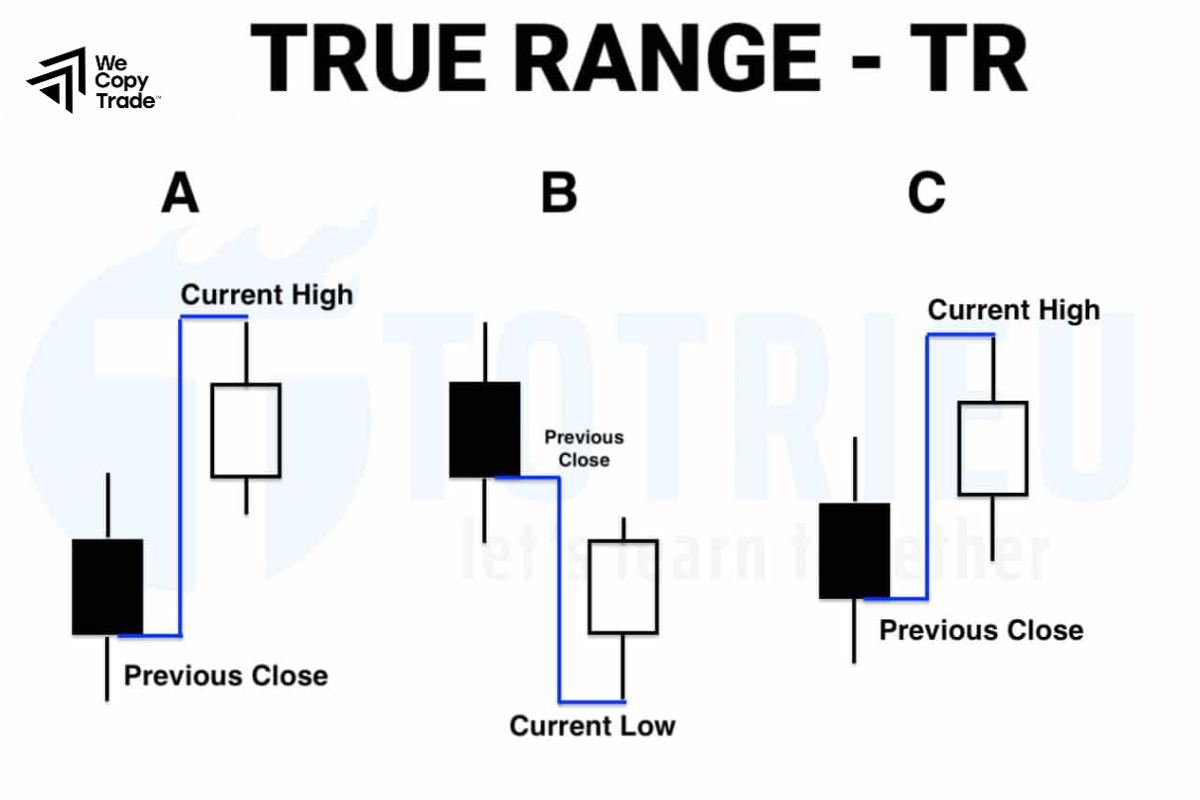
TR is a measure of price volatility over a single day. It is calculated by taking the largest of the following three values:
- Today’s high minus today’s low
- Absolute value of (Today’s high minus yesterday’s close)
- Absolute value of (Yesterday’s close minus today’s low)
Smoothing the data
To remove noise and create a clearer signal, the +DM, -DM and TR values are usually smoothed by calculating a moving average.
Calculating +DI and -DI
- +DI: Is the ratio between the smoothed +DM and the smoothed TR, multiplied by 100. It indicates the strength of the uptrend.
or +DI = (Smoothed +DM / Smoothed TR) * 100
- -DI: Is the ratio between the smoothed -DM and the smoothed TR, multiplied by 100. It indicates the strength of the downtrend
or -DI = (Smoothed -DM / Smoothed TR) * 100
- DX Calculation: DX represents the difference between +DI and -DI, indicating the relative strength of the uptrend and downtrend.
DX = (Absolute Value (+DI – -DI) / (+DI + -DI)) * 100
- ADX Calculation: ADX is the average value of DX over a given period of time (usually 14 days). It represents the overall strength of the trend:
ADX = [(Previous ADX * 13) + Current DX] / 14
Explanation of terms
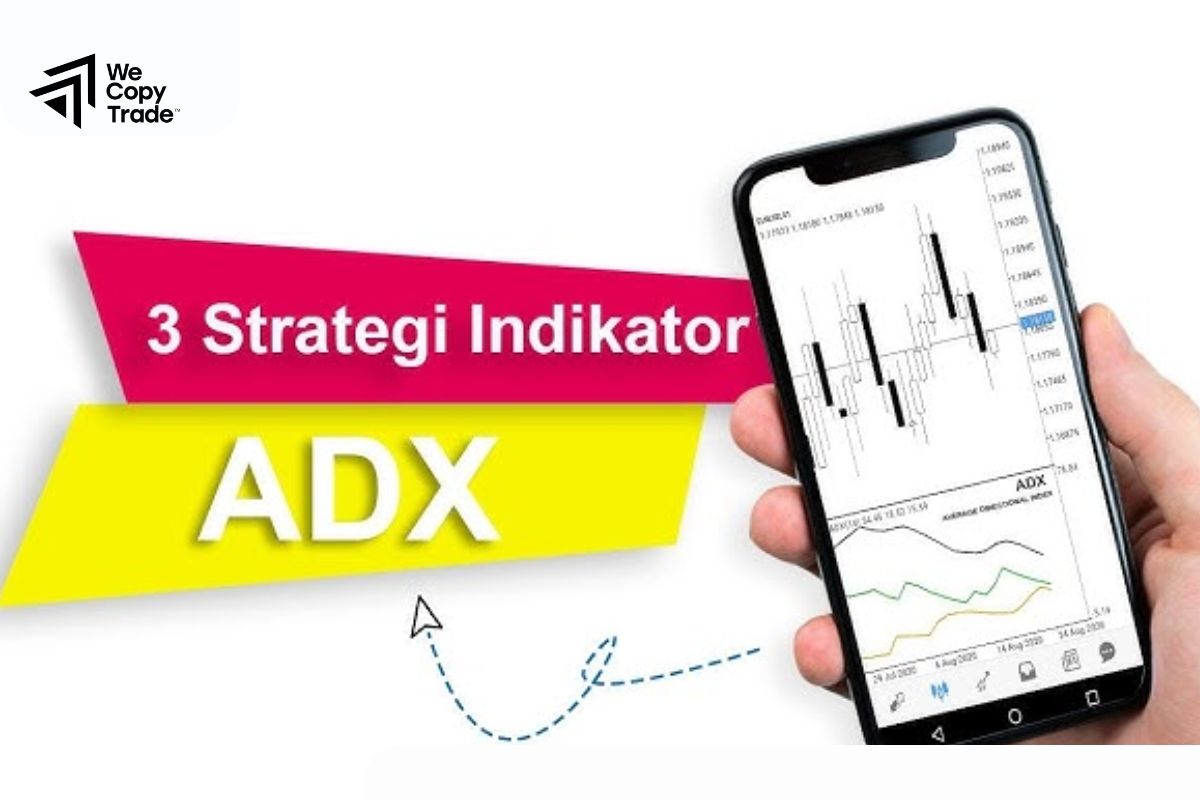
+DM (Positive Directional Movement) and -DM (Negative Directional Movement):
- +DM is a positive movement (+DM) which tells us that the price is trending up during the day compared to the previous day.
- -DM: is a negative movement (-DM) which tells us that the price is trending down during the day compared to the previous day.
True Range (TR):
TR is a measure of how strong or weak the price is moving in a day.
+DI (Positive Directional Indicator) and -DI (Negative Directional Indicator):
- +DI: is an indicator that shows the strength of the uptrend. When +DI is higher than -DI, the uptrend is dominant.
- -DI: is an indicator that shows the strength of the downtrend. When -DI is higher than +DI, it means the downtrend is dominant.
DX (Directional Movement Index) is an indicator that shows the difference between the strength of the uptrend and the downtrend. The value of DX ranges from 0 to 100. The higher the DX, the larger the difference between +DI and -DI, which means the trend is stronger.
ADX (Average Directional Index) is an indicator calculated based on DX. It tells us the overall strength of a trend, regardless of whether it is an uptrend or a downtrend.
ADX Value:
- ADX < 25: The market has no clear trend.
- ADX > 25: The market is in a clear trend.
- ADX > 40: The trend is very strong.
The Average Directional Index vs. The Aroon Indicator

ADX and Aroon are both useful tools in technical analysis, helping investors determine the direction and strength of a trend through positive or negative indicators. However, these two indicators have differences:
- Number of lines:
- ADX: Includes 3 lines: +DI, -DI and ADX.
- Aroon: Includes 2 lines: Aroon Up and Aroon Down.
- Calculation method: The calculation formulas of ADX and Aroon are different, leading to different ways in which they react to price fluctuations.
- Interpretation:
- ADX: focuses on the overall strength of the trend. When ADX is high, the trend is strong, and vice versa.
- Aroon: focuses on determining the start and end of a trend. When Aroon Up is higher than Aroon Down, the uptrend is strong, and vice versa.
Limitations of Using the ADX
In addition to being a useful tool in technical analysis, ADX also has certain limitations that you need to be aware of:
- “Slow” compared to the market: ADX is a trend-following indicator, which means it reacts slower than short-term price fluctuations. This can cause you to enter or exit orders late, miss out on profitable opportunities or take on additional risks.
- ADX only tells you whether the current trend is strong or weak, but does not tell you whether the market is up or down. You need to combine ADX with other indicators such as +DI and -DI to clearly determine the direction of the trend.
- Similar to any other technical indicator, ADX can give false signals, especially in volatile or sideways markets. This can lead to wrong trading decisions.
Strategic Use of ADX
ADX is an extremely useful tool in technical analysis, helping investors determine the strength and direction of a trend. Here are some of the top effective strategies when combining ADX with other indicators and tools:
Breakout Strategy
- When ADX falls below 25 and approaches 0, this indicates that the market has been in a downtrend for a while and a bullish reversal may be imminent.
- Conversely, when ADX rises above 75 and approaches 100, this indicates that the market has been in an uptrend for a while and a bearish reversal may be imminent.
Holy Grail Strategy
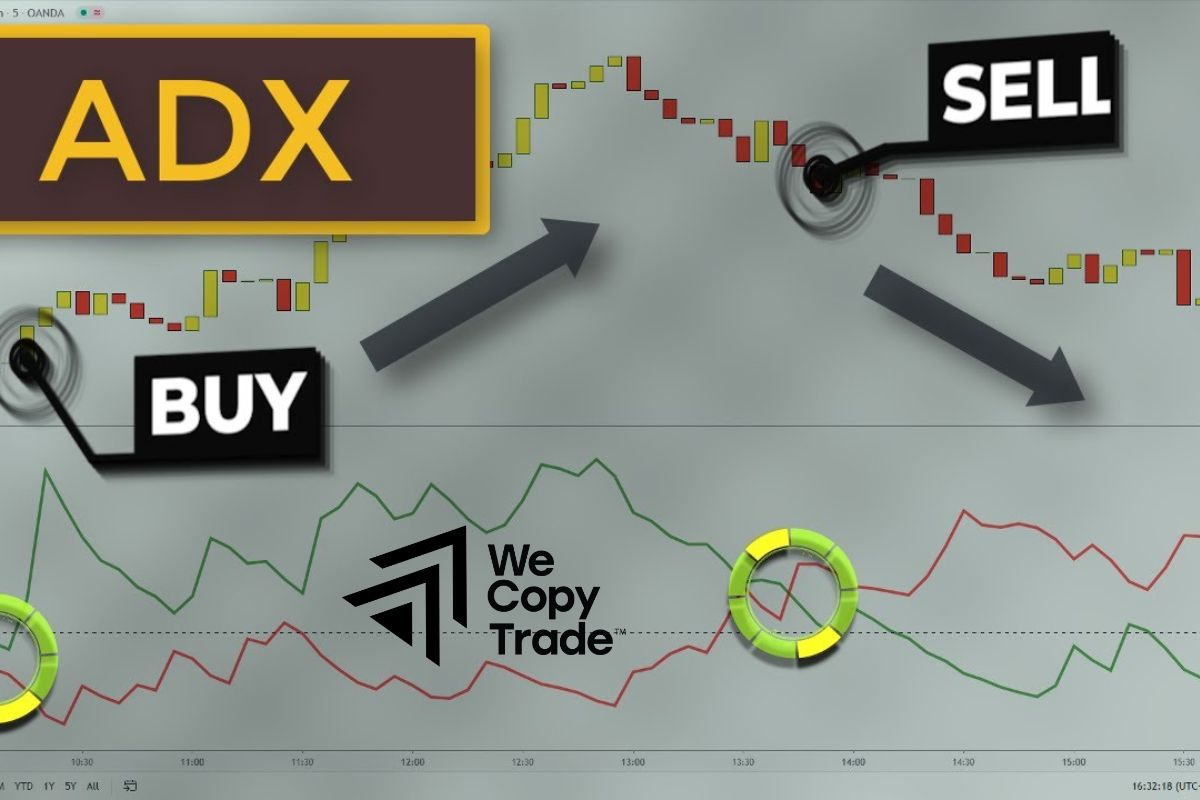
- When ADX is greater than 30 and price breaks above the MA, it is a buy signal.
- When ADX is greater than 30 and price breaks below the MA, it is a sell signal.
Strategy combined with Parabolic SAR
- When ADX and Parabolic SAR give a consensus signal about a trend, that is when you should enter the order.
- Parabolic SAR will help you adjust your stop loss order to follow the price, minimizing risk.
Price divergence strategy
When the ADX peak is lower than the price peak (or vice versa), it is a sign of divergence and can signal a reversal.
Day trading strategy
- When ADX is greater than 50 and the price is rising, it is a buy signal.
- When ADX is less than 50 and the price is falling, it is a sell or exit signal.
Conclusion
In conclusion, ADX is an indispensable tool when conducting technical analysis. It helps us understand the strength of market trends, providing useful information in predicting prices. However, to be able to make the right investment decisions, do not forget to combine it with other tools.