













Do you wonder why so many people invest successfully but many do not? The answer will all be in the secret “Stochastic Oscillator” to help you orient yourself properly right below. Don’t miss the opportunity to become a successful trader with the following golden tips!
Stochastic Oscillator: A Tool for Measuring Price Momentum

The stochastic oscillator acts as a compass to help investors navigate the stock market. It tells us where a stock’s price is relative to its price range over a given period of time.
The important role of the stochastic oscillator:
- Identify overbought/oversold zones: Helps investors recognize when a stock has risen too fast or fallen too deep, thereby making appropriate buying and selling decisions.
- Measure momentum: Indicates the strength of the current trend. If momentum increases sharply, the oscillator will increase and vice versa.
- Forecast reversal points: When the oscillator generates divergence signals, it can signal an impending trend reversal.
See now:
- Guide Step By Step How To Become A Successful Trader
- How To Start Learning Technical Analysis Before Trading?
- The 5 Best Momentum Indicators to Analyze Trend Strength
- Top 7 Best Volatility Indicators in the Market Updated 2024
Formula for the Stochastic Oscillator
The stochastic oscillator is calculated based on two main values: %K and %D.
This is the core value of the indicator, indicating the current position of the closing price relative to the price range over a given period of time. The formula for calculating %K is as follows:
%K = [(Last Close – Low) / (High – Low)] x 100
Where:
- Last Close: The price at which a stock closed in the most recent trading session.
- Low: The lowest price the stock reached during the predetermined period.
- High: The highest price the stock reached during the same period.
- %D: This is a moving average of %K, which helps smooth out the %K line and remove some of the noise. Typically, %D is calculated by taking a simple MA (SMA) of %K over 3 periods.
%D = 3-day SMA of %K
- %K: The closer the %K value is to 100, the closer the closing price is to the highest price during that period, indicating a strong uptrend. Conversely, the closer the %K value is to 0, the closer the closing price is to the lowest price, indicating a strong downtrend.
- %D: The %D line helps determine the overall trend of %K. When %K and %D intersect or diverge, it can signal a change in trend.
Boundaries: Typically, the boundaries used to determine overbought and oversold zones are 80 and 20. However, traders can adjust these boundaries according to their preferences and trading strategies.
How does the stochastic indicator work?
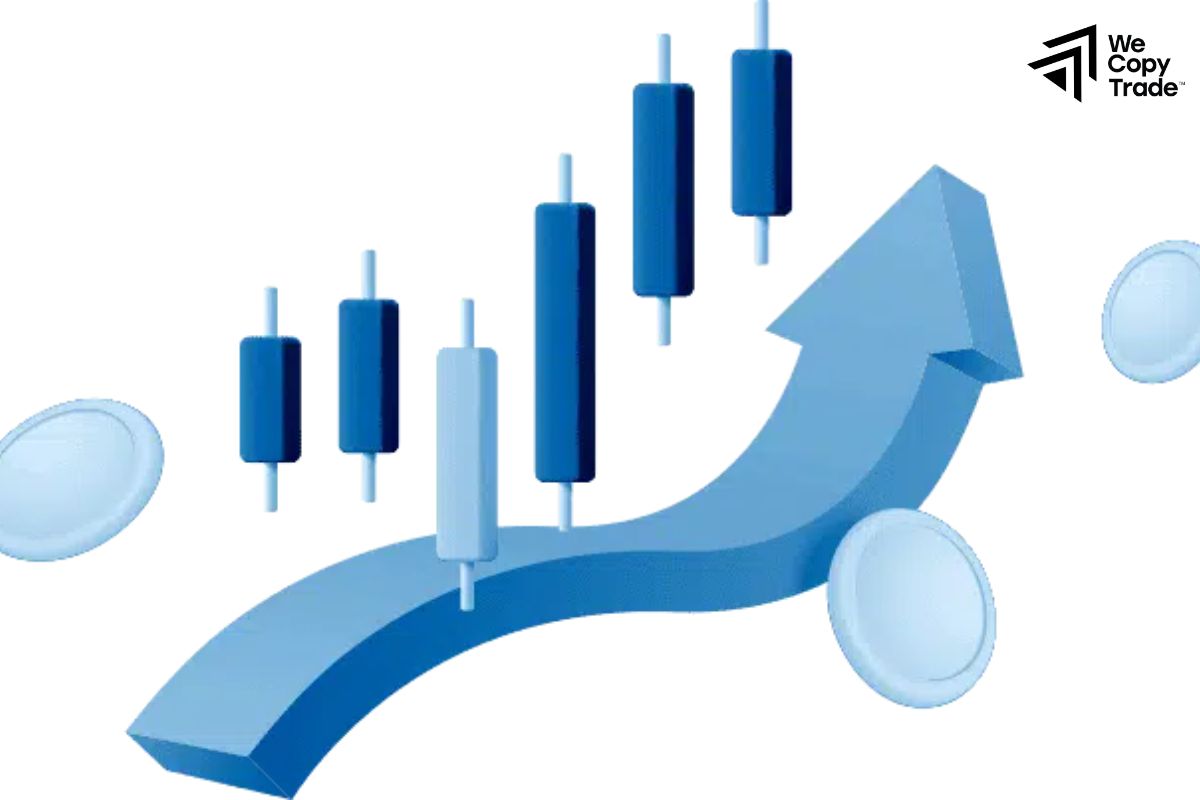
The stochastic oscillator works by comparing the closing price index with its price range over a certain period of time. If the comparison results show that the closing price is close to the high price, this means that investors are very interested in the stock, causing the price to be pushed up. Conversely, when the results show that the closing price is close to the low price, it means that investors are feeling insecure and trying to sell off the stock, causing the price to quickly fall.
Relative Strength Index (RSI) vs. Stochastic Oscillator
Both the RSI and the Stochastic Oscillator are useful tools for helping traders identify potential entry and exit points. However, each indicator has its own advantages and disadvantages, making it suitable for different market situations.
When to use RSI and when to use Stochastic Oscillator?
Identifying overbought/oversold zones:
- RSI: When the RSI is above 70, it indicates that the market is overbought. Conversely, when the RSI is below 30, the market is oversold.
- Stochastic Oscillator: When the Stochastic value is above 80, the market is overbought. When the value is below 20, the market is oversold.
Divergence:
- Both the RSI and the Stochastic Oscillator can be used to identify divergence, a signal that the current trend may be reversing.
- Constant divergence: When the price and the indicator move in opposite directions, forming inconsistent peaks and troughs.
- Hidden Divergence: When the price and indicator move in the same direction but at different speeds.
Crossover:
- RSI: When the RSI line crosses the moving average, it can generate a buy or sell signal.
- Stochastic Oscillator: When the %K line crosses the %D line, it can also generate a buy or sell signal.
So which indicator should you choose?
- RSI is often used to measure the relative momentum of prices. It is more effective in markets with clear trends.
- Stochastic Oscillator: Measures the position of the closing price relative to the price range over a certain period of time. Stochastic Oscillator works better in sideways or highly volatile markets.
Each indicator is an extremely effective tool in market analysis if you know how to understand the rules of operation and combine them together to suit your own circumstances. Each investor has a different trading style. Experiment with different RSI and Stochastic Oscillator settings to find what works best for you. And remember that any method has its limitations, so always place a stop loss to limit your risk when trading.
Limitations of the Stochastic Oscillator
Nothing is absolute, Stochastic Oscillator also has certain limitations that investors need to pay attention to:
One of the most important issues when using a Stochastic Oscillator is that it can generate false signals. This means that the indicator signals to buy or sell, but the price moves in the opposite direction, leading to losing trades. The next challenge is large market fluctuations. Stochastic Oscillators can have trouble keeping up with rapid price changes, leading to many false signals, specifically in short trading.

How to minimize risks when using a Stochastic Oscillator?
- Do not rely on a single indicator to make trading decisions. Combine Stochastic Oscillator with other indicators such as Moving Average, Bollinger Bands to confirm signals.
- Before making a trading decision based on Stochastic Oscillator signals, clearly identify the current market trend. Only trade in the direction of the trend to increase the chance of success.
- Always place a stop loss order to limit losses in case the market does not move as expected.
How to use the stochastic oscillator
As defined above, the Stochastic Oscillator plays an important role in telling you when a stock’s price has risen too fast or fallen too far. So when to buy, when to sell?
- When the Stochastic Oscillator value exceeds 80, it indicates that the stock is overbought and may be about to decline.
- Conversely, when the value is below 20, the stock is oversold and may be about to rise.

However, it is not always that simple! The same overbought or oversold signal can mean different things depending on:
- Current trend: If the market is in a strong uptrend, an overbought signal may just be a small correction before continuing to rise.
- Duration: Overbought or oversold signals can last for quite a while, especially in volatile markets.
- Investment strategy: Every investor has a different strategy. Some people will take advantage of the opportunity to buy when the market is oversold, while others choose to sell when the market is overbought.
So how to use the Stochastic Oscillator effectively?
- Combine with other indicators: Do not rely on only one indicator. Combine Stochastic Oscillator with other indicators such as Moving Average, Bollinger Bands to confirm the signal.
- Fundamental analysis: Do not forget to analyze the fundamentals of the company. A company with good business results will often have an increasing stock price, regardless of the signal of Stochastic Oscillator.
- Risk management: Always place a stop loss order to limit losses in case the market does not move as expected.
Conclusion
In conclusion, the stochastic oscillator is a useful tool to help investors better understand market momentum and make better trading decisions. However, it is not a perfect forecasting tool, you need to combine it with other knowledge and experience to make the final investment decision.
See more: