













One term you will certainly encounter a lot when starting to analyze market price investments is support and resistance levels. So what do they mean and what role do they play in investment research? Let’s learn about them together.
What is support and resistance levels?
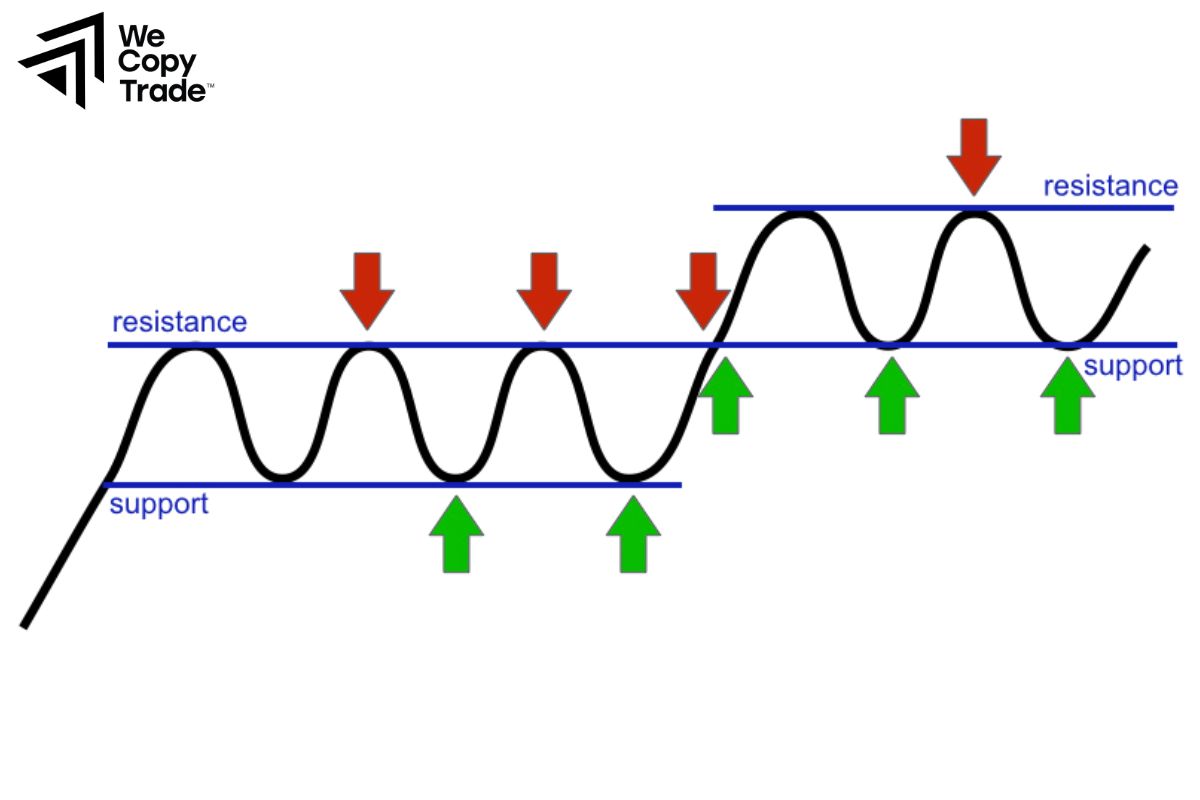
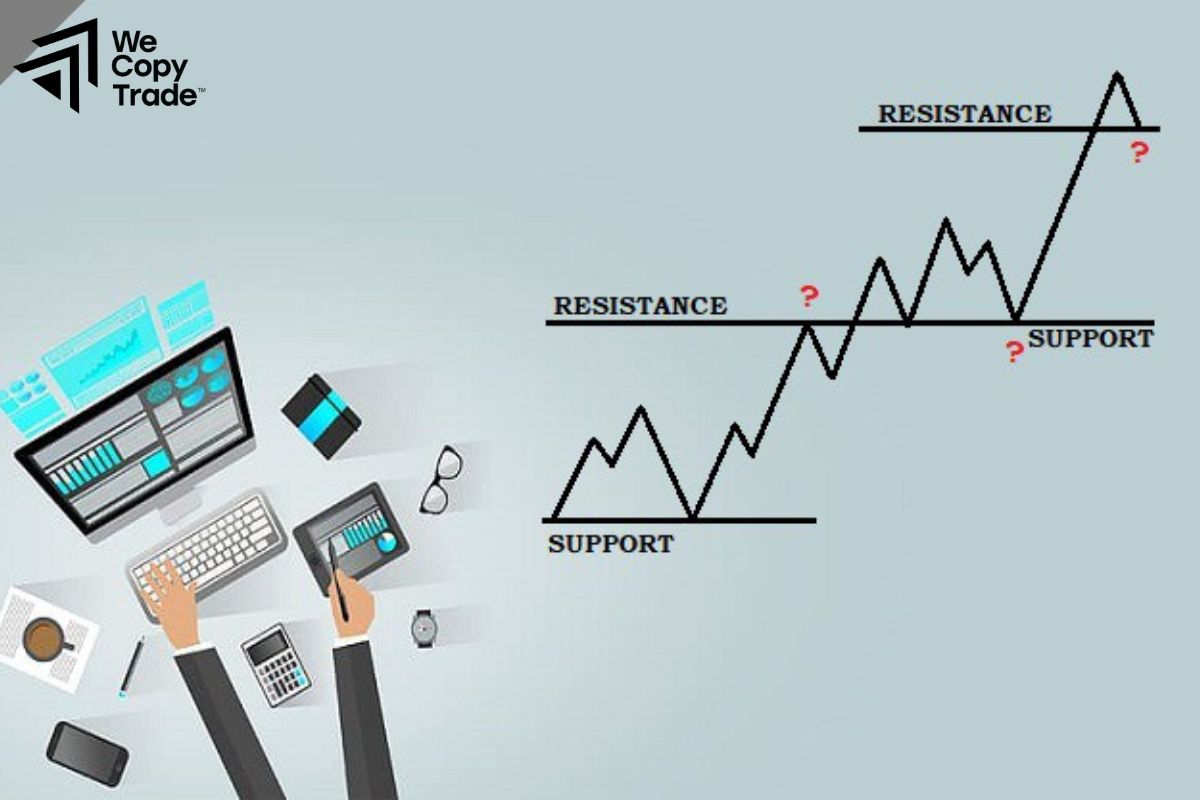
Support and resistance act as barriers that make it difficult for prices to break through. There are two main reasons that unintentionally create this barrier:
- Investor psychology: When prices fall, many investors think that stocks have become too cheap and start buying, creating demand to push prices back up. Conversely, when prices rise too high, they worry that prices may fall and start selling, creating downward pressure on prices.
- Pending orders: Many investors place buy or sell orders at specific price levels. When prices reach these levels, pending orders will be activated, creating large buying or selling forces, making it difficult for prices to break through.
See now:
- Guide Step By Step How To Become A Successful Trader
- The 5 Best Momentum Indicators to Analyze Trend Strength
- Top 7 Best Volatility Indicators in the Market Updated 2024
- What is ADX? Effective Trading Average Directional Index
What is support?
Support is considered a safety net for the price. Because, when the price drops too quickly and touches this net, it will bounce back because there are many people willing to buy at such a low price.
What is resistance level?
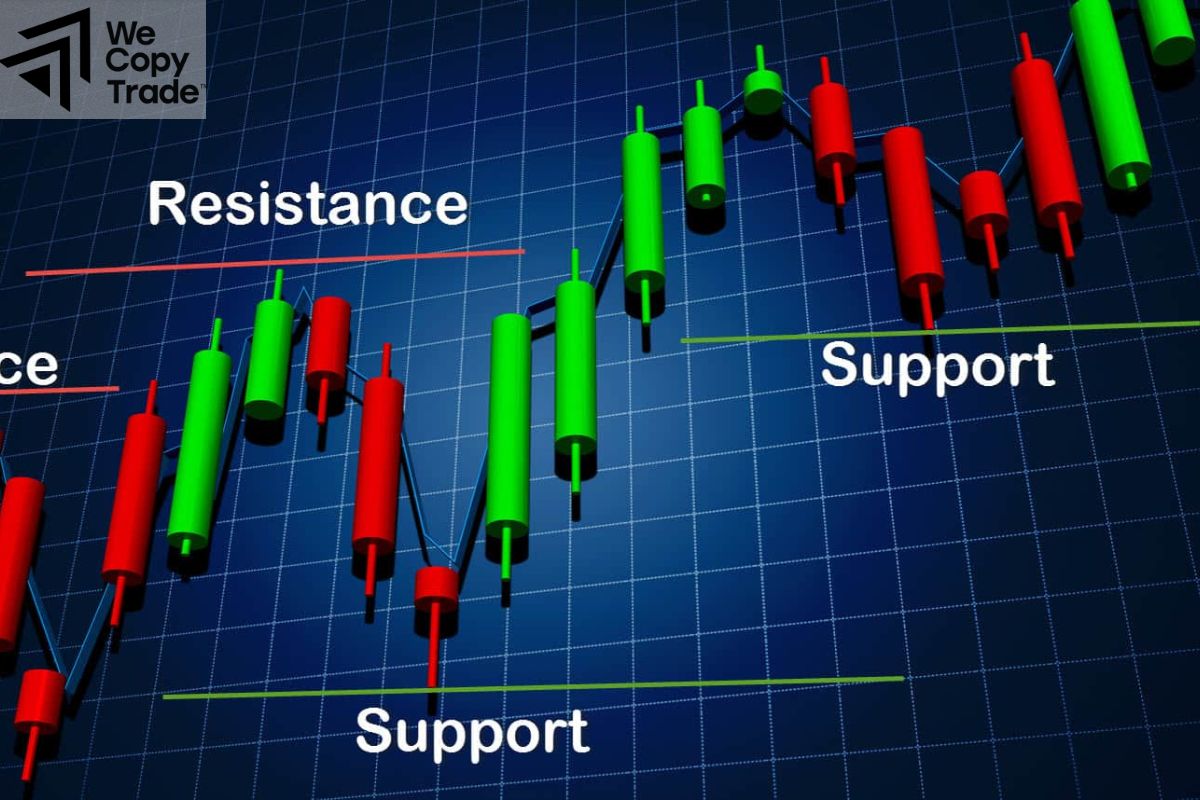
On the contrary, resistance is a point that the price can hardly overcome. Because, when the price increases too quickly, many investors want to sell the price to make a profit. This selling force will make it difficult for the price to overcome and may turn around and go down.
Why are support and resistance important?
Support and resistance are the points where many investors often place buy or sell orders. When the price breaks a support or resistance level, it is often a signal that the trend has changed. Therefore, when the market changes too quickly, these orders will be activated to help reduce risk or make a profit for investors.
Types of Support and Resistance Lines
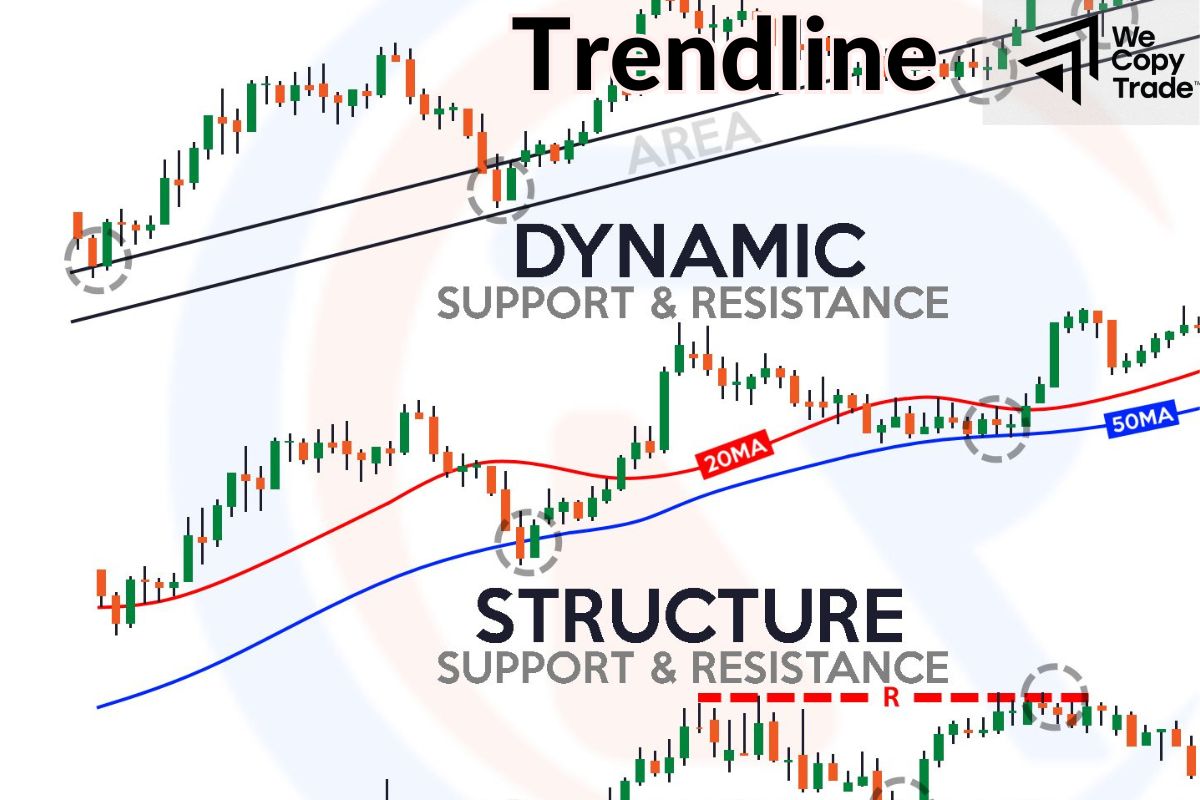
There are different types of support and resistance levels, such as:
- Static support/resistance levels: Formed by the highest and lowest price levels in the past.
- Dynamic support/resistance levels: Move with the trend of the market.
- Psychological support/resistance levels: Formed based on round prices (e.g. 100, 1000,…) or psychologically important price levels.
How to identify support and resistance level
Here are some interesting tips on how to identify invisible walls that prevent prices from moving:
- Potential support and resistance levels are considered based on the points at which prices have turned around in the past.
- Connect consecutive higher points to form a resistance line and consecutive lower points to form a support line.
- Using technical analysis such as moving averages, pivot points can help identify support and resistance levels more accurately.
- Analyze chart patterns such as triangles, rectangles to discover important information about support and resistance levels.
How to draw support and resistance lines
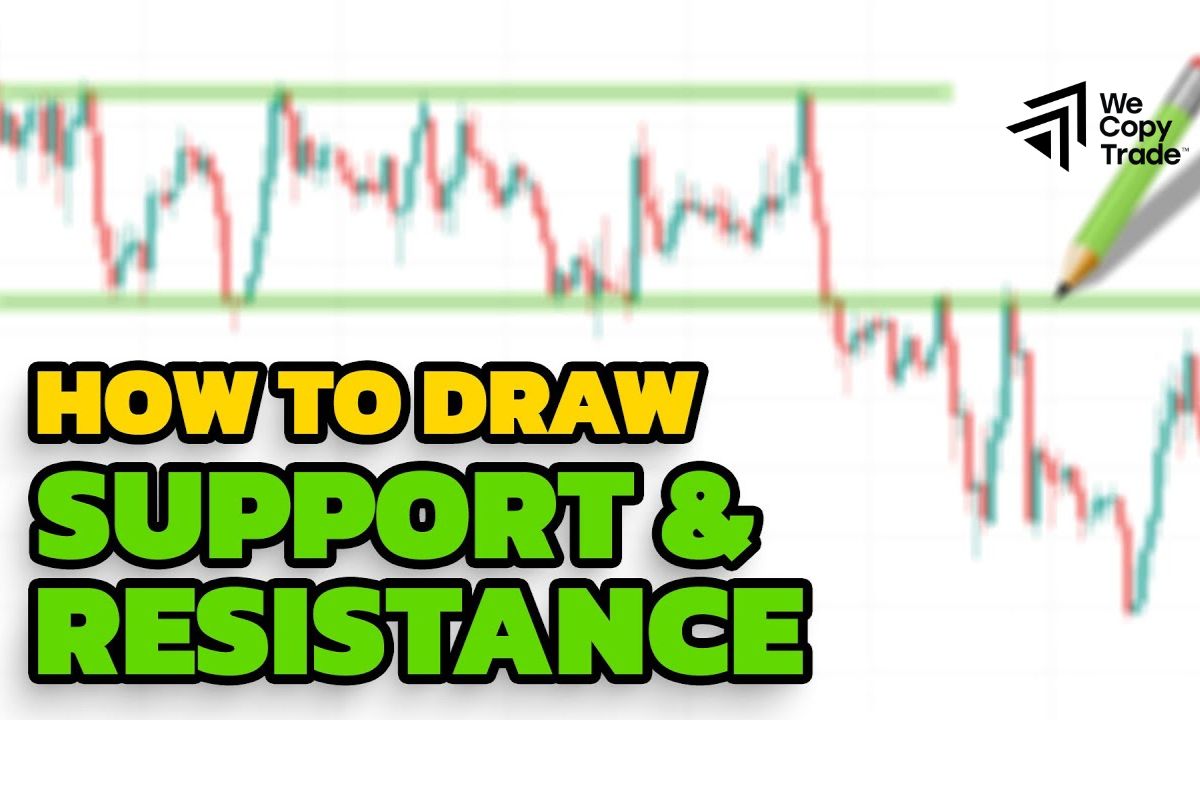
Next, let’s learn step by step how to draw “invisible boundaries” that cause prices to stop or reverse:
- Choose the right time frame: The larger the time frame, the clearer the overall picture of the market.
- Find reversal points: Look at the chart to find points where prices have changed trends many times.
- Draw lines: Use the horizontal line drawing tool to connect the corresponding highs or lows.
- Check the validity: The more times a support or resistance level is tested by the price, the more reliable it is.
Rules For Drawing Support and Resistance
Here are some important rules to keep in mind to complete your support and resistance picture:
Find the “fulcrums” in the market
- To accurately visualize this barrier, the first step you need to do is to determine its limiting height by connecting the highest peaks and lowest troughs together.
- Don’t be too perfectionist when determining support and resistance levels
- The support and resistance levels you determine don’t necessarily have to match the peaks and troughs exactly. The important thing is to find areas where the price frequently stops and reverses.
Don’t let the “jungle” of support and resistance levels distract you
When analyzing the chart, you will see many different support and resistance levels. Instead of getting lost in the chaos, focus on the key levels, the levels that the price frequently interacts with and have a big influence on the trend.
Don’t look too far, focus on the recent
The most potential time period for you to draw your support and resistance levels is within the last 6 months. Don’t look too far because data too far in the past may no longer be suitable for the current market trend.
Support and resistance trading strategy
Support and resistance levels are extremely useful tools in trading. However, to be able to use this tool most effectively, we should prepare specific plans. Here I will share 3 top trading strategies based on support and resistance levels:
- Range trading:
As you know, prices fluctuate within a certain range, limited by support and resistance levels. Therefore, we should buy when the price touches the support level and sell when the price touches the resistance level.
- Breakout trading:
We can buy when the price breaks the resistance level and sell when the price breaks the support level because when the price breaks through an important support or resistance level, a new trend can start.
- Trend trading:
This method uses trend lines to determine the direction of the market. Specifically, buy when the price bounces from the uptrend line and sell when the price bounces from the downtrend line.
Conclusion
In conclusion, support and resistance levels are a useful tool in technical analysis, but don’t rely on them too much. Combine them with other factors like news, volume, and price action signals to make better trading decisions.
See more: