












Explore the world of Quantitative Trading and revolutionize your approach to the financial markets. By harnessing advanced algorithms, data-driven strategies, and automated systems, you can optimize your trades, manage risks effectively, and boost profitability. Don’t miss out, take control of your trading strategy and start achieving consistent results today!
What is Quantitative Trading?
Quantitative Trading is a trading strategy that uses mathematical models, statistical analysis, and advanced algorithms to identify profitable opportunities in financial markets. Instead of relying on intuition or traditional trading methods, quantitative trading leverages data and computational power to make informed, objective decisions.

Traders and firms utilize historical and real-time data to analyze patterns, trends, and market behavior. The process often involves automation, where computers execute trades based on pre-set algorithms and conditions without manual intervention.
See now:
- What Are Trade Wars? Factors of Good or Bad Trade Wars
- The Power of Trend Confirmation Indicator To Trading Result
- Different Types of Economic Sanctions you should know
6 Popular Quantitative Trading Models and Strategies
Here are 6 popular Quantitative Trading models and strategies widely used by traders and institutions to optimize their trading performance:
Mean Reversion Strategy
This strategy assumes that asset prices will revert to their historical average over time. Traders identify securities that are overbought or oversold based on statistical measures like Bollinger Bands or moving averages. When prices deviate significantly from the mean, traders enter positions expecting a reversal back to the average.
- Example: Buying a stock when its price drops far below the moving average.
Momentum Strategy

Momentum strategies focus on following trends in asset prices. Traders aim to capitalize on assets that are showing strong price movement in one direction, either upward or downward. By using indicators like RSI and moving average crossovers, traders identify assets with high momentum and ride the trend until signs of reversal appear.
- Example: Buying stocks that have consistently risen over the past 3-6 months.
Statistical Arbitrage
Statistical arbitrage involves identifying mispricings between correlated assets using mathematical models. This strategy often pairs two securities and takes opposing positions going long on the undervalued asset and short on the overvalued one. The goal is to profit as the prices eventually converge.
- Example: Trading pairs like oil and energy stocks when their price relationship diverges.
High-Frequency Trading (HFT)

High-frequency trading uses algorithms to execute a large number of orders at extremely high speeds. HFT strategies exploit tiny price inefficiencies, market microstructure, and arbitrage opportunities that occur over milliseconds.
- Example: Using algorithmic systems to profit from small price changes across multiple exchanges.
Machine Learning-Based Models
Modern quantitative trading leverages machine learning to analyze vast datasets, identify patterns, and make predictions. These models adapt to changing market conditions by learning from historical data. Common approaches include neural networks, decision trees, and reinforcement learning.
- Example: Predicting future stock prices using historical price movements and news sentiment analysis.
Trend Following Strategy
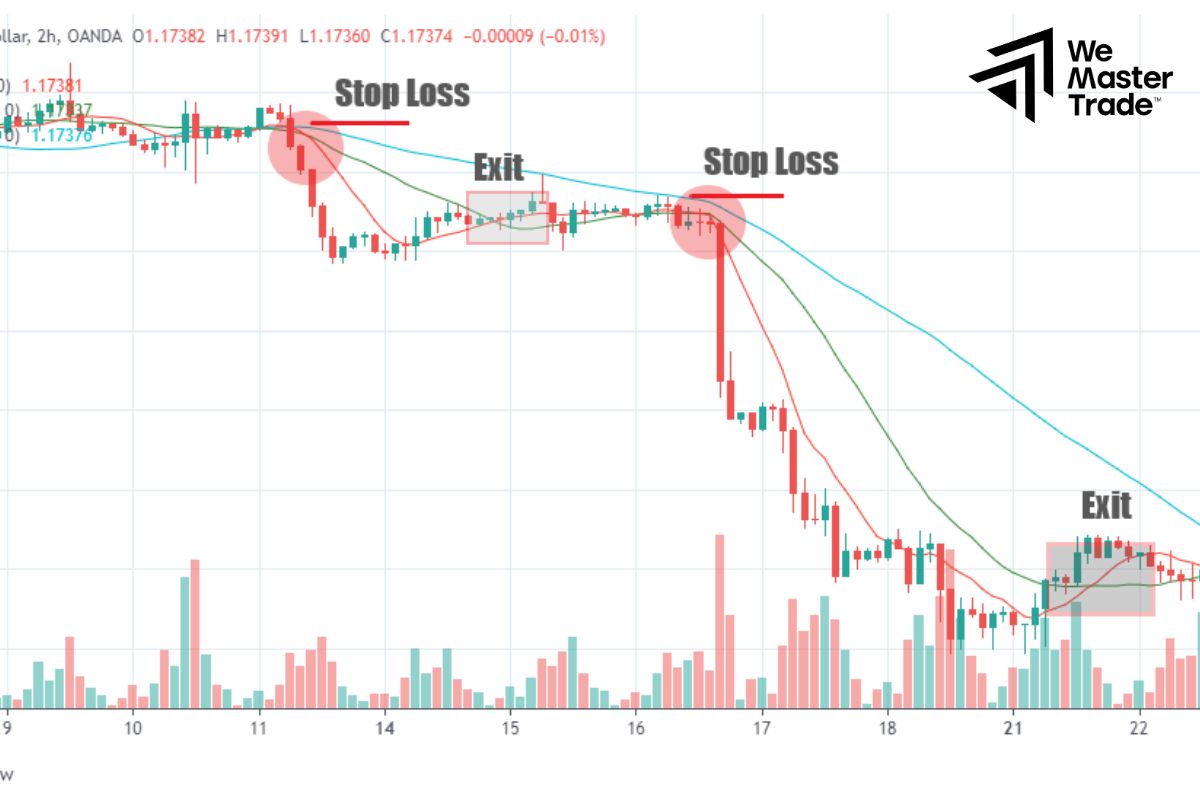
Trend following focuses on identifying and capitalizing on long-term price trends across different assets. Traders use tools like moving averages, trendlines, and breakouts to enter positions that align with the prevailing trend. Unlike momentum, this strategy emphasizes long-term consistency.
- Example: Entering a trade when a stock breaks its 52-week high.
Some Tips for Success with Quant Trading
Here are 4 essential steps for success in Quantitative Trading:
Step 1: Master the Fundamentals
Start with a solid foundation in mathematics, statistics, and programming. Learn key programming languages like Python, R, or C++, which are essential for building and running trading algorithms. Combine this with a strong understanding of financial markets, asset classes, and trading mechanics to connect quantitative strategies with real-world market behavior.

- Focus on learning: Linear algebra, probability, machine learning basics, and time series analysis.
- Tools to explore: Libraries like Pandas, NumPy, and frameworks such as TensorFlow for data manipulation and modeling.
Step 2: Backtest and Refine Your Strategies
Thoroughly test your trading models using historical data to evaluate their performance. Analyze key metrics like Sharpe ratio, drawdown, and ROI to measure success. Be cautious of overfitting, where models perform well in backtesting but fail in live markets.
- Steps to ensure reliability: Use out-of-sample testing, walk-forward analysis, and stress testing to validate your strategies.
- Tip: Test under different market conditions, including high volatility, to understand your model’s limits.
Step 3: Prioritize Risk Management
Effective risk management is crucial for long-term success in quantitative trading. Implement risk controls such as stop-loss orders, position sizing, and exposure limits to protect your capital from large losses.

- Key metrics to monitor: Value at Risk (VaR), maximum drawdown, and volatility.
- Pro Tip: Diversify your portfolio by applying multiple strategies across different markets and timeframes to reduce risk concentration.
Step 4: Stay Adaptive and Continuously Improve
Markets are dynamic, and successful quantitative traders need to adapt. Continuously monitor the real-time performance of your strategies and update models to reflect changing market conditions. Leverage high-quality data and new advancements in technology like machine learning to refine and evolve your systems.
- What to do: Regularly review trade results, identify areas of improvement, and stress-test for robustness.
- Stay ahead: Keep learning by exploring new techniques and tools in quantitative finance, data science, and AI.
The Pros and Cons of Quantitative Trading
Here are the pros and cons of Quantitative Trading to help you understand its strengths and limitations:
Pros of Quantitative Trading
- Data-Driven Decision Making: Quantitative trading relies on mathematical models and statistical analysis, reducing emotional biases and subjective decisions. This leads to more objective and reliable trades.

- Speed and Efficiency: Automated algorithms can process massive amounts of data and execute trades within milliseconds, far beyond human capability. This is especially beneficial for high-frequency trading.
- Ability to Backtest Strategies: Quantitative models allow traders to test strategies against historical data to evaluate their performance before implementing them in live markets. This minimizes risks and fine-tunes strategies.
- 24/7 Market Monitoring: Algorithms can monitor multiple markets and securities simultaneously, identifying trading opportunities even when traders are not actively engaged.
Cons of Quantitative Trading
- Model Dependency: Quantitative trading relies heavily on the accuracy of models and algorithms. If the model is flawed or does not account for unpredictable market events, it can result in substantial losses.
- High Development Costs: Developing and maintaining sophisticated quantitative trading systems requires significant resources, expertise, and access to advanced technology.
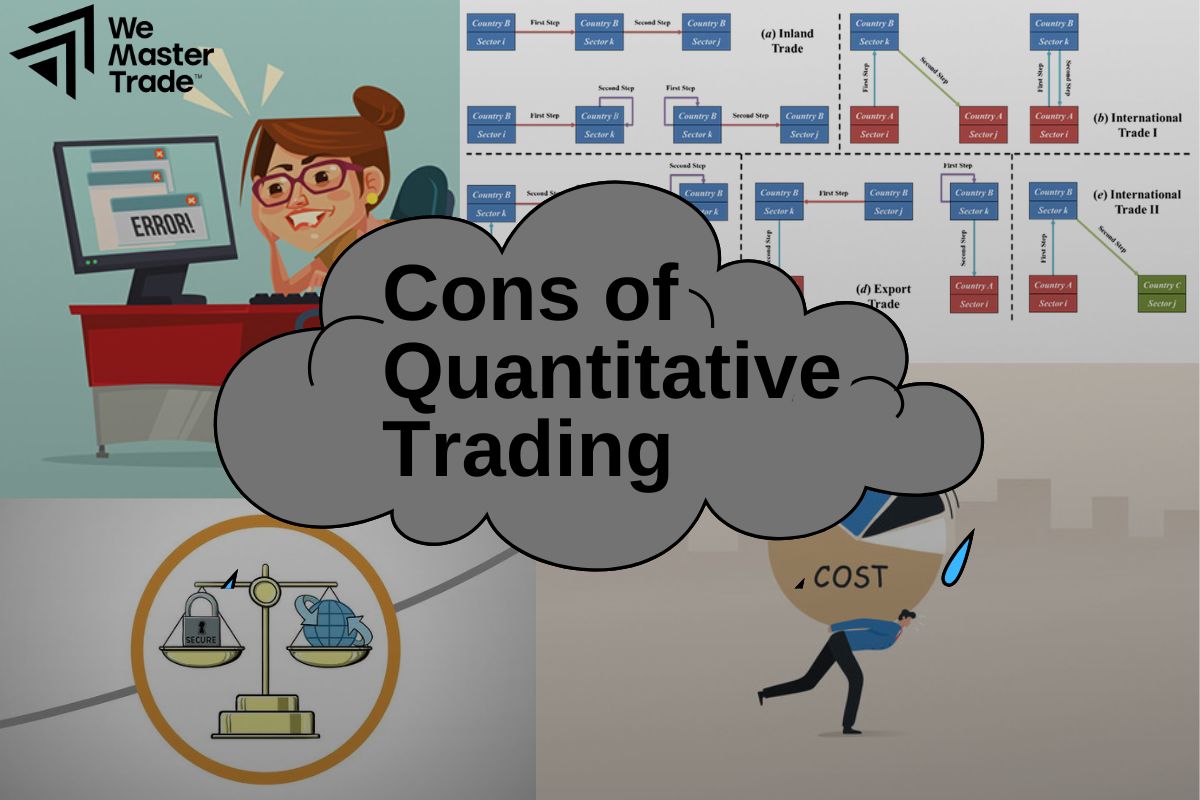
- Technology Failures: Quantitative trading depends on technology and infrastructure. System outages, latency issues, or errors in algorithms can lead to missed opportunities or significant losses.
- Regulatory Challenges: Quantitative and high-frequency trading strategies are increasingly under scrutiny by regulators. Compliance with regulations can add complexity and costs to operations.
Conclusion
In conclusion, Quantitative Trading offers powerful opportunities for traders to leverage data-driven strategies, automate decisions, and maximize efficiency in the markets. By using mathematical models, historical data traders can identify profitable patterns and execute high-speed trades. Begin learning, testing, and optimizing your trading models today to stay ahead of the competition! Don’t miss out on unlocking your trading potential with quantitative strategies and take your trading to the next level.
See more: