












In the global financial world, the foreign exchange market is where price fluctuations occur continuously. With a trading volume of up to trillions of USD per day, understanding and grasping market trends in forex not only helps traders make accurate decisions but also significantly reduces risks. The following article will help traders better understand and effectively apply the strategy of trading according to market trends:
What is Market Trend in Forex?
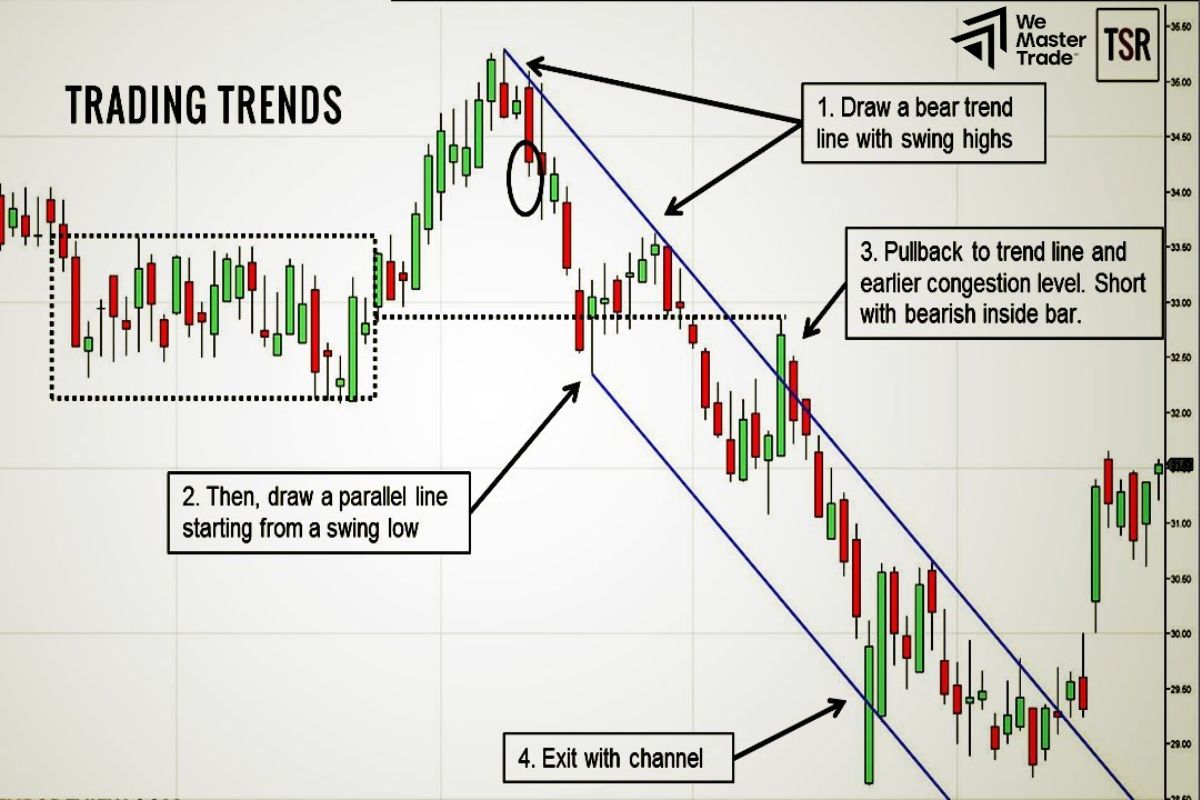
A market trend in forex is the consistent movement of exchange rates in a certain direction over a specific period of time. There are three main types of trends that any trader needs to identify:
- Uptrend: Prices consistently make higher highs and higher lows.
- Downtrend: Prices form lower highs and lower lows.
- Sideways/Range-bound: Prices fluctuate within a certain range without a clear direction.
Understanding these types of trends is the first step to building an effective trading strategy in the forex market.
See now:
- Useful Prop Firm Success Tips For Traders
- Strategy to Optimize Prop Firm Investment Decisions
- Prop Firm Emotional Control Secret And Stay Mentally Stable
Why Should You Care About Market Trends In Forex?
Understanding market trends in forex helps traders orient their actions:
- Optimize entry and exit points.
- Limit risks when the market fluctuates strongly.
- Take advantage of trading opportunities in the direction of the trend to increase the probability of success.
In addition, early recognition of trend reversal signals also helps traders proactively respond instead of being passive in the market.
Trend Levels In Forex
Strong Trend
Represented by long candles, few retracements, prices continuously create new peaks. Traders can prioritize trading in the direction of the trend during this period.
Weak Trend
When the market has a trend but there are many corrections or sideways. Be cautious and consider risk management carefully.
Trend Reversal
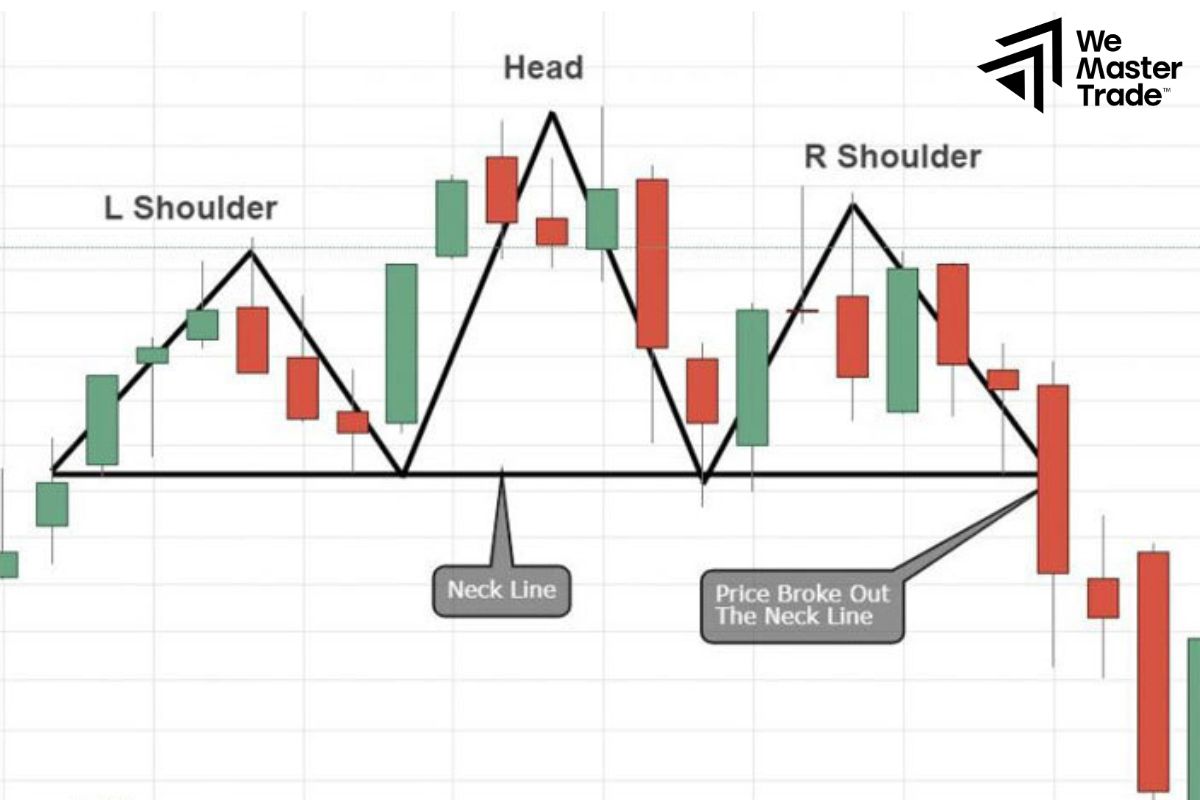
Start with divergence signals, reversal patterns or trendline breakouts. This is the time when traders should adjust their strategies, avoiding “top-fishing” or “bottom-fishing” without basis.
How to Identify Market Trends in Forex
Analyzing Price Action
Observing charts to identify top-bottom patterns, signal candles such as pin bars, engulfing, etc. is one of the most popular methods to detect market trends in forex.
Using technical indicators
Some popular indicators that support trend identification:
- Moving Average: A simple MA line helps identify the current trend by comparing prices with past averages.
- ADX (Average Directional Index): Measures the strength of a trend, values above 25 usually indicate a clear trend.
- MACD: The intersection of two moving averages can signal the start or end of a trend.
- RSI: Although often used to measure overbought/oversold, RSI also reflects changes in trend momentum.
- Bollinger Bands: When prices stick close to the upper or lower bands, it can be a sign of trend continuation or termination.
Market Trend Following Strategies in Forex
Trendline Breakout Strategy
This strategy relies on connecting peaks or troughs to form a trendline. When prices clearly break the trendline, traders can enter orders in the direction of the breakout, with a stop loss to preserve capital.
Ascending and Descending Triangle Patterns
- Ascending triangles often appear in uptrends, signaling strong buying pressure.
- Descending triangles are common in downtrends, indicating overwhelming selling pressure.
The strategy is to wait for prices to break the pattern’s boundaries with increasing trading volume to enter orders in the direction of the market trend in forex.
“Catch a Wave” Strategy – Catch the Wave Following the Trend
This strategy combines EMA (short term) and SMA (long term) to identify market waves:
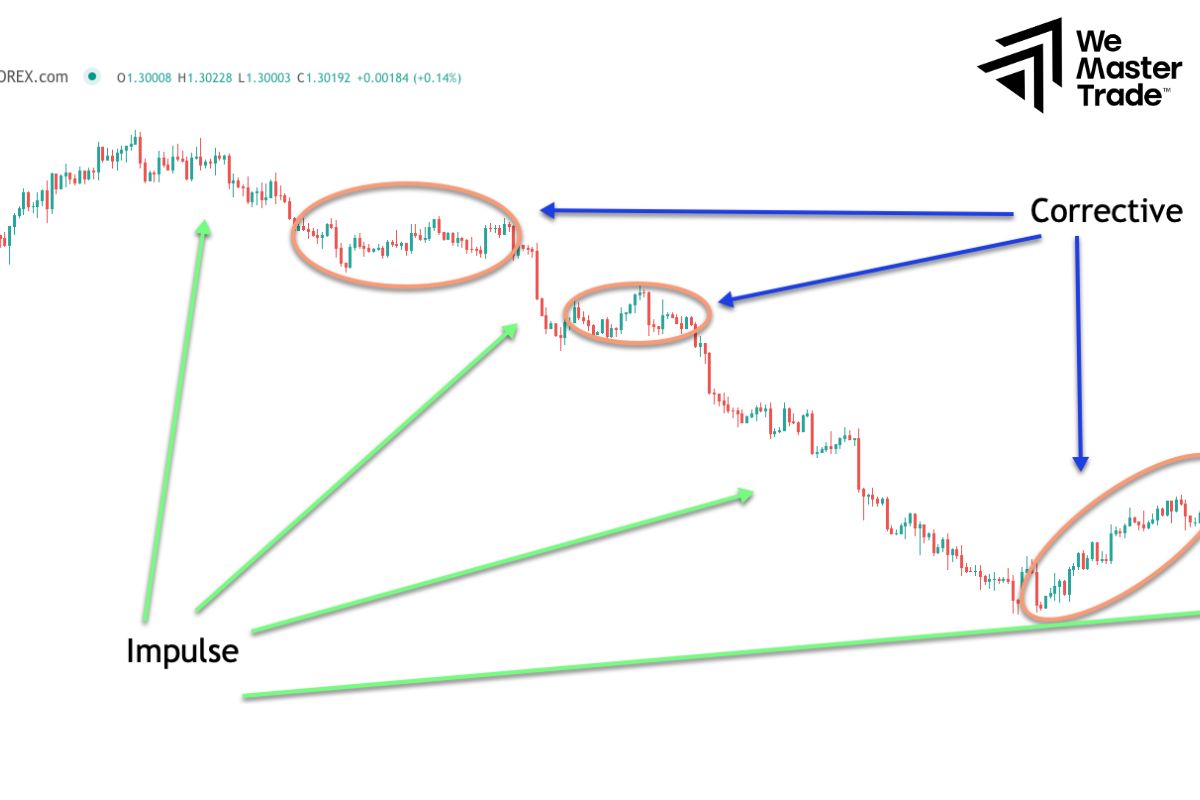
- Impulse wave: Price moves in the direction of the main trend, usually consisting of 5 oscillations.
- Corrective wave: Price moves against the main trend, consisting of 3 oscillations.
Based on wave counting, traders can determine whether to hold the order or exit when the market trend in forex is changing.
Counter-Trend Trading – Should You?
Counter-trend strategies can be profitable if traders time the reversal correctly. However, the risk level is high and requires advanced analytical experience.
Should only be used when there are clear signs of the end of the current trend such as MACD divergence, RSI, or strong reversal candlestick patterns (such as Morning Star, Shooting Star …).
Risks When Trading Following the Trend
Although market trends in forex are the foundation of many trading strategies, there are also potential risks:
- False trend: Price breaks out in the short term but then returns to the old zone.
- FOMO (fear of missing out): Causes traders to enter orders too early or too late, not at the right time.
- Noisy market: Especially in the Asian session or when there is no news, the trend can be weak and prone to sudden reversals.
Notes When Applying Market Trends in Forex
- Always combine at least 2 factors to confirm the trend (eg: MA + candlestick pattern).
- Do not trade against the trend unless there is a certain sign.
- Use reasonable stop-loss to avoid risks when the trend suddenly reverses.
- Prioritize capital management rather than trying to catch every opportunity.
Conclusion
In short, understanding and correctly applying market trends in forex is vital for any trader – from novice to professional. By using the right technical indicators, combined with price patterns and risk management strategies, traders can take full advantage of market trends in forex in a proactive, calculated and safe way.
See more: