












A forex flash crash is a sudden, sharp move in a currency pair that happens very quickly and may partially or fully reverse soon after. It is one of the clearest reminders that liquidity can disappear faster than a trader expects.
Flash crashes are rare, but they matter because normal stop-loss assumptions, spreads and execution can break down during extreme conditions. This guide explains how they happen and how traders can prepare risk rules. It is educational only and does not guarantee trading results, challenge outcomes, funded status or payouts.
What is a forex flash crash?

A flash crash is a rapid price drop or spike that occurs over a short period, often minutes or even seconds. In forex, it can affect one currency pair or a group of related pairs, especially when liquidity is thin and orders hit the market aggressively.
The key features are:
- The move is unusually fast.
- Liquidity becomes thin or disappears.
- Stop orders may cascade.
- Spreads may widen.
- Price may recover quickly, but not always.
- Execution can be worse than expected.
A flash crash is not the same as a normal downtrend. It is an extreme market event where the order book can become unstable.
Why forex flash crashes happen
Flash crashes usually come from several factors combining at the wrong time. One cause alone may not be enough, but together they can create a sudden air pocket.
Thin liquidity
Forex liquidity changes by session, holiday and market condition. Around rollover, late US hours, early Asia, holidays or after major news, there may be fewer active participants. When fewer orders are available, a large market order can move price farther.
For session context, review Weekend Gaps in Forex and Holiday Trading Markets, because thin liquidity often matters most when normal participation is reduced.
Stop cascades
Many traders place stop-loss orders around similar technical levels. If price breaks those levels quickly, stops can trigger together. Those stop orders become market orders, adding more pressure to the move.
This is why stop placement matters. A stop is necessary for risk control, but it should be placed where the trade idea is invalidated, not simply where everyone else is likely to place it.
Algorithmic and high-speed reactions
Automated systems can react quickly to price, order flow or news. In unstable liquidity, fast reactions can amplify movement before human traders have time to understand what happened.
This does not mean algorithms are the only cause. It means modern market structure can transmit stress very quickly.
Surprise news or policy shocks
Central bank comments, unexpected economic data, political headlines or policy decisions can force rapid repricing. Currency markets are especially sensitive to interest-rate expectations and macro surprises.
For background, see Central Banks and Financial Markets and US Election Financial Markets.
What happens to orders during a flash crash?
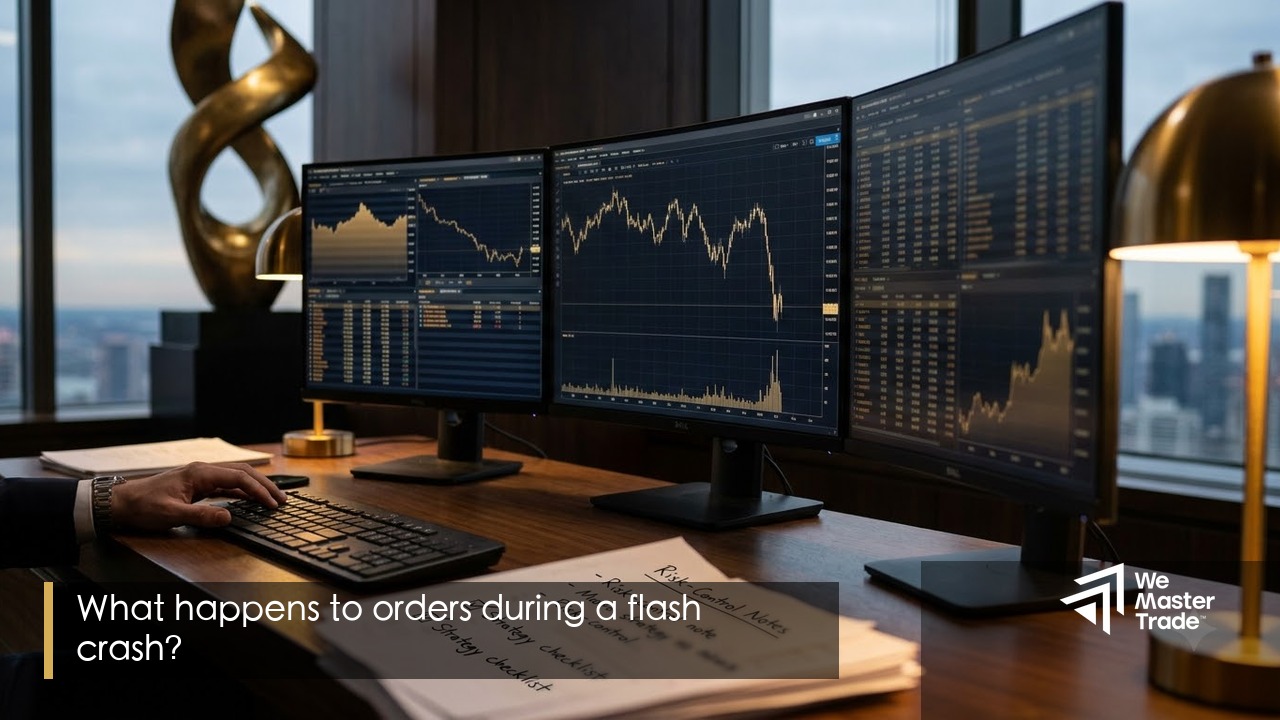
During a flash crash, traders may experience wider spreads, slippage or fills away from expected levels. A stop-loss can still be triggered, but the execution price may be worse than the stop level if the market gaps through available liquidity.
That is the uncomfortable truth: a stop-loss is a risk-control tool, not a guarantee of perfect execution.
This is why position size matters. If a trade is too large for the account, even a small slippage event can become a serious drawdown problem. Review How to Calculate Position Size in Trading and Risk Reward Ratio Mistakes if this is part of your trading plan.
When are flash crashes more likely?
No trader can reliably predict every flash crash, but some conditions deserve caution:
- Thin liquidity sessions.
- Holiday markets.
- Rollover periods.
- Major unexpected news.
- Crowded positioning.
- Heavy stop clusters near obvious levels.
- Weekend reopening after major headlines.
- Markets already under stress.
If a market is already volatile and liquidity is falling, reduce assumptions. A setup that looks normal on the chart can behave abnormally in execution.
How traders can prepare

You cannot remove flash crash risk completely, but you can reduce exposure to it.
Use practical rules:
- Avoid oversized positions.
- Know when liquidity is usually thin.
- Be careful around rollover and session opens.
- Check the economic calendar.
- Avoid holding through major events unless your plan allows it.
- Use alerts and predefined risk limits.
- Stop trading for the day after abnormal slippage or emotional stress.
If you trade a prop firm account, add another layer: daily loss limits, max drawdown, news restrictions and weekend rules. Flash-crash conditions can make these limits matter quickly.
Should traders avoid forex after flash crashes?
No, but traders should respect what flash crashes reveal. They show that markets are not always continuous, spreads are not always stable and stops are not always filled exactly where expected.
The lesson is not fear. The lesson is humility.
A trader who understands tail risk can build a more durable process. That includes smaller sizing, fewer trades around thin liquidity, and a written plan for abnormal events. For broader preparation around fast market conditions, review Trading US Indices Around News Events and Risk Taking in Trading.
FAQ
What is a forex flash crash?
A forex flash crash is a sudden, extreme move in a currency pair that happens very quickly, often during thin liquidity or stressed market conditions.
How long does a flash crash last?
Some flash crashes last seconds or minutes and then recover. Others can leave lasting damage if the event changes market expectations or triggers broader risk reduction.
Can a stop-loss protect me from a flash crash?
A stop-loss can help limit risk, but it cannot guarantee perfect execution. During extreme volatility, slippage can occur if price moves through available liquidity.
Are forex flash crashes predictable?
Not reliably. Traders can identify higher-risk conditions such as thin liquidity, major news and crowded positioning, but they cannot predict every event.
What should prop firm traders check?
Check daily loss limits, max drawdown, news rules, weekend rules, symbol conditions and whether your strategy is suitable for thin-liquidity periods.
Respect liquidity before it disappears
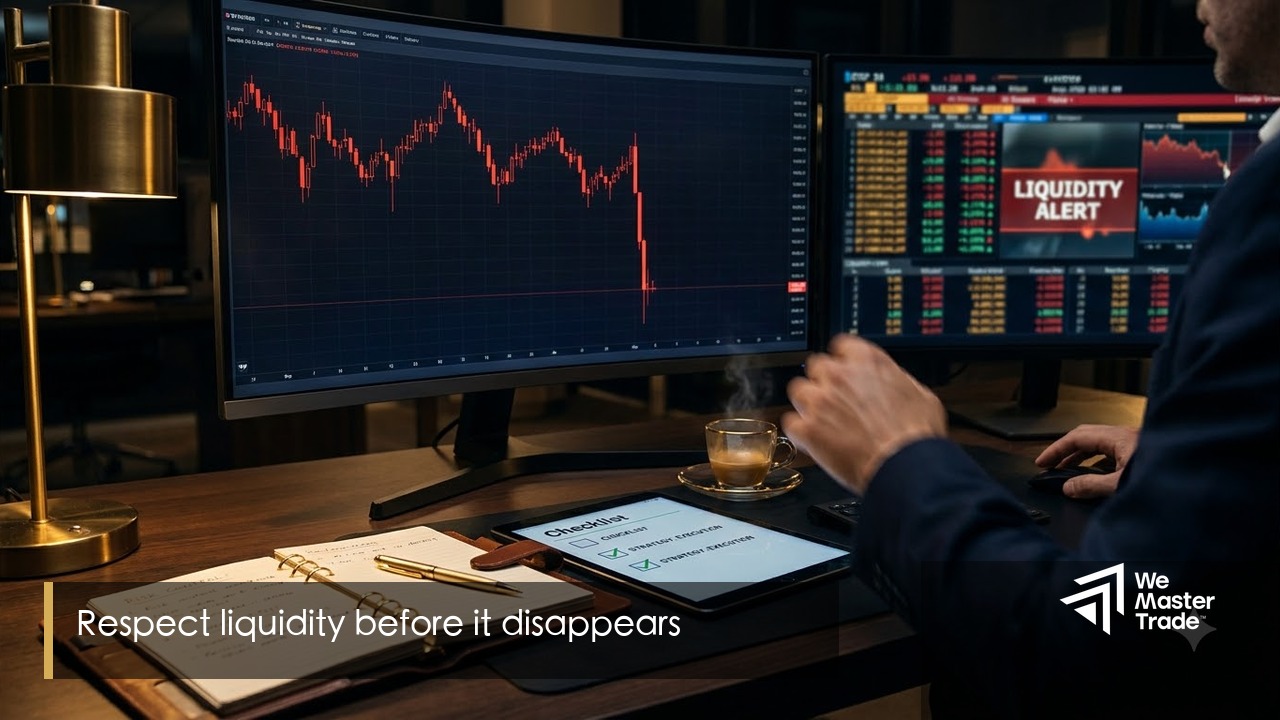
A forex flash crash is a low-frequency but high-impact reminder that risk is not only about direction. It is also about liquidity, execution and account rules.
If you are trading through an evaluation route, review the WeMasterTrade homepage, Trading Challenge and Instant Evaluation conditions before exposing a strategy to fast or thin markets.