











Holiday trading markets can behave differently from normal sessions. Some exchanges close completely. Others operate on shortened hours. Liquidity can thin out, spreads can widen and price action can become less reliable.

For traders, the point is not only knowing whether a market is open. The bigger question is whether trading conditions are good enough for your strategy and account rules.
This article is for educational purposes only. It does not provide financial advice or guarantee trading results, challenge outcomes, funded status or payouts.
What holiday trading markets mean
Holiday trading markets refer to market sessions affected by public holidays, exchange holidays, bank holidays or shortened trading schedules. Different asset classes can be affected in different ways.

For example, a stock exchange may close for a national holiday, while forex remains technically open but liquidity is weaker because banks in a major region are closed. Futures markets may use special hours. Bond markets may close earlier than equities.
Because schedules change by market and region, traders should always check the official calendar for the instrument they trade.
Why holidays affect trading conditions
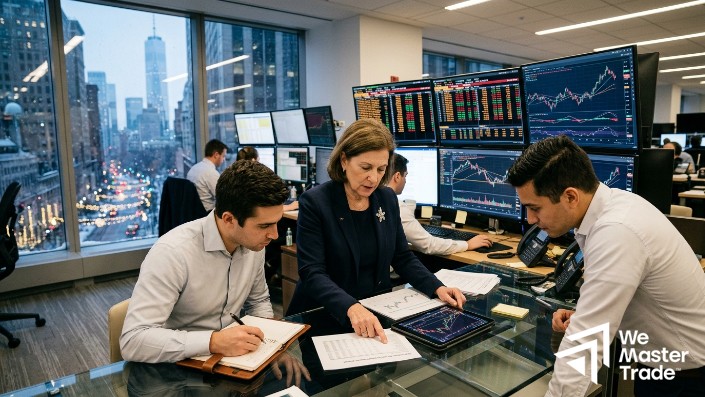
Markets need participants. When banks, exchanges, institutions or major regions are closed, liquidity can decline. Lower liquidity can change execution quality.
Holiday conditions may create:
- Wider spreads.
- Slower movement in some sessions.
- Sudden spikes from fewer orders.
- Lower volume.
- Gaps after a market reopens.
- More noise around the open or close.
This is why holiday trading connects closely with seasonality in financial markets. Calendar effects can matter, but they should never replace risk control.
What to check before trading around holidays
Do not assume normal trading hours apply. Use a checklist before placing trades.
| Check | Why it matters | Risk if ignored |
|---|---|---|
| Exchange calendar | Confirms open, close or early close | Trade may be unavailable |
| Broker or platform hours | Platform hours may differ by instrument | Orders may not execute as expected |
| Liquidity | Fewer participants can widen spreads | Stops may trigger more easily |
| News calendar | Data can still release near holidays | Volatility may surprise traders |
| Weekend or reopening gap | Closed markets can reopen at a different price | Stop levels may not fill as planned |
For forex traders, the holiday period can also connect with weekend gaps in forex, especially when liquidity is thin before or after a closure.
Common mistakes in holiday trading
The first mistake is assuming that open means tradable. A market can be open but still have poor liquidity for your strategy.
The second mistake is using normal stop sizes in abnormal conditions. If spreads widen, a stop that usually makes sense may become too tight.

The third mistake is holding trades through closures without understanding gap risk. A market can reopen far from the previous price if news appears while it was closed.
The fourth mistake is trading out of boredom. Holiday sessions can feel quiet, and traders may force setups because fewer opportunities appear.
For traders who focus on news-sensitive markets, holidays should be connected with trading US indices around news events. A shortened session near an economic release can behave differently from a normal trading day.
Prop firm rules around holiday markets
In a prop firm environment, holiday trading requires extra care. Even if a setup looks familiar, execution conditions may be different enough to affect rule risk. Traders who are still comparing account options can begin with the Best Prop Firm homepage before reviewing holiday-session rules.
Before trading, review:
- Whether the instrument is available.
- Whether spreads or margin conditions change.
- Whether holding over the closure is allowed.
- Whether news rules apply during shortened sessions.
- Whether the daily loss limit is safe for thin liquidity.
- Whether the trade still has a realistic risk reward ratio.
If the answer is unclear, staying out can be a valid risk decision.
How to build a holiday trading plan
A simple holiday plan should define what you will trade, what you will avoid and how you will reduce risk.
Consider:
- Checking the official exchange or platform calendar.
- Reducing position size when liquidity is thin.
- Avoiding trades close to early market closes.
- Avoiding unfamiliar instruments.
- Setting a maximum loss for the session.
- Writing down whether holiday conditions helped or hurt your strategy.
This process keeps holiday trading from becoming random. It also helps traders avoid treating unusual conditions as if they were normal.
FAQ: Holiday trading markets
Are markets open on holidays?
It depends on the market, exchange, country and instrument. Some markets close, some close early and some remain open with reduced liquidity.
Is forex open during holidays?
Forex may remain open during many holidays, but liquidity can be weaker if major financial centers or banks are closed. Traders should check spreads and execution conditions.
Why are spreads wider during holidays?
Spreads can widen when fewer participants are active. Lower liquidity can make it harder to match orders at normal prices.
Should prop traders avoid holiday trading?
Not always, but they should be cautious. If liquidity is thin or rules are unclear, avoiding the session may be safer than forcing a trade.
Let the calendar shape the risk plan
Holiday trading markets can create unusual conditions. The best response is preparation: check the calendar, confirm platform hours, reduce unnecessary risk and avoid setups that depend on perfect liquidity.
If you trade through WeMasterTrade, review the relevant simulated symbols and platform conditions before holiday sessions. A valid trade idea still needs a tradable market.