











Trading US indices news events means paying attention to the economic releases, central bank decisions, earnings headlines and risk sentiment shifts that can move the S&P 500, Nasdaq 100, Dow Jones or other US index markets. These events can create opportunity, but they can also create fast reversals, wider spreads and poor execution.

The goal is not to predict every headline. The goal is to know when volatility may change, decide whether the trade is worth taking and protect the account from avoidable rule breaches.
Why news events matter for US indices
US indices reflect expectations about growth, inflation, interest rates, corporate earnings and investor risk appetite. When new information changes those expectations, index prices can move quickly.

Some moves are directional. For example, a softer inflation report may lead traders to expect easier monetary policy, which can support equities. Other moves are unstable. A market can rally immediately after data, reverse minutes later and then settle in a different direction once liquidity improves.
That is why trading news is not only about being right. It is also about execution. A trader can have the correct macro view and still lose money through slippage, oversized positions or entering during the most chaotic part of the release.
News events US index traders watch
US index traders often monitor:
- Federal Reserve decisions and press conferences.
- CPI and PCE inflation data.
- Nonfarm payrolls and unemployment data.
- GDP reports.
- Retail sales and consumer sentiment.
- ISM manufacturing and services data.
- Treasury yield moves.
- Major earnings from index-heavy companies.
- Geopolitical or banking stress headlines.
Some events are scheduled and can be tracked with an economic calendar. Others are unexpected. A disciplined trader prepares for scheduled risk and uses position sizing to survive unscheduled risk.
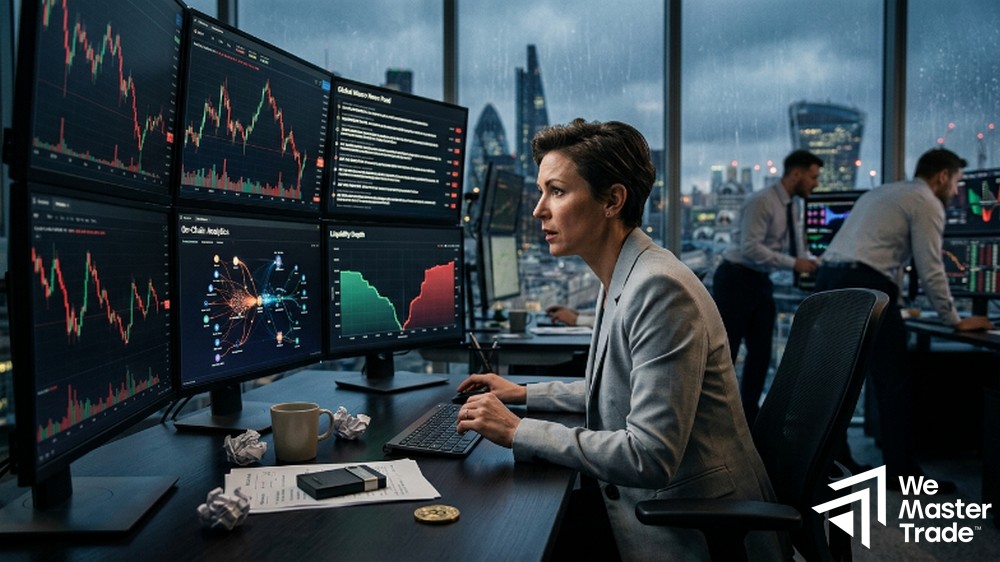
If you want more context on data releases, see GDP Trading Indicator and Labour Market Economic Indicator. These topics are especially relevant when US index volatility is driven by macro expectations.
How to use an economic calendar
Economic calendars help traders see what is scheduled, when it is released and how important the event may be. The SERP for this topic is dominated by calendar and market-news pages because the user intent is practical: traders want to know what may move the market today.
A useful calendar routine includes:
| Calendar item | Why it matters |
|---|---|
| Release time | Volatility can cluster around the exact minute |
| Forecast | Markets often react to surprise versus expectation |
| Previous reading | Helps frame whether the trend is changing |
| Importance rating | Filters events that may not matter much |
| Related market | Some data affects Nasdaq more than Dow, or yields more than equities |
Do not use the calendar as a signal by itself. A high-impact event tells you risk may increase. It does not tell you the market direction with certainty.
Pre-market and opening-session risk
US indices can move before the cash market opens. Futures, pre-market stock movers, overnight headlines and global market sentiment can all set the tone.
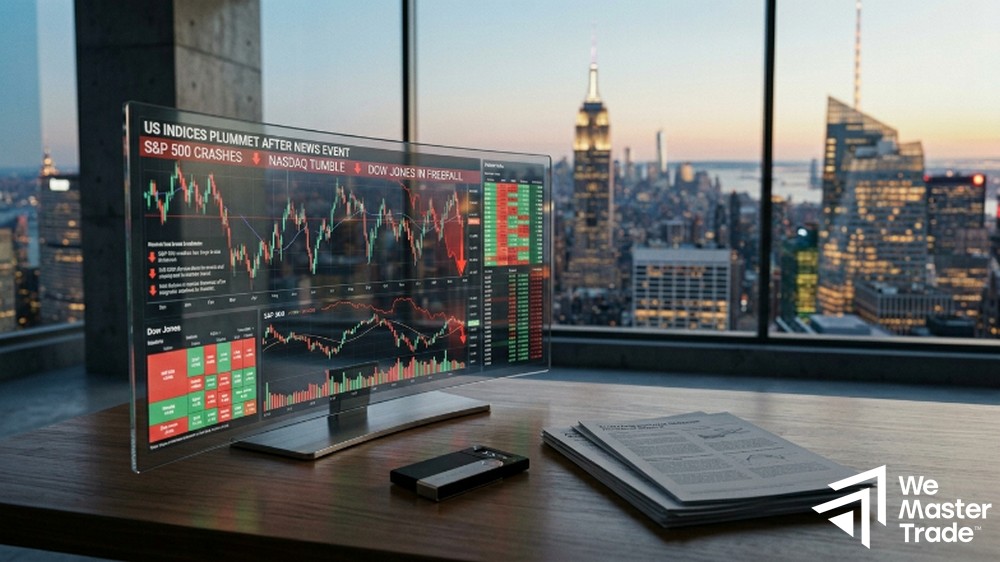
The first minutes after the US open can be especially noisy. Liquidity is active, orders reset, overnight positions adjust and news from the pre-market gets priced into cash-market activity. Breakouts during this window can be powerful, but false moves are common.
For traders using prop firm rules, this is where discipline matters. A wider stop, smaller position or no-trade window may be safer than trying to capture every move. The trade should fit the rules, not the excitement of the open.
Risk controls for trading news events
News-event trading can create:
- Wider spreads.
- Slippage.
- Fast one-minute reversals.
- Stop-loss fills away from expected prices.
- Emotional overtrading after a missed move.
- Rule breaches from oversized trades.
A safer framework is to classify each event before trading:
| Event type | Possible approach |
|---|---|
| High-impact scheduled release | Reduce size, wait for the first reaction, or avoid trading |
| Fed decision and press conference | Treat as multi-phase volatility, not one candle |
| Earnings-driven index move | Check concentration risk in major index components |
| Low-impact data | Trade only if normal technical setup appears |
| Unexpected headline | Protect open risk before looking for a new trade |
If you trade with WeMasterTrade, review available simulated symbols and trading platforms so your news-event plan matches the instruments and execution environment.
Prop firm checklist for US index news events
Before trading US indices around news, ask:
- Is this event allowed under the account rules?
- Am I inside a restricted news window?
- What is my maximum loss if slippage occurs?
- Does this position size still respect the daily loss limit?
- Am I entering because of a plan or because the candle is moving?
- Is the spread normal or unusually wide?
- What is my stop rule if price whipsaws?
If the answer is unclear, not trading is a valid decision. Missing one event is less damaging than turning one volatile release into a rule breach.
For broader preparation, the trading academy and trading challenge pages can help you connect market preparation with account rules.
FAQ
Which news events move US indices the most?
Fed decisions, inflation data, jobs reports, major earnings, GDP data and unexpected risk headlines can all move US indices. The impact depends on market expectations at the time.
Should beginners trade US indices during news?
Beginners should be cautious. News events can move quickly and create slippage. It is often better to observe first, then trade only after a clear plan exists.
Is an economic calendar a trading signal?
No. A calendar tells you when risk may increase. It does not guarantee direction or trade quality.
Why do US indices reverse after news?
Markets can react to the headline first, then reprice after traders assess details, positioning, yields and broader risk sentiment.
Can news trading guarantee profits?
No. News trading can create opportunity and risk, but it does not guarantee profits, payouts, funded status or trading success.
Trade the risk, not just the headline
Trading US indices around news events requires preparation more than prediction. Know the schedule, understand what the market expects, reduce risk when execution becomes uncertain and follow account rules before chasing volatility.
For WeMasterTrade readers, the practical rule is simple: if the event can move the index quickly, it can also move the account quickly. Respect the calendar, control the size and trade only when the setup and rules agree.