












Macroeconomic factors play a vital role in shaping the overall health and growth of economies around the world. Whether you are navigating the global financial landscape or planning a long-term strategy, staying up to date with macroeconomic developments is crucial to success. So, to better understand the importance of the economy in the forex market, follow this article now!
What is Macroeconomics in Trading?

Macroeconomics in trading refers to the analysis of large-scale economic factors that influence financial markets and trading decisions. These factors include interest rates, inflation, gross domestic product (GDP), employment rates, and government policies. Traders use macroeconomic data to assess the overall economic health of a country or region, predict market trends, and make strategic investment choices.
Besides, by understanding how macroeconomic indicators affect asset prices, such as currencies, stocks, and commodities, traders can make more informed decisions and potentially capitalize on market movements driven by economic changes.
See more:
- What is Pullback? Effective Trading Methods You Should Know
- Basic types of fundamental analysis for effective investing
Importance of Macroeconomics in Trading
The importance of macroeconomics in trading lies in its ability to provide a comprehensive understanding of the factors that influence market movements. Key macroeconomic indicators such as inflation, interest rates, unemployment, and GDP growth directly affect asset prices, including stocks, bonds, currencies, and commodities.
By analyzing these trends, traders can anticipate market shifts, manage risks, and make informed decisions. For instance, rising interest rates might lead to a stronger currency but weaken stock markets. Understanding these connections helps traders develop strategies to capitalize on market opportunities and avoid potential losses. In essence, macroeconomic analysis is crucial for navigating the complexities of the financial markets.
Macroeconomic Indicators in Forex Market
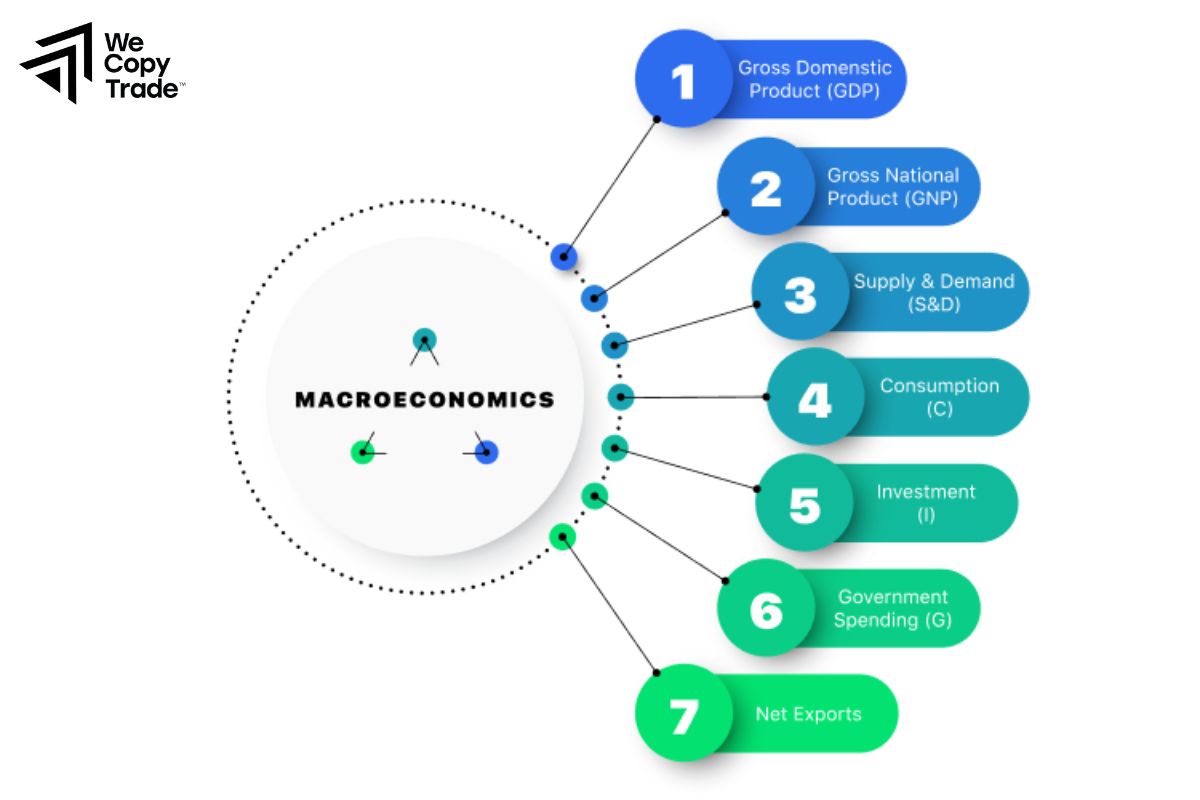
Macroeconomic indicators in the Forex market are key statistics that help traders assess the economic health of countries and predict currency movements. Some of the most important indicators include:
Gross Domestic Product (GDP)
Measures the total economic output of a country, indicating economic growth or contraction. A higher GDP usually strengthens the national currency.
Interest Rates
Set by central banks, interest rates influence the flow of capital. Higher rates generally attract foreign investment, boosting the currency value.
Inflation Rates
Inflation reflects the rising cost of goods and services. Moderate inflation is healthy, but high inflation erodes purchasing power, potentially weakening a currency.
Employment Data
Metrics like unemployment rates and non-farm payroll data signal the economic stability of a country. Strong employment usually strengthens the currency.
Trade Balance
The difference between a country’s exports and imports. A trade surplus strengthens the currency, while a deficit may weaken it.
Compare Macroeconomics vs. Microeconomics
Macroeconomics and microeconomics are two branches of economics that focus on different levels of economic activity.

Macroeconomics looks at the big picture, studying the economy as a whole. It focuses on large-scale economic factors like national income, inflation, unemployment, interest rates, and GDP. Macroeconomics analyzes how government policies, global markets, and overall economic health impact entire economies and global markets. This branch is crucial for understanding broad economic trends and policies that affect large sectors or nations.
Microeconomics, on the other hand, focuses on individual consumers, firms, and industries. It examines how decisions are made at a smaller scale, such as how businesses set prices, how consumers choose products, and how markets allocate resources. Microeconomics studies supply and demand, competition, and the behavior of individual economic agents.
How macroeconomics is affected in the market
Macroeconomics affects markets by influencing large-scale economic factors that shape the overall economic environment. Key macroeconomic elements such as inflation, interest rates, GDP growth, and government policies have significant effects on market behavior and investor sentiment. Here’s how these factors impact the market:
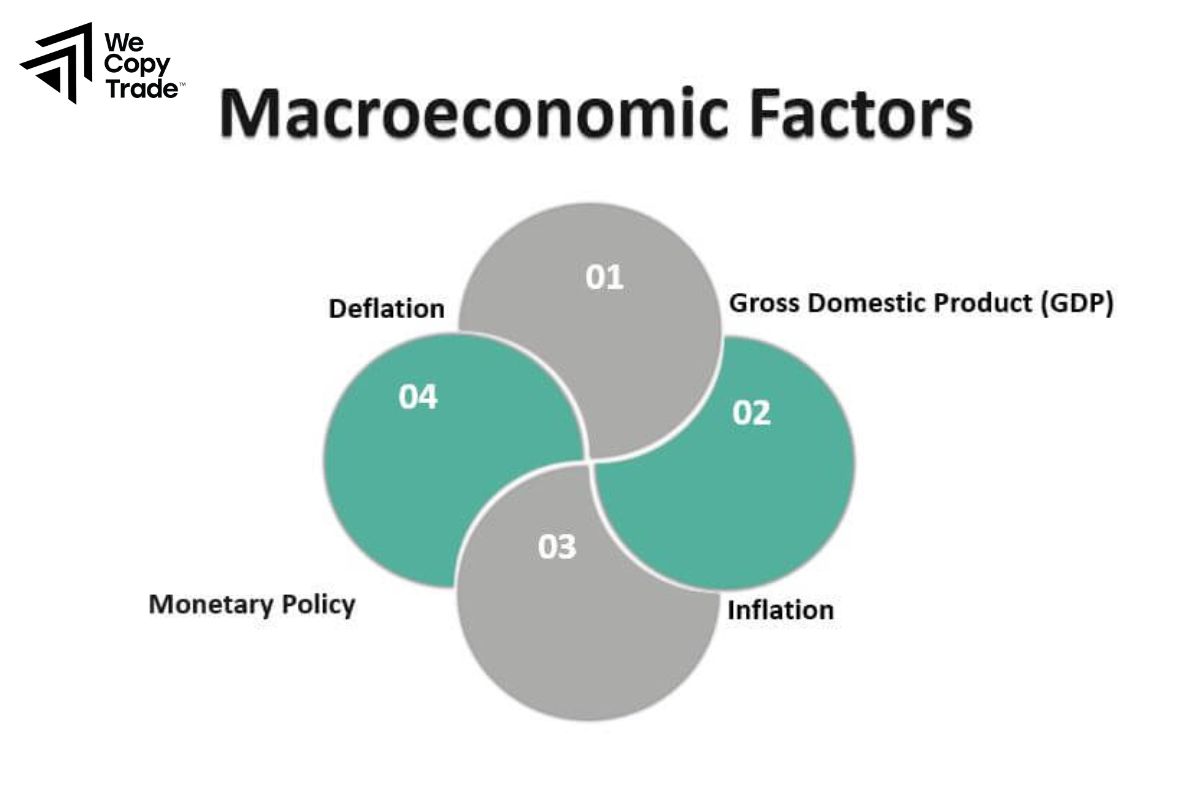
- Interest Rates: Central banks adjust interest rates to control inflation and stabilize the economy. Higher interest rates often lead to higher borrowing costs, reducing consumer spending and business investments, which can slow down stock markets. Lower rates, on the other hand, tend to stimulate borrowing and investment, boosting stock prices.
- Inflation: High inflation decreases purchasing power, increases costs for businesses, and may lead to reduced corporate profits, negatively impacting stock markets. Inflation also influences bond prices and interest rates, as central banks often raise rates to control inflation, affecting asset values.
- Gross Domestic Product (GDP): GDP growth indicates economic expansion, which generally boosts investor confidence and drives stock markets upward. Slower or negative GDP growth signals economic contraction, often leading to market declines as investors anticipate lower corporate earnings and weaker economic conditions.
- Employment Levels: Strong employment data boosts consumer spending and corporate profitability, supporting stock market growth. Conversely, high unemployment rates signal economic weakness and may lead to market downturns as demand slows.
- Government Policies: Fiscal policies like taxation, government spending, and trade policies directly affect market conditions. Expansionary policies, such as tax cuts or increased government spending, can stimulate economic growth and boost market performance, while contractionary policies may have the opposite effect.
- Global Events: Macroeconomic events such as geopolitical tensions, trade wars, and natural disasters can affect investor confidence and market stability, leading to volatility.
Conclusion
In conclusion, understanding macroeconomic factors is essential for navigating the financial markets successfully. Key indicators like inflation, interest rates, and GDP offer valuable insights into economic trends and market movements. So, Stay informed on macroeconomic shifts to make smarter investment decisions and seize market opportunities. Start tracking macroeconomic trends today for better results!
See now: