













Unlock the benefits of commission forex trading and take your trading to the next level! Discover how structures work, the advantages they offer over spread-only accounts, and tips for selecting the right broker to maximize profitability. Learn how lower rates can boost your returns and optimize your overall strategy. Start trading smarter, explore the best forex options today!
What is the commission fee?
A commission fee is a charge or percentage taken by a service provider for facilitating a transaction or service. This fee can vary widely depending on the context, such as:

- Real Estate: Agents often charge a commission based on the sale price of a property, typically ranging from 5% to 6%.
- Brokerage Services: In stock trading, brokers might charge per trade or a percentage of the transaction.
- E-commerce Platforms: Online marketplaces may take from sales made through their platform, often ranging from 5% to 20%.
- Affiliate Marketing: Affiliates earn for referring customers to a business, usually a percentage of the sale.
- Payment Processors: Services like PayPal or Stripe may charge a fee per transaction, often around 2.9% plus a fixed fee.
See now:
- What are Trailing Stops? How to Use Trailing Stops in Crypto
- Skills To Place Stop Orders Effectively Not Everyone Knows
- What is a Limit Orders? Guide How to place limit orders
Why do some brokers not charge commission?

Some brokers do not charge commission because they aim to attract a larger customer base, particularly individual investors who may be deterred by trading fees. By offering free trading, these brokers create a more appealing environment for new and existing clients, encouraging them to trade more frequently without the concern of incurring additional costs with each transaction.
One of the primary ways these brokers generate revenue is through the practice of payment for order flow. In this model, brokers sell their customers’ order information to market makers, who pay for the opportunity to execute those trades. This arrangement allows brokers to profit without directly charging their clients. Additionally, instead of a traditional commission structure, some brokers may widen the bid-ask to spread the difference between the buying and selling prices to create revenue. While clients might not perceive this as a direct fee, it can still impact their overall trading costs.
Furthermore, many commission-free brokers employ a “freemium” model, where basic trading services are offered at no cost, but advanced features, research tools, or premium services come with a fee. This allows them to provide free trading while still generating income from those clients who seek more sophisticated trading capabilities.
Types of commission fees and related fees

There are various types of commission fees and related fees that brokers, financial institutions, and service providers may charge. Here’s an overview of the most common types:
Brokerage Commission Fees
- Flat Fee Commission: A fixed charge per trade regardless of the trade size or value.
- Percentage-Based: A fee calculated as a percentage of the trade’s total value, common in real estate transactions (e.g., 5-6% of the sale price).
- Tiered Commission: A structure where the rate decreases as the volume of trades increases. High-volume traders may pay a lower percentage compared to those making fewer trades.
Management Fees
- Asset Management Fee: A percentage of assets under management (AUM) charged by investment managers for managing a portfolio, typically ranging from 0.5% to 2% annually.
- Performance Fees: Charged based on the investment returns generated by the fund or manager, often a percentage of profits earned above a specified benchmark.
Service Fees

- Account Maintenance Fee: A periodic fee charged for maintaining a brokerage or investment account, sometimes waived if minimum balance requirements are met.
- Inactivity Fee: Charged if an account does not have any trades or activity for a specific period, aimed at encouraging active trading.
Transaction Fees
- Trading Fees: Costs incurred each time a buy or sell order is executed, which may include commission fees or spreads.
- Exchange Fees: Charges imposed by exchanges for executing trades, which brokers may pass on to clients.
Transfer and Withdrawal Fees
- Wire Transfer Fee: A fee charged for transferring funds electronically between banks or accounts.
- Withdrawal Fee: A charge for withdrawing funds from a trading account or brokerage, which can vary by method (e.g., ACH, wire transfer).
How to calculate commission fees in Forex and stocks
Calculating fees in Forex and stocks involves understanding the specific fee structure of your broker and the type of trading you’re doing. Here’s a breakdown of how to calculate fees for both Forex and stock trading:
Calculating Commission Fees in Forex
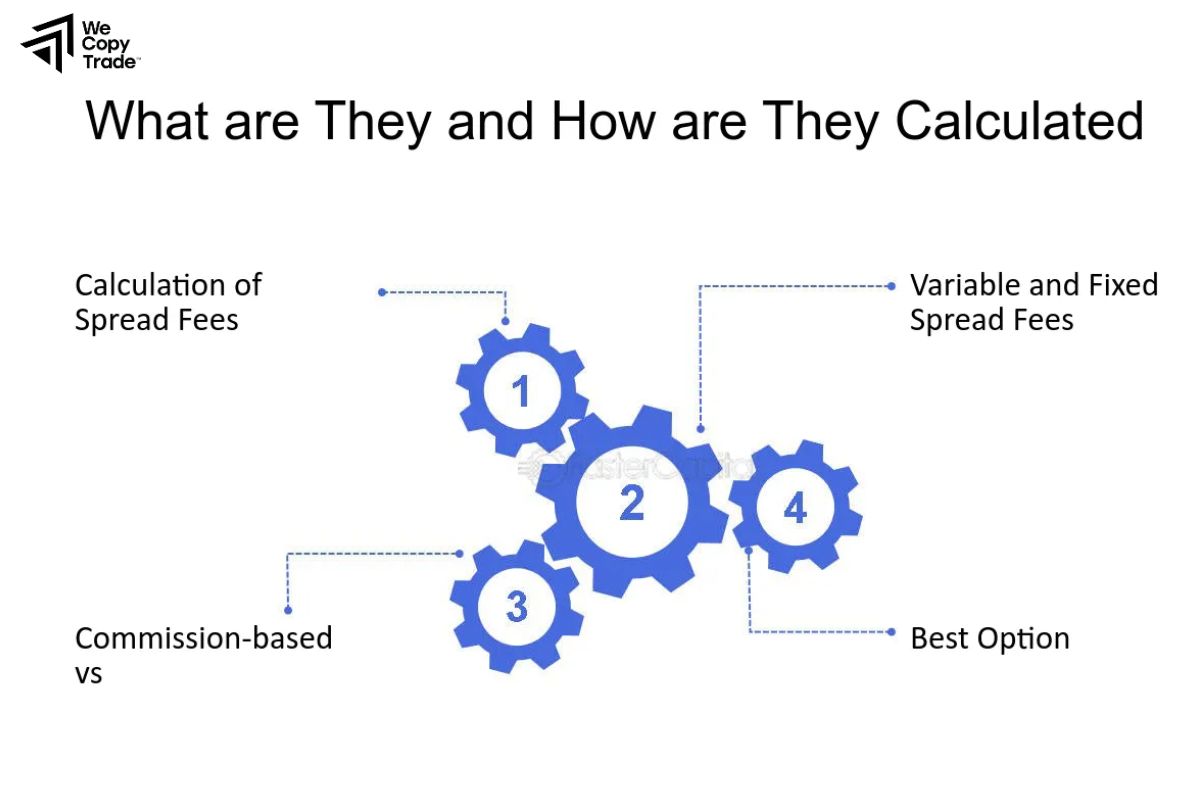
In Forex trading, brokers may charge in several ways:
Commission Per Trade
If your broker charges a fixed per trade, you simply multiply the number of trades by the fee.
Formula:
Total Commission = Number of Trades × Commission per Trade
- Example: If the commission is $5 per trade and you make 10 trades:
Total Commission = 10×5=50 USD
Spread
In Forex, brokers often make money through the spread, which is the difference between the buying (ask) and selling (bid) prices. To calculate the cost in terms of pips:
Formula:
Cost = Spread (in pips) × Lot Size
- Example: If the spread is 2 pips and you trade 1 standard lot (100,000 units), and each pip is worth $10: Cost = 2 pips × 10 = 20 USD
Calculating Commission Fees in Stocks
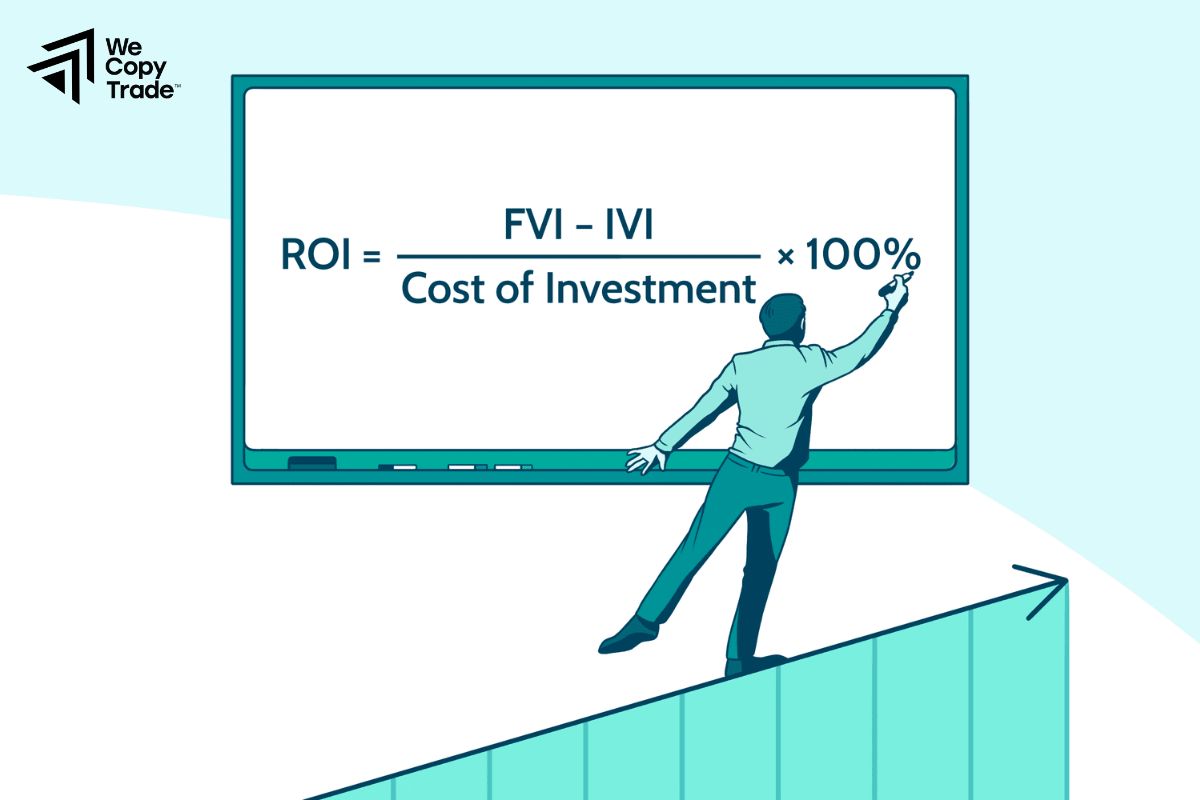
In stock trading, brokers typically charge based on a per-trade basis or as a percentage of the trade value.
Flat Fee Commission
If your broker charges a flat fee per trade, similar to Forex, you calculate it the same way.
Formula:
Total = Number of Trades × Flat Fee
- Example: If the flat fee is $6.95 per trade and you make 5 trades: Total = 5 × 6 . 95 = 34.75 USD
Percentage-Based Commission
If your broker charges as a percentage of the trade value, use the following formula:
Formula:
Total = Trade Value × (Commission Rate100)
- Example: If you buy stocks worth $1,000 with a rate of 1%:
Total =1000×(1100)=10 USD
Some Forex brokers do not charge commission fees
Here is the translation of the list of Forex brokers that do not charge commission fees, along with some basic information about each broker:

eToro
- Revenue Model: Through spreads and currency conversion fees.
- Features: A social trading platform that allows users to copy the trades of successful investors.
IG
- Revenue Model: Through spreads, which can vary depending on the currency pair.
- Features: A robust platform with many analytical tools and educational resources.
OANDA
- Revenue Model: From spreads and overnight fees.
- Features: Known for real-time market quotes.
Forex.com
- Revenue Model: Through spreads and other service fees.
- Features: Offers a variety of trading assets, including Forex, commodities, indices, and stocks.
Plus500
- Revenue Model: From spreads and overnight fees.
- Features: A simple and user-friendly platform, suitable for beginners.
XM
- Revenue Model: From spreads and accounts with different spread levels.
- Features: Rich educational resources and good customer support.
AvaTrade
- Revenue Model: Through spreads and other fees.
- Features: A diverse trading platform with plenty of educational resources.
FXTM (ForexTime)
- Revenue Model: From spreads and overnight fees.
- Features: Offers various trading options and attractive promotional programs.
IC Markets
- Revenue Model: Through spreads on Standard accounts fees on Raw Spread accounts.
- Features: A fast trading platform suitable for scalping and high-frequency trading.
NinjaTrader
- Revenue Model: From spreads and overnight fees.
- Features: A powerful platform for futures and Forex trading, with many technical analysis tools.
Conclusion
In conclusion, understanding commission forex is essential for traders looking to optimize their trading costs and enhance their profitability. Many brokers offer competitive pricing structures, including zero options, which can significantly impact your overall trading experience. Explore the various options available and find the right forex broker that meets your needs today. Start your trading journey with confidence research, compare, and choose wisely!
See more: