












In the financial markets, every decision carries both risks and opportunities. One of the most notable approaches that many traders are interested in is offensive style trading—an active approach that seeks to capture opportunities quickly rather than waiting passively. However, to succeed, a trader needs not only strong analytical skills but also solid psychological control and risk management.
This article will dive deeper into the essence of this trading style, how to balance between “offense” and “defense,” as well as the crucial role of psychology in decision-making.
The Essence of Offensive Style Trading

The Essence of Offensive Style Trading
Offensive style trading is not simply about placing trades continuously or making oversized bets. Its essence lies in the ability to seize market opportunities at the right moment, based on clear analysis and confidence in the chosen strategy.
In sports, a team that wants to score must actively attack, create pressure, and capitalize on the opponent’s mistakes. In trading, it’s the same: traders need to “score points” by making quick decisions, but at the same time, they must maintain discipline to avoid self-destruction.
This shows that offensive trading cannot be separated from defensive elements. A good trader knows not only when to “attack” to maximize profit but also when to “defend” to minimize risk.
See now:
- Qualifying for a Prop Firm: All the Skills You Need
- What is Exchange Rate? A Comprehensive Guide for Traders
- Prop Firm Career Opportunities: New Path for Modern Traders
Balancing Offense and Defense
In football, a strong team must excel in both attack and defense. Similarly, in trading, offensive style trading cannot be entirely separated from defensive strategies.
Offense: The Scoring Strategy
Actively seeking opportunities: Traders often analyze charts and identify early entry points to ride the trend.
Maximizing profits: When the market moves in the right direction, offensive trading allows scaling positions and optimizing returns.
Creating a psychological edge: Success in well-executed offensive trades boosts a trader’s confidence.
Defense: Protecting Against Risks
- Setting reasonable stop-losses: Avoid letting a single bad trade wipe out the account.
- Controlling position size: Always calculate appropriate capital allocation for each trade.
- Managing emotions: Recognize fear and greed to avoid being dragged along by the market.
A harmonious combination of both elements allows traders to score while avoiding self-sabotage.
The Meaning of “Small Losses for Bigger Wins”
In offensive style trading, winning every trade is impossible. The key is knowing how to accept small losses to preserve capital for bigger opportunities.
For example: A trader may cut losses early when the market moves against them instead of holding onto a losing position. Although a small amount is lost, this action preserves mental stability and allows them to rejoin the market in a better setup.
This approach not only protects the account but also enhances long-term sustainability.
Psychology in Offensive Style Trading
One of the greatest challenges of offensive style trading lies not in technique, but in psychology. Traders often face stress, fear, or greed, which can lead to poor and impulsive decisions.
Understanding Your Emotions
Psychological studies show that identifying and labeling emotions helps people control their behavior more effectively. When traders recognize they are anxious, angry, or overly excited, they can adjust their decisions to reduce risks.
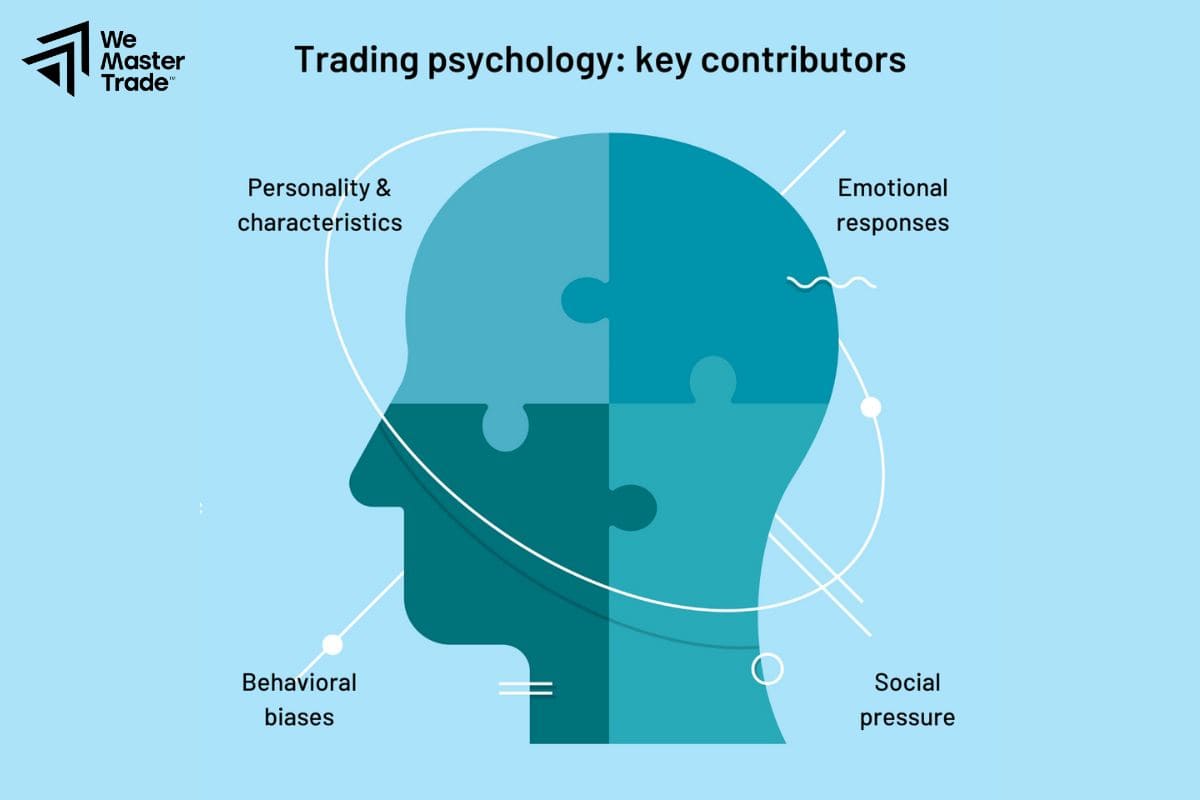
Understanding Your Emotions
For example:
- A string of losing trades may cause panic and desperate revenge trading.
- A big winning trade may cause euphoria and overtrading.
Timely recognition of these emotions serves as an important “defensive shield” in trading.
Managing Emotions
It’s impossible to eliminate emotions completely, but traders can learn to turn them into useful information. Anxiety, for instance, may sometimes be a signal that the market is unfavorable. The important thing is to understand what the emotion is trying to say instead of blindly following it.
Analyzing Mistakes and Improving Strategy
A practical way to improve performance in offensive style trading is to review past mistakes.
- Ask yourself: Why did I enter that trade?
- What was I feeling at the time?
- Did the mistake come from technical analysis, money management, or emotions?
This process helps traders better understand their strengths and weaknesses. Once the cause is clear, improvement becomes easier. For example:
- If the mistake was due to lack of discipline → strengthen trading rules.
- If it was emotional → practice emotional control.
- If it was poor analysis → improve technical knowledge.
Practical Lessons

Practical Lessons
Imagine the market as a football match. In offensive style trading, the trader plays the dual role of both striker—seeking to score goals—and defender—protecting the goalpost.
- Offense: Build a clear game plan and identify strategic entry points.
- Defense: Protect the trading account against unpredictable market swings.
- Coach: This represents the mindset and strategy that the trader designs for themselves.
A successful trader doesn’t rely solely on their ability to score profits, but also on preventing themselves from making costly mistakes. Just like a strong football team, success comes not only from scoring many goals but also from keeping a clean sheet.
Conclusion
In summary, offensive style trading is a challenging yet rewarding approach. It demands proactivity, discipline, and a balance between technical analysis and emotional control. A successful trader knows not only how to attack to seek profits, but also how to defend to protect themselves.
By understanding the essence of this trading style, maintaining balance between offense and defense, and analyzing both psychology and past mistakes, traders can improve their performance and build sustainable growth in the market.
See more: