




Fundamental Analysis is an essential method for investors who want to assess the true value of a security by considering key financial and economic factors. Whether you are looking to fine-tune your investment strategy or understand market dynamics, mastering Fundamental Analysis can provide valuable insights and improve your investment success. So, to better understand how to use it when trading, follow the article below!
What is Fundamental Analysis in Trading?
Fundamental Analysis in trading involves evaluating the intrinsic value of a security by analyzing various economic, financial, and qualitative factors. This method aims to understand the underlying factors that can influence a security’s value and price movements over time. Here’s a breakdown of what Fundamental Analysis entails:
Key Components Fundamental Analysis:
- Financial Statements: Review a company’s income statement, balance sheet, and cash flow statement to assess its financial health, profitability, and liquidity.
- Economic Indicators: Analyze broader economic factors such as GDP growth, inflation rates, and unemployment figures to understand the economic environment affecting the security.
- Industry Analysis: Examine the industry in which the company operates, including market trends, competitive landscape, and regulatory environment.
- Company Performance: Assess key metrics like revenue growth, earnings per share (EPS), return on equity (ROE), and debt levels to gauge the company’s performance and stability.
- Management Quality: Evaluate the experience and track record of the company’s management team to understand their ability to lead and make strategic decisions.
- Valuation Models: Use models such as the Discounted Cash Flow (DCF) analysis, Price-to-Earnings (P/E) ratio, and Price-to-Book (P/B) ratio to estimate the security’s intrinsic value and determine if it is undervalued or overvalued.
See now:
- Mitigate Risk with The Hidden Value of Industry Situation
- What is Price Action? How to apply it to trade effectively
- How Measure Whether Company Financial Situation Developing
Why Fundamental Analysis is Important in Trading
Fundamental analysis is crucial in trading because it helps determine an asset’s intrinsic value by examining economic indicators, financial statements, and other relevant data. This analysis reveals whether an asset is undervalued or overvalued compared to its market price, providing a foundation for making informed investment decisions.

For long-term investments, fundamental analysis is particularly valuable. It assesses a company’s financial health, profitability, and growth potential, which are key for evaluating long-term gains. Additionally, it allows traders to understand market trends and economic conditions by analyzing factors like GDP growth, inflation rates, and interest rates.
Effective risk management is another benefit of fundamental analysis. By evaluating an asset’s financial stability and performance, traders can better assess potential risks. This information is also useful for making strategic buy, hold, or sell decisions.
Furthermore, fundamental analysis aids in comparing companies within the same industry, identifying those with stronger financial performance and growth prospects. It also provides context for technical analysis by explaining the underlying reasons for price movements and trading volumes.
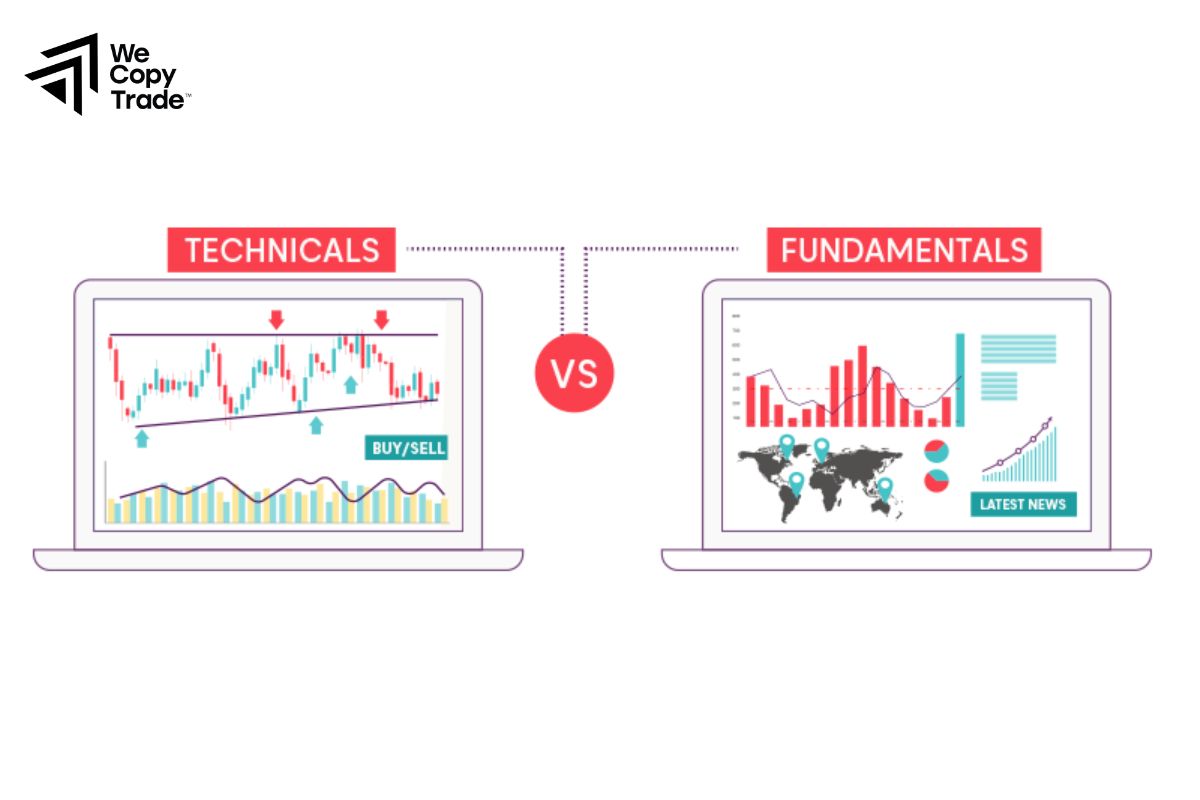
In essence, fundamental analysis offers a comprehensive view of an asset’s value and market conditions, complementing technical analysis and enhancing overall trading strategies.
3 Types of Fundamental Analysis for Effective Investing
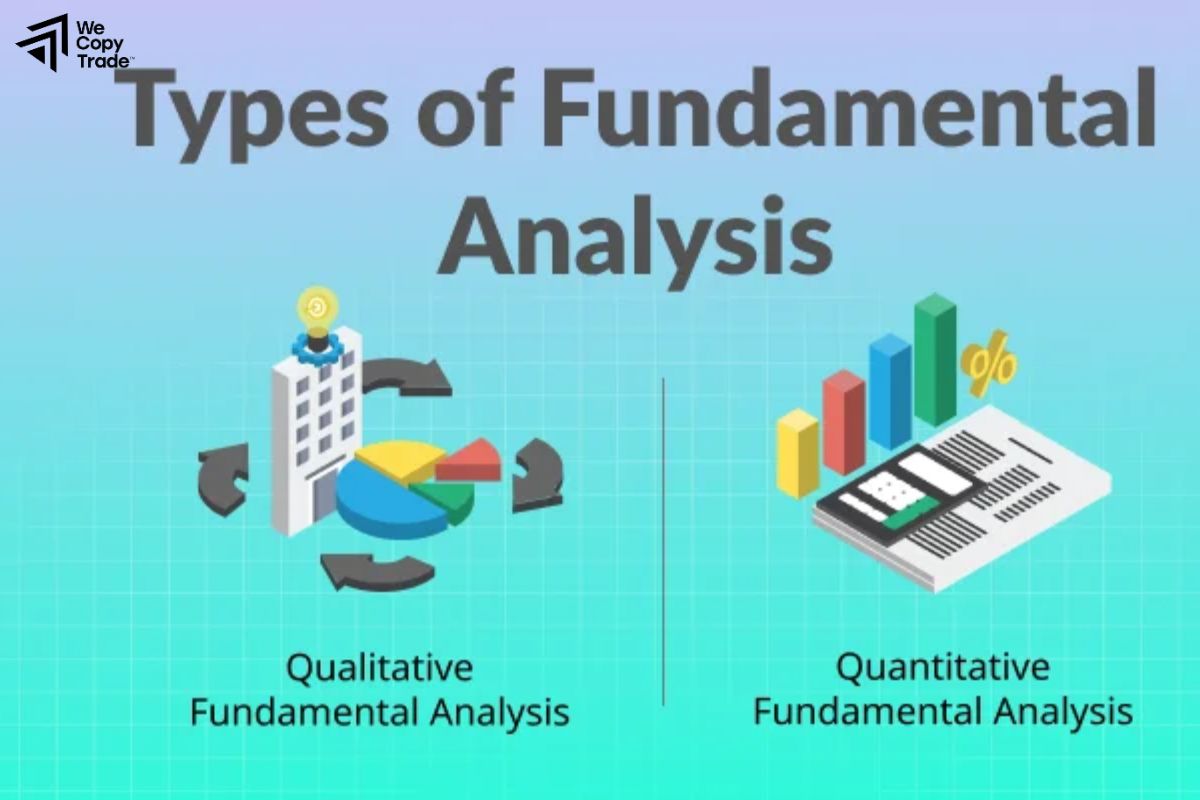
For effective investing, fundamental analysis typically involves several basic types that help assess the value and potential of investments. Here are the key types:
Top-Down Analysis
Starts with a broad perspective and narrows down to specific investments. It involves:
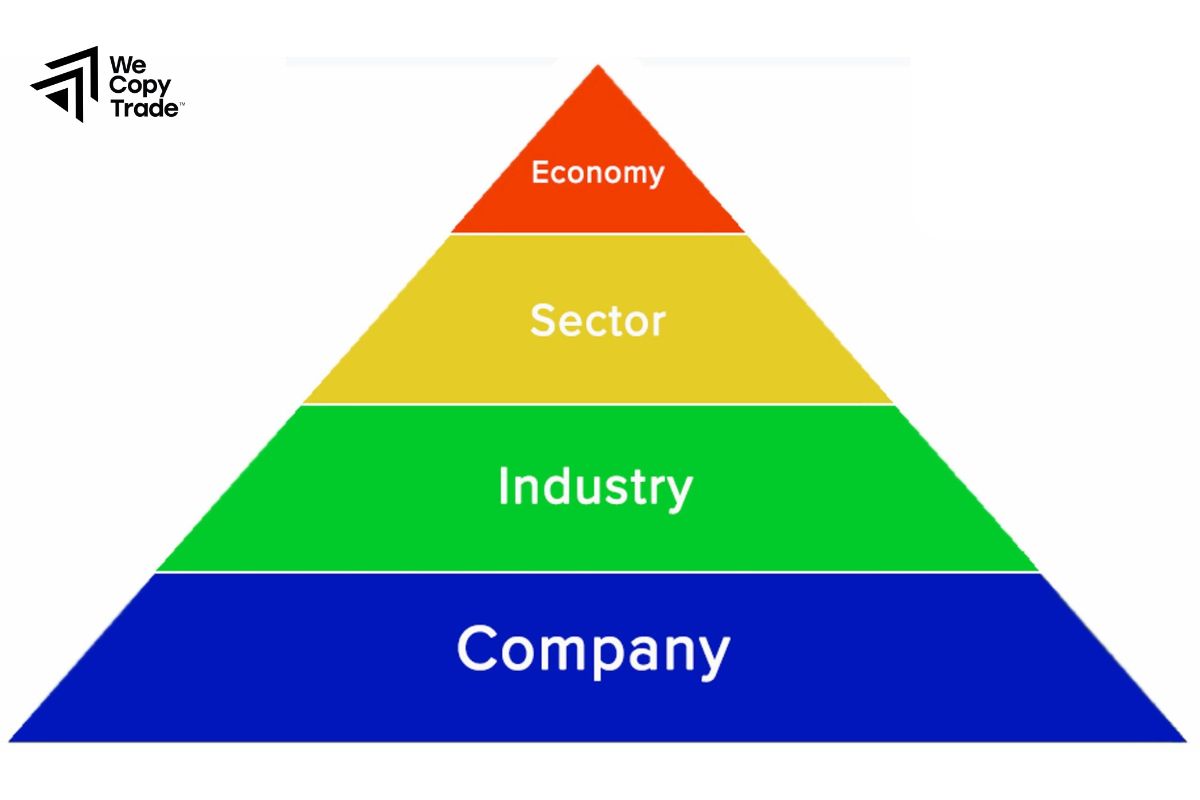
- Macroeconomic Analysis: Evaluating the overall economic environment.
- Industry Analysis: Identifying promising sectors within the broader economy.
- Company Analysis: Assessing individual companies within the chosen sectors. This approach helps investors understand the big picture and then focus on the best opportunities.
Bottom-Up Analysis
Focuses on individual companies rather than the broader economy or industry. It involves in-depth analysis of a company’s financial statements, management, and competitive position to identify strong investment opportunities regardless of macroeconomic conditions.
SWOT Analysis
Evaluates a company’s Strengths, Weaknesses, Opportunities, and Threats. This approach provides insights into internal factors (strengths and weaknesses) and external factors (opportunities and threats) that can impact a company’s performance.
The Simplest Way to Trade Fundamental Analysis
Trading using fundamental analysis involves evaluating a company’s financial health, market position, and other economic factors to make informed trading decisions. Here’s a simplified approach to using fundamental analysis in trading:
Understand Fundamental Analysis
- Fundamental analysis involves studying financial statements, economic indicators, and industry conditions to assess the value of a security.
- To determine if a stock or other asset is undervalued or overvalued based on intrinsic value versus market price.
Identify Key Factors
- Consider GDP growth, unemployment rates, inflation, and interest rates as they impact overall market conditions.
- Analyze industry growth, competitive landscape, and market demand.
- Examine key financial statements:
- Income Statement: Look at revenue, profit margins, and earnings.
- Balance Sheet: Assess assets, liabilities, and shareholder equity.
- Cash Flow Statement: Check operating cash flow, investing cash flow, and financing cash flow.
Evaluate Key Metrics
- Earnings Per Share (EPS): Indicates profitability; higher EPS often means a more profitable company.
- Price-to-Earnings Ratio (P/E Ratio): Compares a company’s current share price to its per-share earnings; helps determine if a stock is over or underpriced.
- Price-to-Book Ratio (P/B Ratio): Compares a company’s market value to its book value; useful for assessing if a stock is undervalued.
Assess Financial Health

- High debt can be risky; check the company’s debt-to-equity ratio.
- Examine return on equity (ROE), return on assets (ROA), and profit margins to gauge how well a company generates profit from its assets.
Monitor Economic and Market Conditions
- Keep an eye on broader economic trends, such as changes in interest rates and economic policies.
- Be aware of market trends and investor sentiment which can affect stock prices in the short term.
Review and Adjust
- Continuously review and adjust your portfolio based on new information and changing market conditions.
- Stay informed about changes in fundamental analysis techniques and market trends.
Conclusion
In conclusion, incorporating Fundamental Analysis into your trading strategy can provide valuable insights into a company’s financial health and market potential. Start applying fundamental analysis today to enhance your trading approach and discover new opportunities for growth. For expert guidance and tools, explore our resources and take your trading to the next level!
See more:

