











Forex is the most liquid global financial market, where currency exchange rates fluctuate continuously due to various reasons. To analyze and forecast price movements, having a clear understanding of forex influencing factors is absolutely essential.
This article will help you organize the key groups of factors, explain why they strongly impact the forex market, and support your analysis and evaluation process.
Major Forex Influencing Factors
Periodic economic reports act as a compass for price trends. Among the forex influencing factors, fundamental economic data are usually given top priority.
GDP – Gross Domestic Product
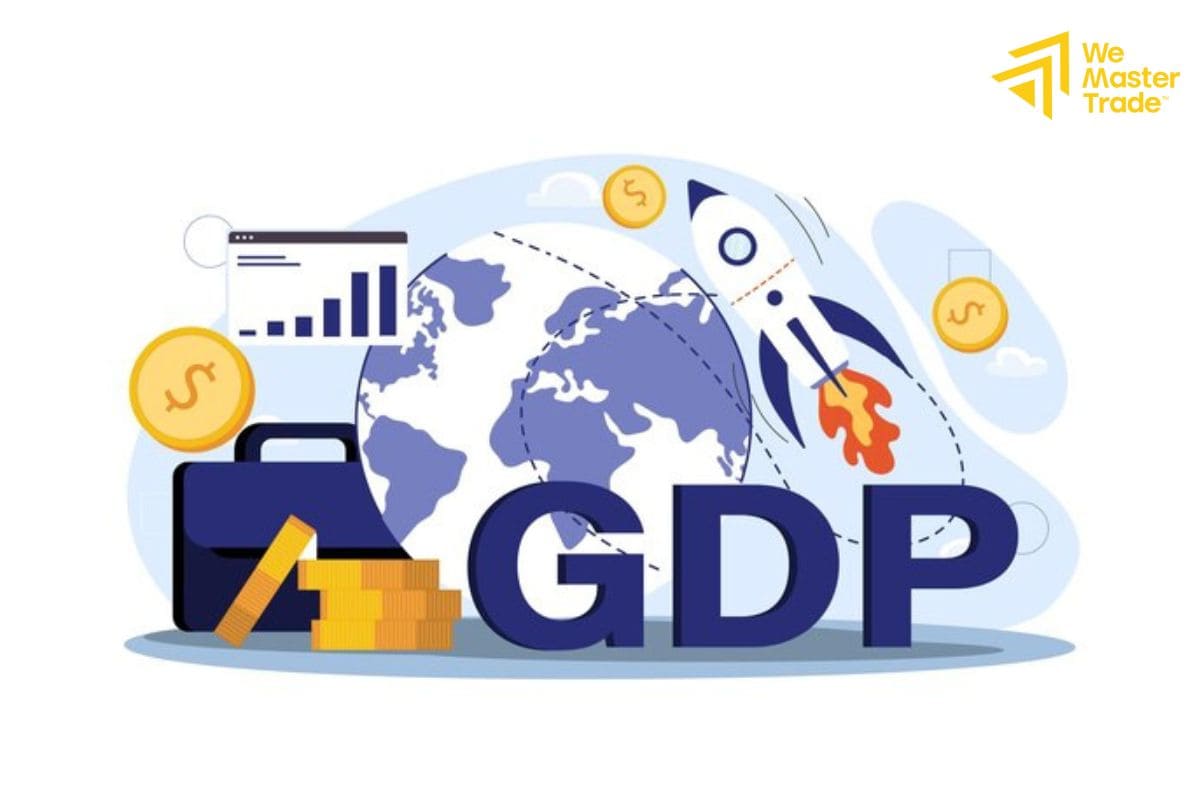
GDP – Gross Domestic Product
GDP measures the value of goods and services produced by a country within a certain period. When GDP grows strongly, the national currency often appreciates as investors expect a healthy economy. Conversely, declining GDP can cause the currency to lose value.
See now:
- Prop Firm Trading Techniques: From Basic to Advanced
- Qualifying for a Prop Firm: All the Skills You Need
- What is Exchange Rate? A Comprehensive Guide for Traders
- Prop Firm Career Opportunities: New Path for Modern Traders
CPI and Inflation
The Consumer Price Index (CPI) reflects the average increase in prices of a basket of goods and services. Excessive inflation usually forces central banks to raise interest rates to control prices, and this is a very direct forex influencing factor. Higher interest rates can attract foreign capital inflows, strengthening the currency.
Non-Farm Payrolls (NFP)
NFP is the U.S. monthly employment report (excluding agriculture). It is highly market-moving because it reflects labor market health, indirectly influencing spending and economic growth.
Market Sentiment and Activity Indicators
Beyond hard data, emotions and expectations of businesses and consumers are also significant forex influencing factors.
Consumer and Business Sentiment Reports
Surveys help gauge optimism or concern about the economic future. Positive sentiment typically boosts spending and investment, supporting the currency. Negative sentiment, on the other hand, can reduce demand and weaken the currency.
Purchasing Managers’ Index (PMI)
A PMI above 50 signals economic expansion, while below 50 indicates contraction. Investors use it to quickly assess sector health and anticipate currency trends.
Retail Sales and Vehicle Sales
Retail sales directly reflect consumer demand – the main driver of the economy. Auto sales, though narrower in scope, are often published earlier and can serve as a leading indicator of consumption trends.
Political Factors and Fiscal Policy
In addition to economic data, government and central bank decisions are forex influencing factors that cannot be ignored.
Government Announcements
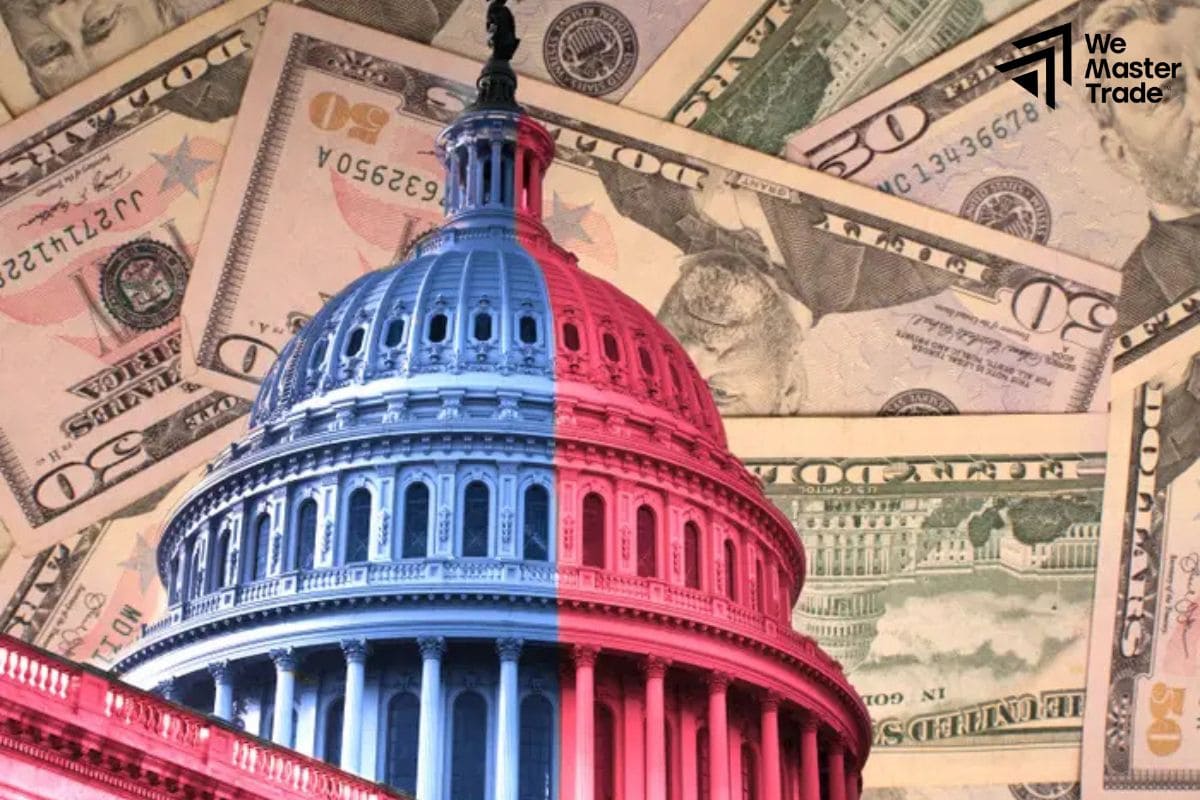
Government Announcements
Fiscal policies – such as increased public spending, tax cuts, or bond issuance – can significantly affect currency value. For example, a large stimulus package may boost growth but also raise public debt, pressuring the currency if market confidence wanes.
Central Bank Monetary Policy
Decisions on interest rates, quantitative easing (QE), or balance sheet reduction can alter money supply and demand. This group of forex influencing factors is closely monitored by analysts.
Market Psychology and Global News
The forex market is highly sensitive to unexpected developments, where emotions and information play a major role.
Fear and Greed Sentiment
During the European debt crisis, the EUR plunged as fear spread. Conversely, when markets become overly optimistic, currencies may rise beyond reasonable levels, prompting central bank intervention.
Key News Events
Not every piece of news creates volatility, but reports like NFP, retail sales, or inflation data are considered strong catalysts. Knowing the data release schedule helps traders anticipate upcoming market moves.
Other Factors in Forex Market Activity
Beyond economic and sentiment factors, some technical aspects of the market can also become forex influencing factors.
Forex Options Market (FX Options)
Many businesses use options to hedge against currency risk. However, a portion of options trading volume also comes from speculative purposes. Special options like Double No Touch (DNT) can sometimes create strong volatility around psychological price levels.
International Capital Flows

International Capital Flows
Capital flowing into or out of a country—through direct investment, portfolio investment, or trade—can alter the supply and demand for foreign currencies. For example, large inflows into a country’s stock market often drive demand for the local currency, pushing its value up.
Combining Factors for Forex Analysis
In reality, no single forex influencing factor works in isolation. They often interact and combine. A positive GDP report may push the currency higher, but if the central bank simultaneously signals a rate cut, the upward effect could be neutralized.
Analysts typically use fundamental analysis to evaluate economic, political, and news factors while combining it with technical analysis to find optimal entry and exit points. Even if you are not trading, understanding these factors helps you read and interpret financial news more accurately.
Conclusion
In summary, identifying and understanding forex influencing factors is a foundational skill for analyzing the currency market. By integrating multiple sources of data, you gain a more comprehensive view of price movements, enabling more accurate assessments and predictions.
See more: