












In the global financial world, the foreign exchange market is the place with the largest trading volume. This is the “playground” of both individual and institutional investors. But what makes the difference between an emotional trade and a sustainable path is an effective forex trading strategy.
A strategy in Forex is not simply a formula or a few indicators, but a combination of market analysis, capital management, and disciplined psychology. With a clear plan, traders can turn complex market fluctuations into opportunities for learning and long-term development.
Why do we need an effective forex trading strategy?
Many newcomers to the market often make the mistake of “emotional trading”, making them easily swept away by price fluctuations. In fact, lacking a strategy means trading is like “gambling”.

An effective forex trading strategy helps you:
- Have a clear plan for each situation.
- Determine reasonable entry and exit points.
- Manage risk, do not let losses go beyond control.
- Accumulate experience based on a consistent analytical framework.
In other words, strategy is the “compass” that helps you survive and go far in this volatile market.
See now:
- Should You Trade Forex? An In-Depth Look for Vietnamese Traders
- Forex Losses – How to Limit Risk Effectively in Forex
- Emotional Trader: Understand and Control to Trade Effectively
Core elements of an effective forex trading strategy
Market analysis
Any strategy starts with understanding the market. There are two main directions:
- Technical analysis: based on charts, indicators (MA, RSI, MACD, Fibonacci …) to find signals.
- Fundamental analysis: based on economic news, monetary policy, interest rate data, inflation …
Combining both often brings a more comprehensive perspective.
Capital management
No strategy is called “effective” if it ignores capital management. A common rule: only risk 1-2% of capital for each transaction. This helps you preserve your account even when you have a losing streak.
Trading Psychology
Even the best strategy can fail if the trader is impatient or emotional. Discipline – sticking to a set plan – is the key to turning an effective forex trading strategy into a practical tool.
Effective forex trading strategy groups
Short-term trading strategies
This group is often applied to those who like speed and flexibility.
Scalping
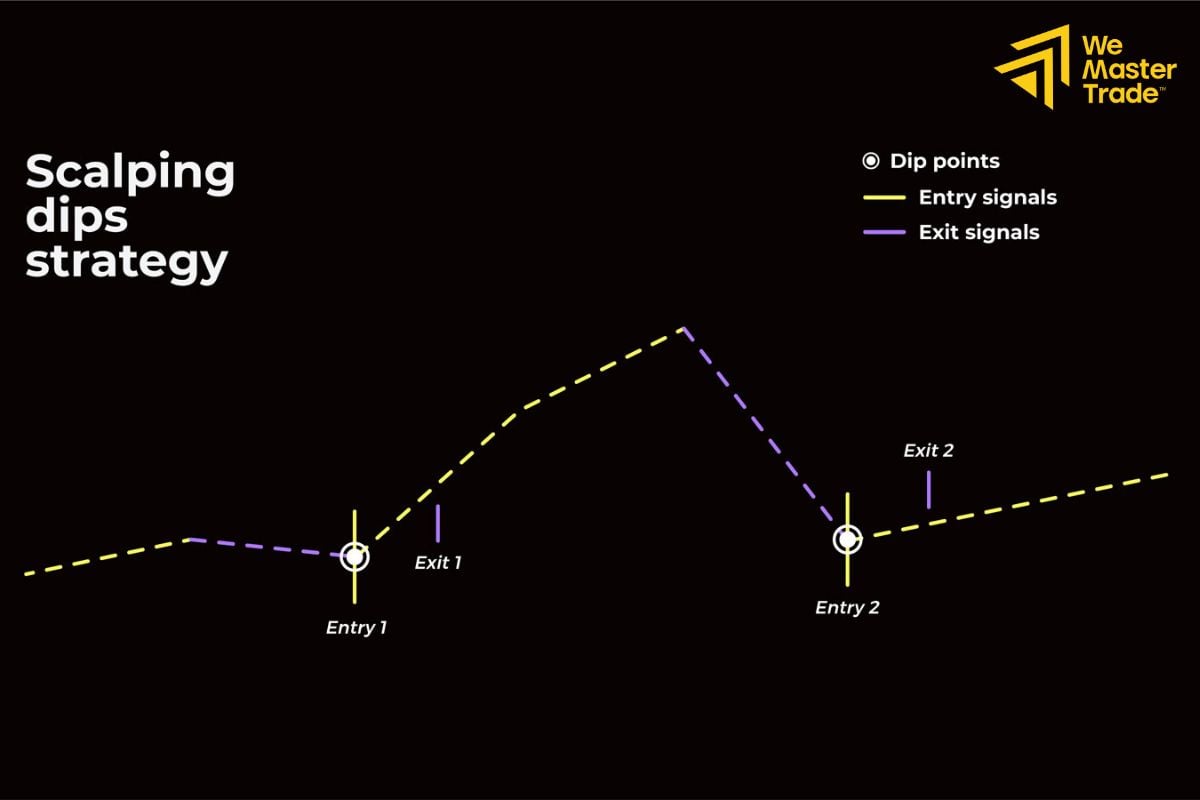
- Execute many trades during the day, each order only lasts a few seconds to a few minutes.
- Small profits but accumulate into big results.
- Requires high discipline and fast reaction speed.
Day Trading
- Open and close orders during the day, do not hold overnight.
- Take advantage of fluctuations in active trading sessions (London, New York).
- Helps avoid overnight fees, suitable for those who like to constantly observe the market.
Medium-term trading strategy
For those who cannot sit in front of the screen all day but still want to follow the market closely.
Swing Trading:
- Hold orders for a few days, taking advantage of the market’s ups and downs.
- Technical analysis plays an important role (support/resistance, candlestick patterns).
- Need to be patient, not too hasty.
Long-term trading strategy
Suitable for investors who want to follow the big market trend.
Position Trading:
- Hold orders for a few weeks to a few months.
- Rely heavily on fundamental analysis (monetary policy, economic data).
- Less affected by short-term noise, but requires large capital and a strong mentality.
Popular effective forex trading strategies
- Trend Following strategy: follow the main direction of the market, combined with moving averages.
- Breakout Trading: enter an order when the price breaks out of a strong support or resistance zone.
- Reversal Trading: predict when the trend is about to end to trade in the opposite direction.
- News Trading: take advantage of strong fluctuations when there is important economic news.
- Indicator combination strategy: use RSI, MACD, Bollinger Bands… to confirm the signal before entering an order.
Whichever way you choose, it is important that the strategy must be tested (backtest) before applying in practice.
Tips for building an effective forex trading strategy

- Start simple: don’t try to apply too many tools at the beginning.
- Test the strategy: use a demo account to test.
- Keep a trading diary: track winning/losing orders, reasons for entering orders, to gain experience.
- Always prepare for the worst scenario: set a stop-loss for every transaction.
- Don’t follow your emotions: the market will always have opportunities, no need to rush.
Conclusion
In short, an effective forex trading strategy is a clear set of rules for you to maintain stability, manage risks, and develop in the long term. Whether you choose short-term, medium-term or long-term trading, the decisive factor for success is still patience, discipline and capital management. When the strategy becomes a habit, Forex will no longer be an unpredictable market, but a place where you can learn, practice and improve your skills every day.
See more: