












Continuation Patterns are essential chart formations that signal the potential continuation of a current trend, offering traders opportunities to capitalize on ongoing market movements. Start learning how to use Continuation Pattern effectively to maximize your trading potential and boost your profits today!
What are Continuation Patterns in trading?

Continuation Patterns in trading are chart formations that indicate a temporary pause in the prevailing trend, followed by a continuation in the same direction. These patterns signal that, after a brief consolidation, the price is likely to resume its original uptrend or downtrend. Common continuation patterns include flags, pennants, triangles, and rectangles.
Trader use these patterns to identify opportunities to enter trades aligned with the current trend, ensuring they capitalize on the market’s momentum after the consolidation phase ends. Understanding continuation patterns can help enhance trading strategies and improve decision-making.
How to use Continuation Patterns in your trading?
Using Continuation Patterns in your trading can help you capitalize on ongoing trends. Here’s how to effectively apply them:
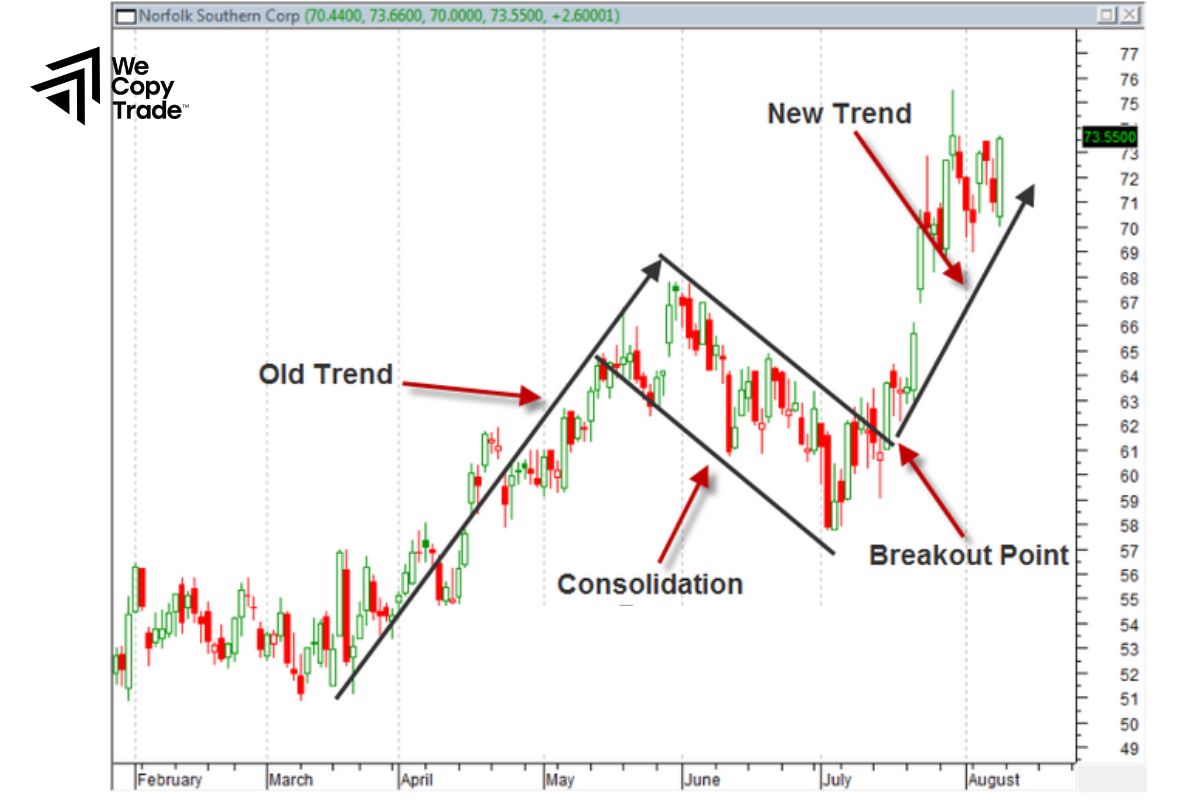
- Identify the Pattern: Look for common continuation patterns like flags, pennants, triangles, or rectangles during a pause in the trend. Ensure the market shows strong movement before the pattern forms, as this signals potential continuation.
- Wait for Confirmation: After spotting the pattern, wait for the price to break out in the same direction as the prevailing trend. Confirmation can come from a strong price move accompanied by increased volume.
- Enter the Trade: Once the breakout occurs, enter a trade in the direction of the trend. For bullish continuation patterns, buy at the breakout point, while for bearish patterns, consider selling or shorting.
- Set Stop-Loss and Profit Targets: Place a stop-loss just outside the pattern (below the support for bullish, above the resistance for bearish) to limit risk. Use the measured move method to set your profit target based on the pattern’s height.
Common Types of Continuation Patterns
Here are some common types of Continuation Patterns in trading:

Flags
Small rectangular patterns that slope against the prevailing trend, either upward in a downtrend or downward in an uptrend. They indicate brief consolidation before the trend resumes.
Pennants
Similar to flags but with converging trend lines that form a small triangle. Pennants also signal short consolidation periods before the continuation of the trend.
Symmetrical Triangles
A symmentrical triangles pattern with two converging trendlines, where the price moves into a tighter range. It suggests the trend will likely continue in the original direction once the breakout occurs.
Rectangles
Formed when price moves sideways between parallel support and resistance levels. This indicates a consolidation phase, after which the price is expected to break in the direction of the prior trend.
Are continuation and reversal Patterns the same for forex and stocks?
Continuation and reversal patterns are generally the same in both forex and stocks, as they represent similar market dynamics across different asset classes. However, there are a few differences to consider:

Similarities
- In both forex and stocks, continuation patterns (like flags, pennants, and triangles) signal that the current trend is likely to continue after a brief pause.
- Reversal patterns (like head and shoulders, double tops, and double bottoms) in both markets suggest that the current trend is likely to reverse.
Differences
- Volatility: Forex markets tend to be more volatile due to factors like economic news and geopolitical events, which can affect the formation of patterns more quickly than in stocks.
- Liquidity: Forex markets are highly liquid, especially major currency pairs, so patterns may form more reliably compared to less liquid stocks.
- Timeframes: Stock markets have specific trading hours, while forex is a 24-hour market. This may impact the timing of pattern formation and breakout.
Example of a Continuation Pattern in the Stock Market
Here are additional examples of Continuation Patterns commonly found in the stock market:
Bull Pennant
- Similar to the bull flag, but instead of forming a channel, the price forms a small, symmetrical triangle (pennant) after a strong upward move.
- The pennant signals a short consolidation before the stock continues its upward trend. This pattern is typically seen after a sharp price rise.
- A breakout above the pennant’s upper trendline confirms the continuation of the bullish trend, especially if supported by strong volume.
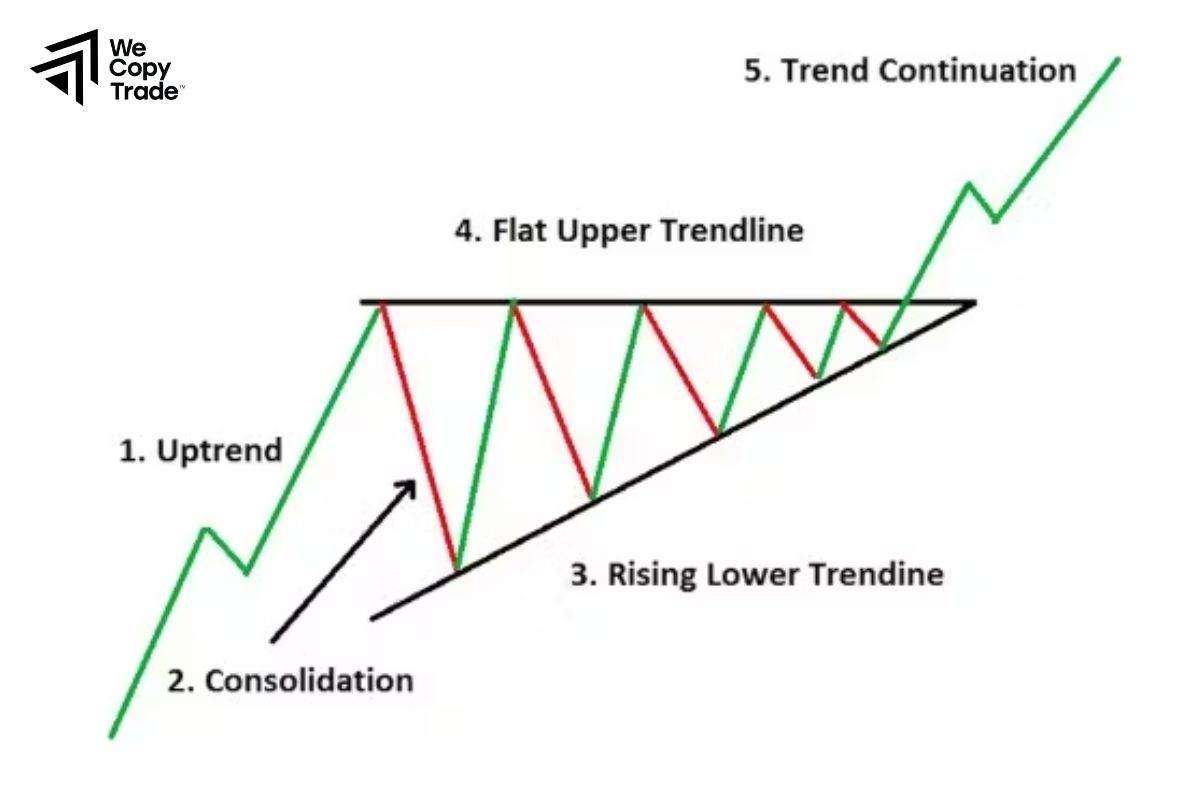
Ascending Triangle
- This pattern forms when the stock’s price consolidates between a flat resistance line on top and a rising support line below. It usually occurs during an uptrend.
- The ascending triangle suggests that the bulls are gaining strength and are likely to break through the resistance level.
- A breakout above the resistance line indicates the continuation of the uptrend. Traders often enter a long position after the breakout.
Bear Flag
- This is the bearish version of the bull flag. It forms during a downtrend when the price consolidates in a small upward channel after a sharp drop.
- The bear flag signals a continuation of the downtrend after the brief consolidation phase.
- A break below the flag’s lower trendline confirms the resumption of the downward trend.
Symmetrical Triangle
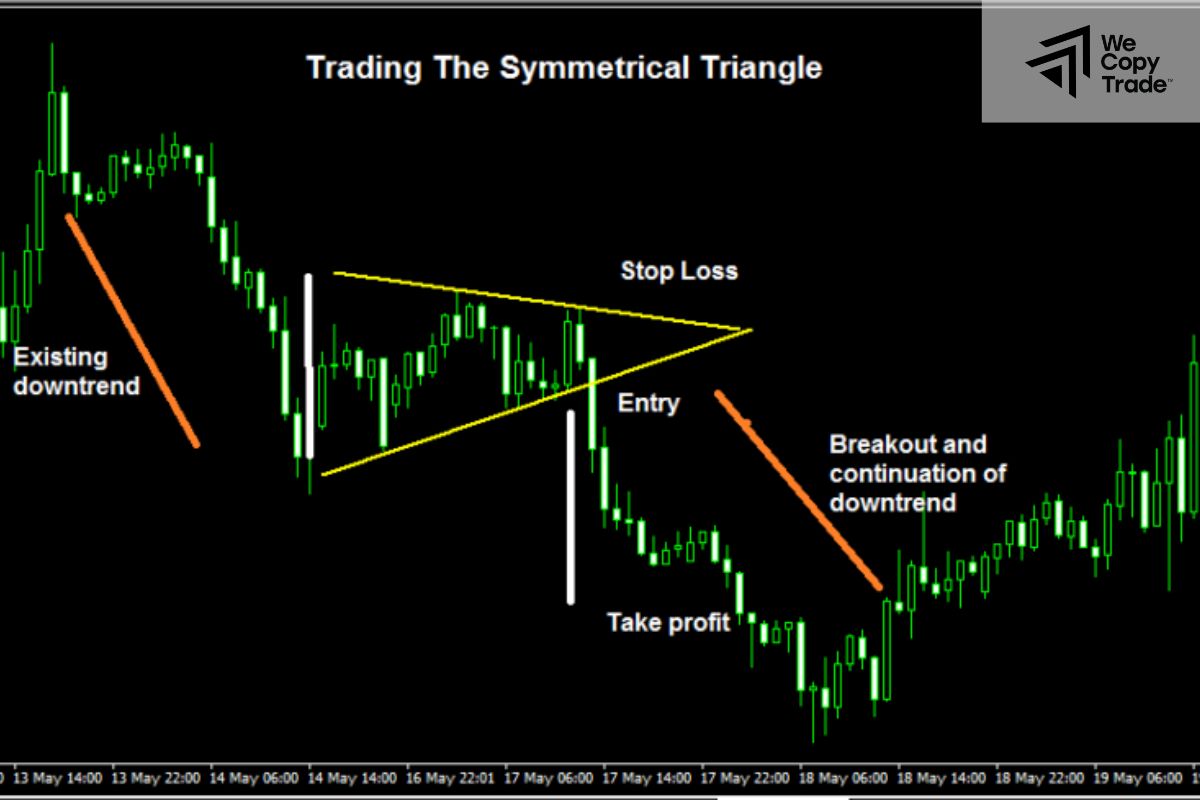
- The price consolidates with converging trendlines, where neither bulls or bears have the upper hand, resulting in lower highs and higher lows.
- The symmetrical triangle indicates a period of indecision that could lead to a continuation of the existing trend (either up or down).
- A breakout in the direction of the prior trend confirms the continuation pattern.
Conclusion
In conclusion, Continuation Patterns are powerful tools that help traders identify moments when a trend is likely to resume after a brief pause. By mastering patterns like flags, pennants, and triangles, you can make more informed trading decisions and capitalize on ongoing market movements. Start incorporating Continuation Pattern into your trading strategy today to enhance your market analysis and increase your profitability.
See more:
- Top Common Types Of Chart Patterns Trading For Beginners