




You are always advised to invest in growing companies, right? But how can you accurately assess the development of a Company Financial Situation? Let’s explore some valuable tips that few people know to grasp the financial situation of a company right away!
What is Financial Analysis?

Financial analysis is a method of analyzing numbers and data to evaluate the financial situation of a company, project or investment. Thanks to that, we know whether this company has the ability to pay its debts? Is their financial situation stable? Is investing here profitable or not?
- Why is financial analysis important?
Analyzing the Company Financial Situation helps investors choose potential stocks and bonds, minimizing risks when investing.
See more:
- What is Pullback? Effective Trading Methods You Should Know
- Basic types of fundamental analysis for effective investing
- The Importance of Macroeconomics in the Forex Market 2024
Types of Financial Analysis and How to Analyze Company Financial Situation
To compile statistics on the company’s general business situation, a company will usually have different types of reports. The most common types of Company Financial Situation analysis are:
Growth Analysis
To assess a company’s growth potential, analysts often look at:
- Past growth rate: By comparing the business results of previous years, we can predict future growth trends.
- Regression analysis: This is a statistical method that helps determine the relationship between variables, thereby predicting the value of one variable based on other variables.
- Bottom-up and top-down analysis: These two methods help analyze growth from the micro level (individual products, services) to the macro level (the whole market).
Liquidity Analysis:
Liquidity analysis helps us assess a Company Financial Situation ability to pay its short-term debts. In other words, it shows whether the company has enough cash or assets that can be easily converted into cash to pay its debts that are due within one year.

Some ratios commonly used to measure liquidity include:
- Current ratio: Compares total current assets (such as cash, inventory) to total current liabilities. This ratio shows whether the firm has enough current assets to pay off its short-term debts.
- Acid test: Similar to the current ratio, but excludes inventory (since inventory cannot be converted into cash immediately). This ratio shows the company’s financial ability to pay off its short-term debts immediately.
- Cash ratio: Compares cash to current liabilities. This is the most rigorous ratio, indicating whether a company has enough cash to pay off its short-term debts.
- Net Working Capital: The difference between total current assets and total current liabilities. A positive number indicates that the company has enough finance to pay off all current liabilities and have a surplus.
Efficiency Analysis
Efficiency analysis helps us assess how efficiently the company uses its assets to generate revenue. Efficiency ratios help us answer the question: “For each dollar invested in assets, how much revenue does the company generate?

Some ratios commonly used to measure company financial situation efficiency include:
- Asset turnover ratio: Tells how much revenue is generated for each dollar invested in assets.
- Fixed asset turnover ratio: Similar to asset turnover ratio, but focuses on fixed assets (such as buildings and machinery).
- Cash conversion ratio: Measures how efficiently the company converts revenue into cash.
- Inventory turnover ratio: Tells how quickly inventory is sold and replaced.
Cash Flow
Cash flow is the amount of cash flowing into and out of a business over a period of time. It includes cash received from operating activities, money invested in new assets, and money received or paid from financing activities such as borrowing and paying off debt.
Commonly analyzed types of cash flows:
- Operating cash flow: Cash received from the main business activities of the business.
- Investing cash flow: Cash used to invest in fixed assets (such as factories, machinery) or to acquire other companies.
- Financial cash flow: Cash received or paid from financing activities such as borrowing, paying off debt, issuing shares.
Profitability ratios

Profitability ratios help us evaluate the performance of a business by comparing profits with invested capital.
Commonly used types of profitability ratios:
- Return on equity (ROE): Shows how much profit is generated for each dollar of capital that shareholders contribute to the business.
- Return on assets (ROA): Shows how much profit each dollar invested in a company’s assets generates.
- Return on invested capital (ROIC): Shows how much profit each dollar invested in a company’s capital generates.
- Dividend yield: The percentage of profits paid to shareholders in the form of dividends.
- Capital gains: Profits earned from the sale of an asset.
- Accounting rate of return (ARR) and internal rate of return (IRR): These two ratios help evaluate the effectiveness of an investment project.
Valuation Analysis
As the name suggests, this method aims to determine how much a business is worth. Does it have the potential to generate steady profits and grow in the future? What assets does it own (such as buildings, machinery, brands)? How much debt does it have?
There are many ways to value a business, but some common methods include:
- Comparatives: Compare the market value of the company to other companies in the same industry to estimate its value.
- Discounted cash flow analysis: Forecast the company’s future cash flows and calculate their present value.
- Asset-based method: Calculate the total value of all the company’s assets.
Scenario and sensitivity analysis
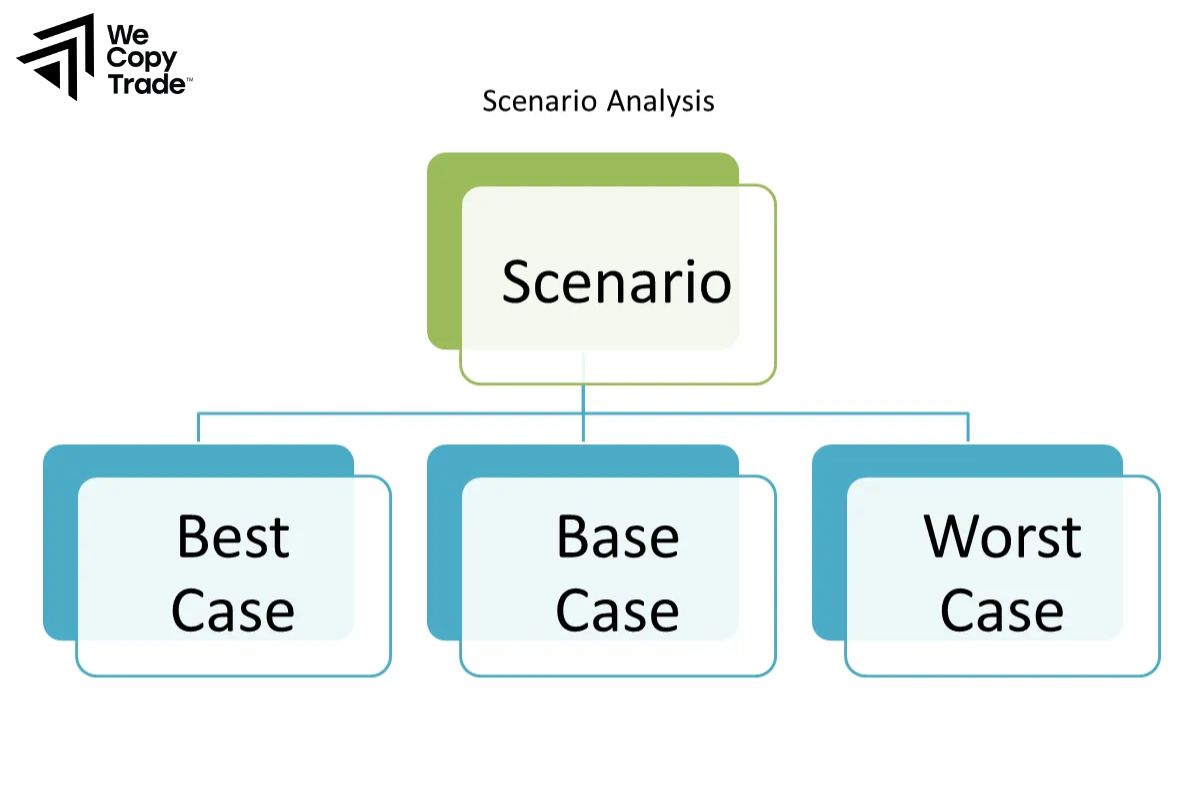
What happens if everything goes well? What happens if certain risks occur?To minimize the risk to the business you are investing in, always prepare yourself with backup plans. Scenario and sensitivity analysis help us better understand the risks and opportunities of the business.
Variance analysis:
Variance analysis gives us a clear picture of the difference between our expectations and the actual results. In this way, we can understand the causes of the difference and adjust our plans for the future.
Conclusion
In conclusion, I believe that from the useful information above, you can confidently start to analyze the finances and evaluate the Company Financial Situation or business you want to invest in, right? Wish you success.
See now:

