












As a forex trader, do you really know all the types of currency pairs? How do currency pairs affect our trading? Which types of currency pairs are the most profitable and how to predict the exchange rate? In the following article, we will answer all of the above questions together!
What Is a Currency Pair?
You can think of a currency pair as a currency exchange rate at a bank. For example, when you exchange money from Vietnam to the US, the bank will tell you how many Vietnamese Dong is equivalent to 1 USD. That is a currency pair, specifically VND/USD (Vietnamese Dong/US Dollar).

Components of a currency pair:
- Base Currency: The currency before the /, for example: VND in the VND/USD pair. This is the currency you want to buy.
- Quote Currency: The currency after the /, for example: USD in the VND/USD pair. This is the currency you use to buy the base currency.
For example: If the EUR/USD pair is priced at 1.20, it means that you need 1.20 USD to buy 1 Euro.
See now:
- What is Diversification? Why is Diversification Important?
- Top Harmonic Patterns- How To Identify Harmonic Trading
- What Are Trade Wars? Factors of Good or Bad Trade Wars
- Why is National Debt Important? The Structure of National
How Currency Pairs Work?
Let’s say you’re traveling to Europe and want to exchange Euros. You’ll go to a bank or a currency exchange shop to make a transaction. The exchange rate you get is the price of the EUR/USD currency pair, where:
- EUR: Euro (base currency)
- USD: US Dollar (quote currency)
- Exchange rate 1.3560/1.3562:
1.3560: Ask price: If you want to buy 1 Euro, you’ll have to pay 1.3560 USD.
1.3562: Bid price: If you want to sell 1 Euro, you’ll receive 1.3560 USD.
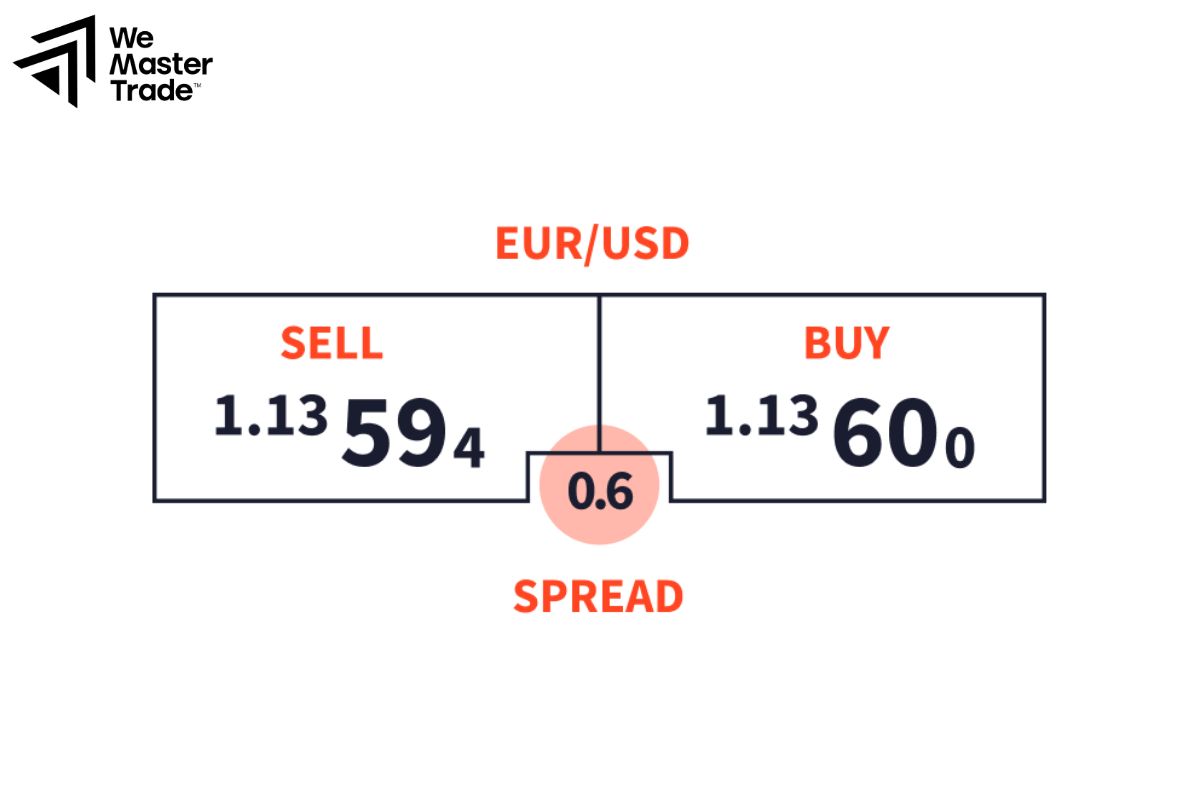
- Long term purchase: If you predict that the Euro will increase in value against the USD, you’ll buy the EUR/USD pair. This means you’re buying Euros and selling USD in the hope that when the Euro price increases, you can sell it back at a higher price and make a profit.
- Short sale: Conversely, if you predict that the Euro will fall in value against the USD, you will sell the EUR/USD pair. This means that you are selling the Euro and buying the USD in the hope that when the Euro price falls, you can buy it back at a lower price and make a profit.
Top Common Types of Currency Pairs
Understand and know how to distinguish the following popular currency pairs to flexibly prioritize the best trading results.
Major Currency Pairs
The foreign exchange market (Forex) is a vast “playground” with hundreds of different types of currency pairs. However, only a few types really “dominate” and are sought after by traders. So which currency pairs are they? Let’s explore the 7 “hottest” types of currency pairs in the world right after this!
The US dollar is the world’s reserve currency, so any currency pair with the USD has extremely high liquidity. This means you can buy or sell a large amount of currency without affecting the price.
Countries with large economies such as the US, Japan, UK, Europe… often have stable and widely traded currencies.
High liquidity means you can make transactions quickly and easily, and the spread (the difference between the buying and selling price) is often narrower.

7 hottest currency pairs:
- EUR/USD: The classic pair between the Euro and the US Dollar, reflecting the relationship between the world’s two largest economies.
- USD/JPY: The combination of the greenback and the Japanese Yen, often traded during global economic or political turmoil.
- GBP/USD: This pair reflects the relationship between the UK and the US, and is often affected by political events in both countries.
- USD/CHF: The pair between the US Dollar and the Swiss Franc, often seen as a “safe haven” during times of uncertainty.
- AUD/USD: The Australian Dollar and the US Dollar, a popular currency pair with traders interested in commodities and real estate.
- USD/CAD: The US Dollar and the Canadian Dollar, often affected by oil prices and economic factors related to North America.
- NZD/USD: New Zealand Dollar and US Dollar, a smaller currency pair but still very popular with traders.
Minor currency pairs ( cross currency pairs)
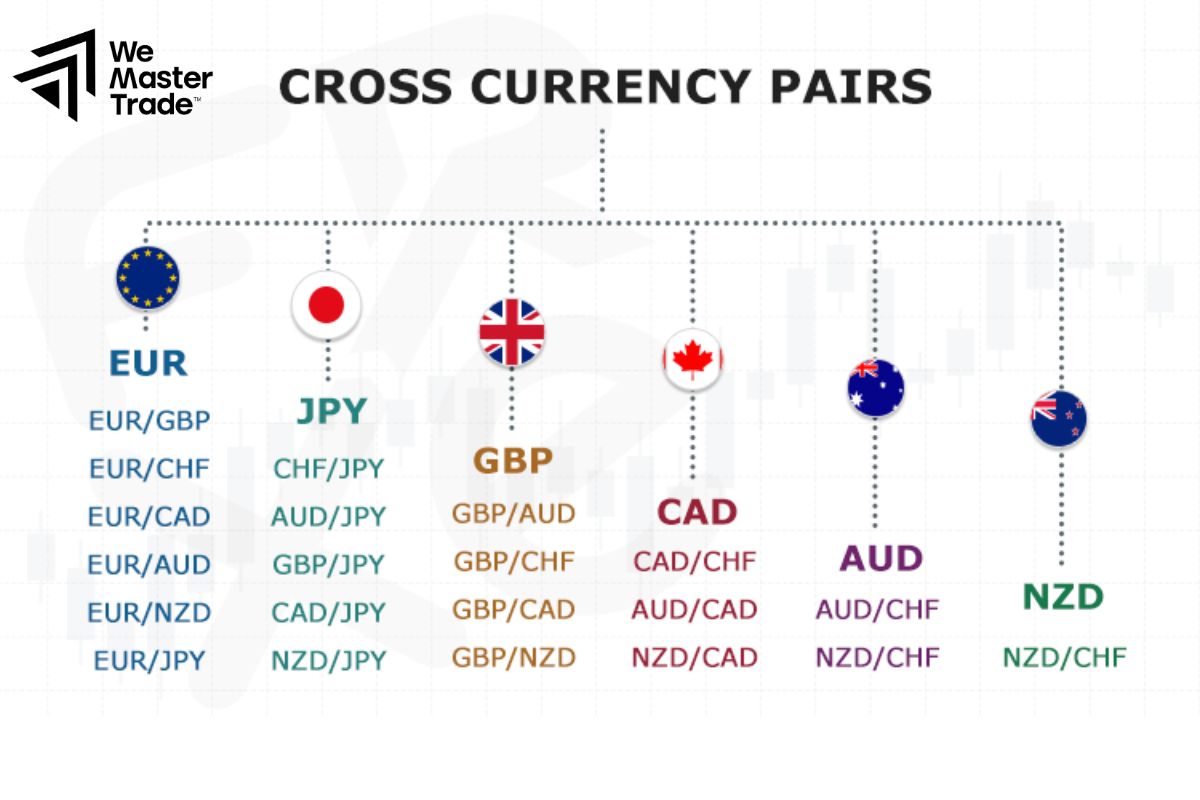
These are types of currency pairs that do not include the US dollar (USD). Instead, they are made up of two different currencies, such as the Euro (EUR) and the British Pound (GBP) in the EUR/GBP pair.
They are not as widely traded as pairs that include the USD, so there may be less information and price volatility, which can affect your profits. Although they are not as popular as the major pairs, you can still trade them easily.
For example: EUR/GBP, GBP/JPY, EUR/CHF.
Exotic Currency Pairs
These are types of currency pairs related to developing countries or emerging financial markets.
They are the least traded of all currency pairs, you may have difficulty finding a buyer or seller when you want to exit a position, which increases the risk of trading.
For example: USD/SGD (US dollar/Singapore dollar), pairs related to currencies of African countries, Middle East.
What affects the price of forex pairs?
The price of a currency pair is influenced by many factors, from major political events to minor monetary policy decisions. Let’s explore the main factors that “trigger” this volatility!
1. Interest rates

When a central bank raises interest rates, that country’s currency becomes more attractive to investors. Why? Because investors will receive a higher interest rate when depositing money in that country’s banks. This increases demand for that currency, pushing the price up.
For example, when the US Federal Reserve (Fed) raises interest rates, the USD often strengthens against other currencies.
2. Political instability
When a country experiences political instability, investors become concerned about the stability of the economy and withdraw capital from that country. This reduces the value of that country’s currency.
For example: Protests, wars, or sudden changes in government can cause sharp fluctuations in exchange rates.
3. Economic strength
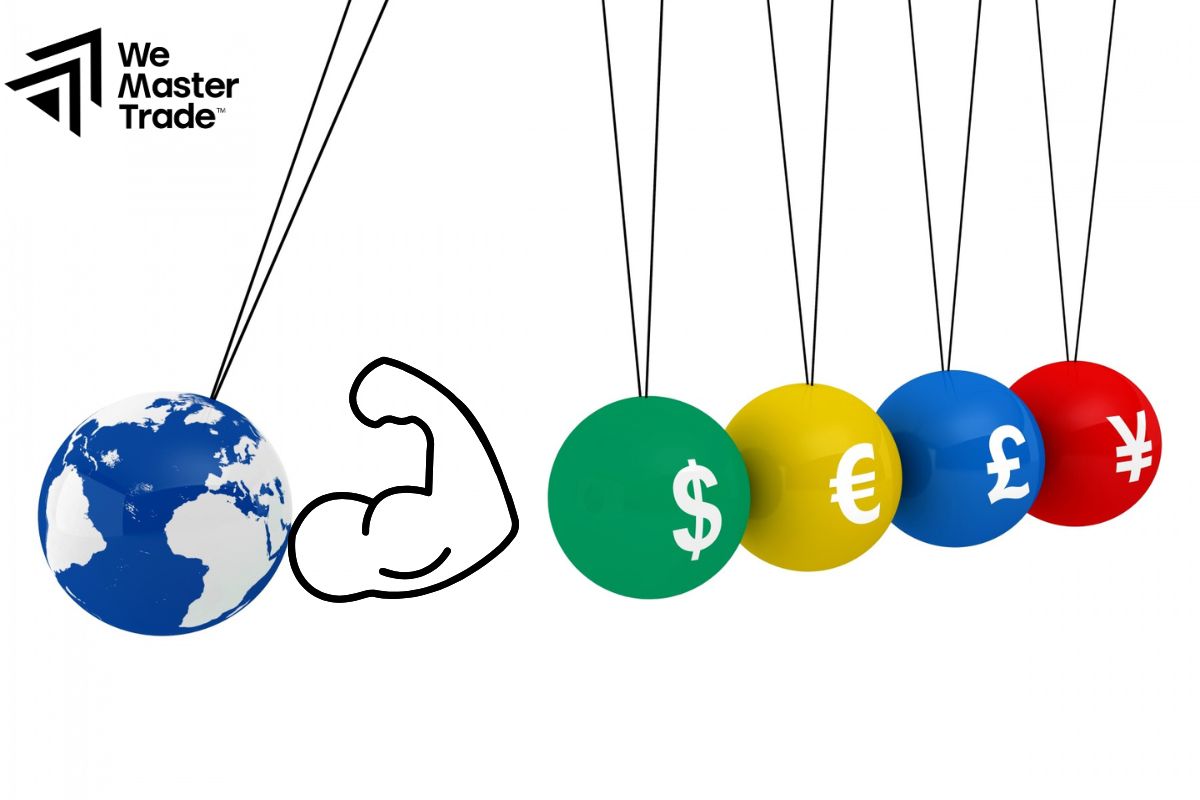
A strong economy, with high GDP growth and low unemployment, will attract many investors. This increases the demand for that country’s currency.
For example: Countries with large and stable economies such as the US and Japan often have strong currencies.
4. Foreign direct investment (FDI)
When foreign companies invest in a country, they need to exchange their money into that country’s currency. This increases the demand for the local currency and pushes up prices.
For example: US technology companies investing in Vietnam will increase the demand for the Vietnamese Dong.
Conclusion
In conclusion, there are many types of currency pairs in the market, they act as a measure of economic stability between two countries. Having a clear understanding of currency pairs helps investors have a more general view of the market, thereby making better decisions.
See more: