












Are you ready to transform your trading skills? The Elliott Wave Theory is a proven method for analyzing market trends and predicting price movements with precision. By understanding its key principles and wave patterns, you can unlock insights into market behavior and make more confident trading decisions. Start exploring its techniques and apply them to your trading strategy today. Don’t wait to elevate your trading game now!
What is Elliott Wave Theory?
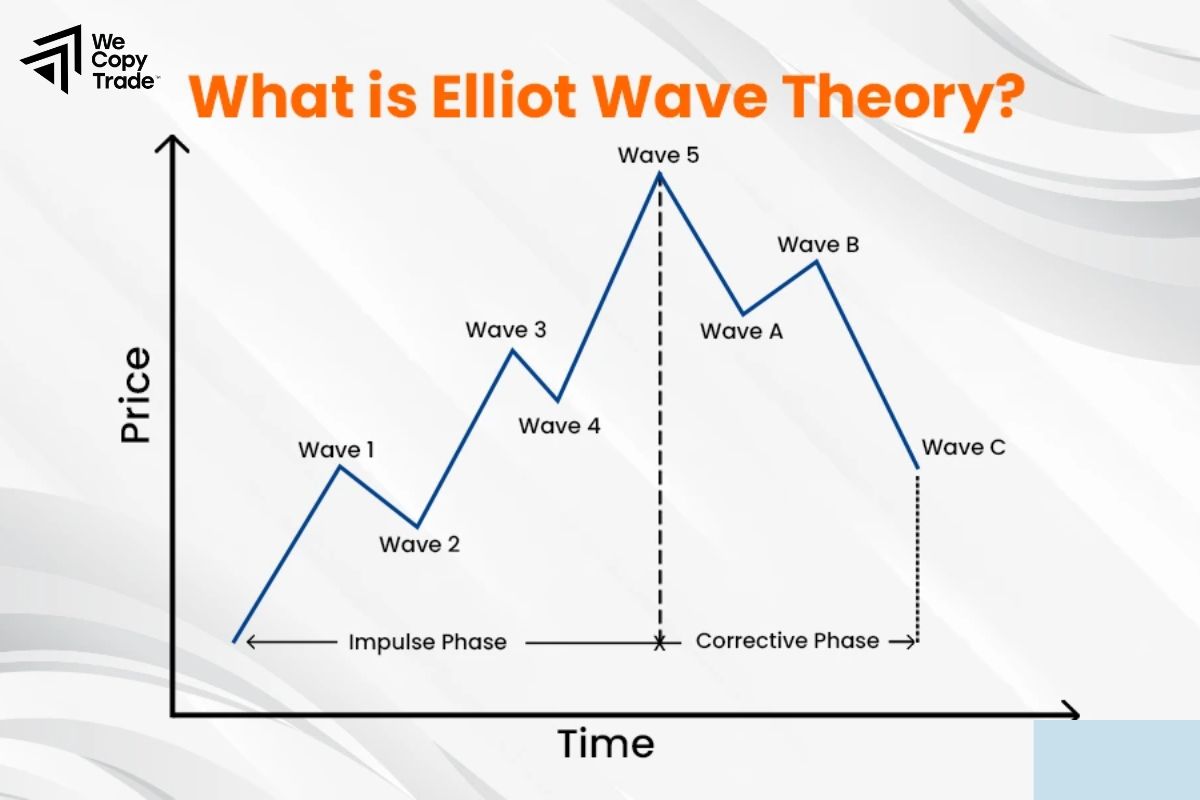
Elliott Wave Theory is a technical analysis method used to predict market trends by identifying repetitive wave patterns influenced by crowd psychology. Developed by Ralph Nelson Elliott in the 1930s, the theory posits that market prices move in cycles, reflecting the collective emotions and behaviors of traders.
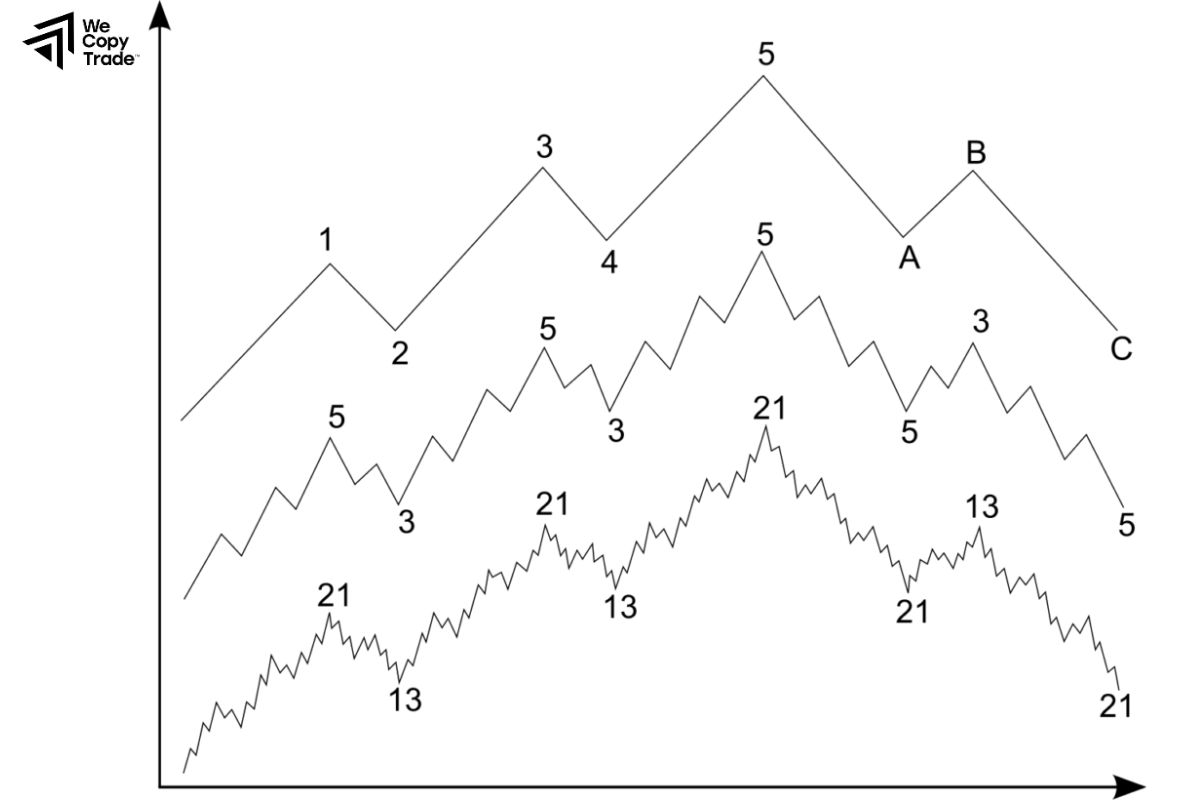
The structure typically includes a five-wave sequence in the direction of the trend, followed by a three-wave corrective pattern. These waves are fractal in nature, meaning they repeat on multiple timeframes and can be broken into smaller sub-waves. Additionally, Elliott Wave Theory often aligns with Fibonacci ratios, helping traders forecast potential retracement and extension levels.
This theory is widely used by traders to analyze price action, predict potential reversals, and identify optimal entry and exit points. However, its application requires skill and practice, as interpreting wave patterns can be subjective and influenced by market conditions.
See more:
- Apply Multiple Time Frames Technology Analysis in Trading
- How To Avoid Common Mistakes In Trading Psychology
- What are emotions in trading? Emotions Traders Experience
- What Does Patience in Market Entry Mean? Importance in forex
Basic Principles of Elliott Wave Theory
The basic principles of Elliott Wave Theory are grounded in the belief that market prices move in repetitive patterns driven by crowd psychology. These patterns are categorized into two main wave types:
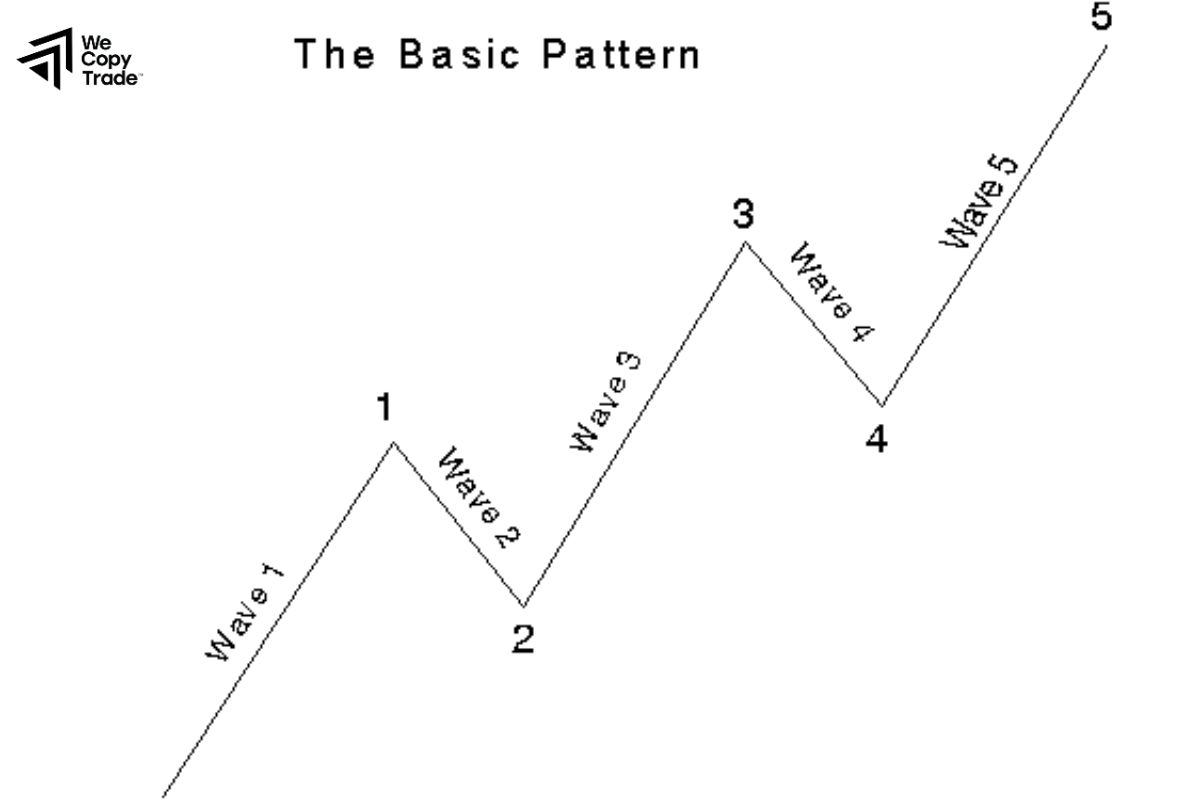
Impulse Waves (5-Wave Structure)
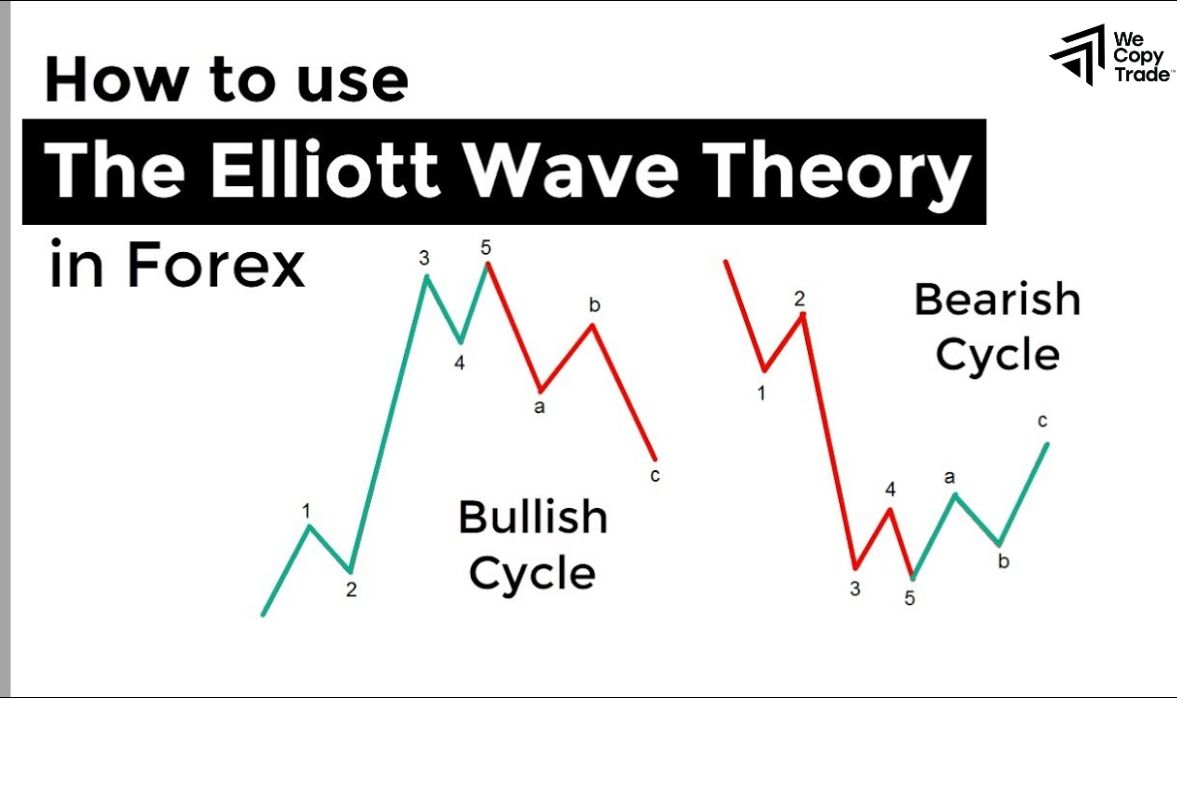
Impulse waves move in the direction of the overall trend and consist of five sub-waves:
- Wave 1, 3, 5: Move in the direction of the trend.
- Wave 2, 4: Are corrective and move temporarily against the trend.
Corrective Waves (3-Wave Structure)
Corrective waves move against the overall trend and typically follow an A-B-C pattern:
- Wave A: Initial counter-trend movement.
- Wave B: Partial retracement of wave A.
- Wave C: Completes the correction and moves beyond wave A.
Fractal Nature
Elliott waves are fractal, meaning smaller wave patterns exist within larger waves. These patterns repeat across various timeframes, making the theory applicable to both short-term and long-term analysis.
Wave Degrees
Waves are classified into degrees based on their scale, such as Grand Supercycle, Cycle, and Minor waves, allowing analysts to track the market on different levels.
Fibonacci Ratios
Waves often follow Fibonacci relationships in their lengths and retracements. For example, wave 2 may retrace 50% or 61.8% of wave 1, while wave 3 is often 1.618 times the length of wave 1.
Classification of Wave Forms
In Elliott Wave Theory, waves are classified into two main forms based on their direction and purpose within the market’s overall movement: Impulse Waves and Corrective Waves. Each type has unique characteristics and sub-patterns. Here’s a breakdown:
Impulse Waves
Impulse waves are the driving force of the market, moving in the direction of the prevailing trend. They consist of five sub-waves and adhere to specific rules:
- Wave 1, 3, 5: Move in the direction of the trend.
- Wave 2, 4: Are corrective waves that move briefly against the trend.
Rules for Impulse Waves:
- Wave 2 cannot retrace beyond the start of Wave 1.
- Wave 3 is never the shortest among waves 1, 3, and 5 and often the strongest.
- Wave 4 cannot overlap Wave 1 in most markets (except in diagonal patterns).
Corrective Waves
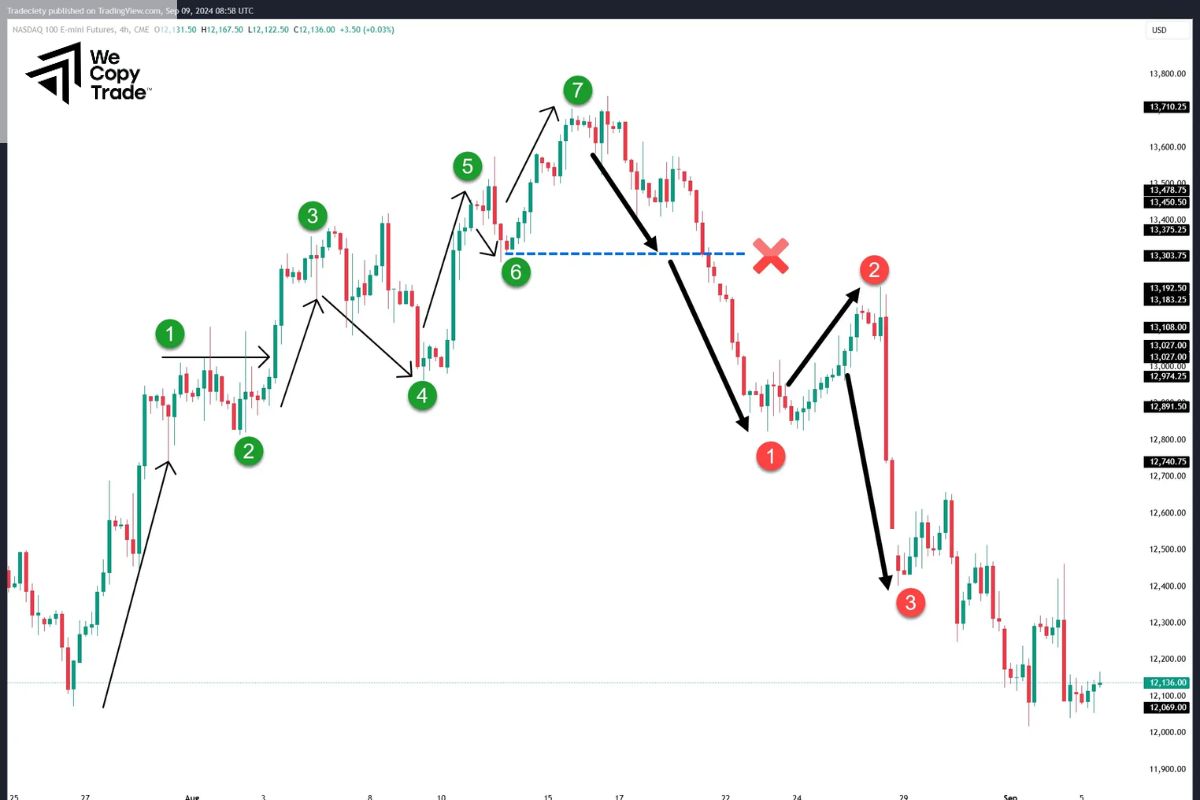
Corrective waves move against the prevailing trend and typically consist of three sub-waves labeled A, B, C. Corrective waves are more varied and complex than impulse waves, with several sub-classifications:
Zigzag Patterns
- A sharp corrective move, typically forming a 5-3-5 structure.
- Example: Wave A and C are impulsive, while Wave B is corrective.
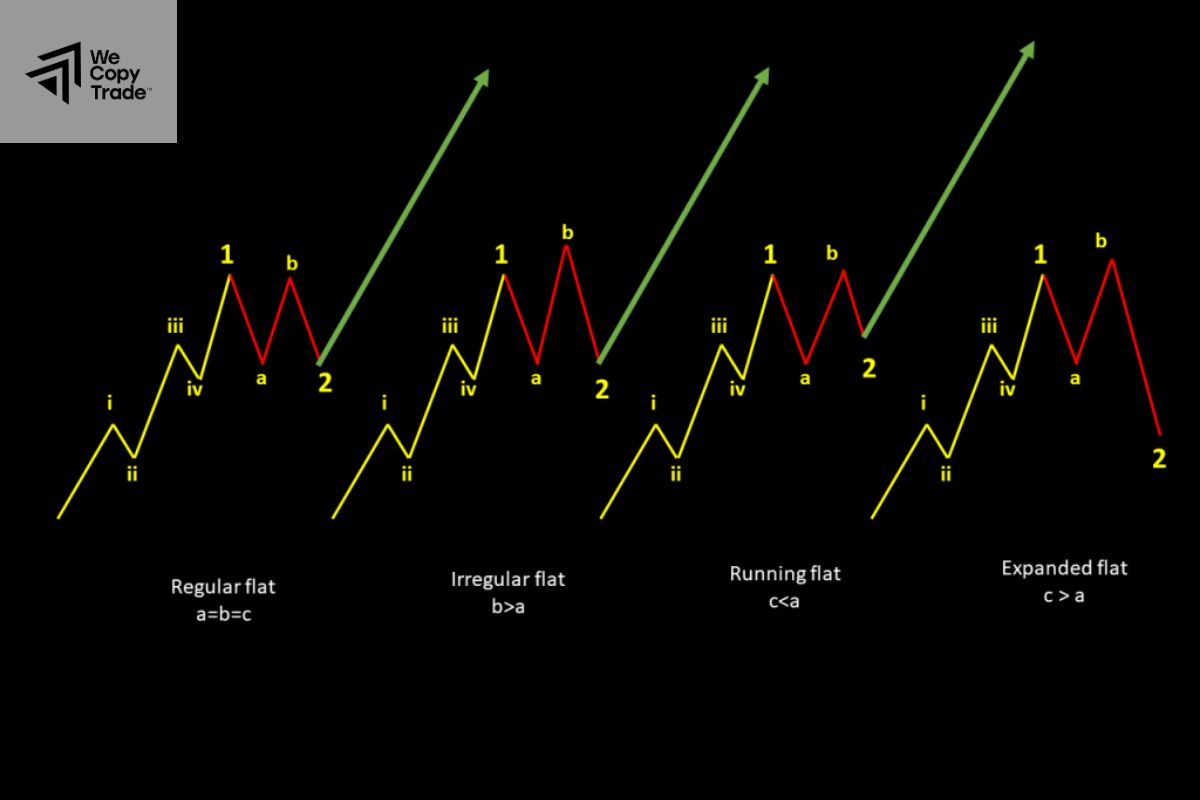
Flat Patterns
- A sideways corrective wave with an overall 3-3-5 structure.
- Example: Wave A and B are corrective, and Wave C is impulsive.
Triangles
- Consolidation patterns forming five sub-waves (A-B-C-D-E), moving sideways.
- Common in Wave 4 or Wave B of corrections.
Combination Patterns
- A mix of multiple corrective structures, such as zigzags and flats, connected by a linking wave.
Diagonal Waves
Diagonals are a hybrid between impulse and corrective waves, appearing in the form of contracting or expanding triangles. They are found in:
- Leading Diagonals: Occur in Wave 1 or A, signaling the start of a trend.
- Ending Diagonals: Occur in Wave 5 or C, signaling trend exhaustion.
How to Use Elliott Wave Theory in Trading
To use Elliott Wave Theory in trading, you can follow these 4 basic steps:
Step 1: Identify the Trend
- Impulse Waves: Look for the five-wave sequence (1, 2, 3, 4, 5) that moves in the direction of the main market trend. These waves are the strongest and provide entry points in the direction of the trend.
- Corrective Waves: Observe the three-wave sequence (A, B, C) that moves against the main trend. Corrective waves often present opportunities to enter trades before the main trend resumes.
Step 2: Use Fibonacci to Set Targets and Stop-Loss
- Wave 2 typically retraces about 50% or 61.8% of Wave 1.
- Wave 3 is often 1.618 times the length of Wave 1.
- Wave 4 usually retraces between 23.6% and 38.2% of Wave 3.
- Use Fibonacci levels to identify potential reversal points and set realistic profit targets and stop-loss levels.
Step 3: Combine Elliott Wave with Other Technical Indicators
- Combine Elliott Wave with indicators like RSI, MACD, or Moving Averages to confirm trends and entry points.
- For example, a bullish divergence between Elliott Waves and RSI can confirm the end of a corrective wave.
Step 4: Risk Management
- Always use stop-loss orders and define your risk-reward ratio before entering trades.
- Since Elliott Wave Theory involves some subjectivity, be cautious with unclear signals and adjust position sizes according to your risk tolerance.
Tools to Support Elliott Wave Theory Analysis
To support Elliott Wave Theory analysis, here are some popular tools that help you identify and determine market trends:

- Elliott Wave Indicator: Automatic Elliott Wave drawing tools on trading platforms like TradingView or MetaTrader help quickly identify impulse and corrective waves.
- Fibonacci Retracement and Extension: Used to identify support and resistance levels, especially in corrective waves (Wave 2, 4) and price targets for impulse waves (Wave 3, 5).
- RSI (Relative Strength Index): This indicator helps confirm the strength of a trend, especially in identifying divergence signals when waves are ending.
- MACD (Moving Average Convergence Divergence): Helps identify trend changes, detecting strong impulse waves or reversal points in corrective waves.
- Volume Analysis: Analyzing trading volume to assess the strength of a trend, with higher volume in impulse waves and lower volume in corrective waves.
Frequently Asked Questions about Elliott Wave Theory
Here are some frequently asked questions (FAQs) about Elliott Wave Theory:
Is Elliott Wave Theory Suitable for Beginners?
- Elliott Wave Theory can be challenging for beginners due to its complexity. However, by starting with the basics and combining it with other tools (like RSI and MACD), beginners can improve their skills with practice.
Can Elliott Wave Theory Be Applied to Crypto Markets?
- Yes, Elliott Wave Theory can be applied to crypto markets. While crypto markets are more volatile, the wave patterns still work to identify trends and reversals, especially when combined with tools like Fibonacci and volume analysis.
How to Identify Waves Most Accurately?
To identify waves accurately:
- Start with long-term trends and the main impulse and corrective waves.
- Use Fibonacci retracement levels to predict corrections.
- Combine with indicators like RSI and MACD for confirmation.
- Practice with historical charts and keep your analysis simple.
Conclusion
In conclusion, Elliott Wave Theory offers a powerful framework for understanding market trends and price movements. By analyzing wave patterns, traders can predict future market behavior and make more informed decisions. To get started, practice analyzing historical charts, use the right tools, and combine Elliott Wave with other technical indicators. Start applying Elliott Wave in your trading today and see how it can improve your market insights and trading results!
See now: