











In the highly volatile world of financial trading, understanding and mastering indicators is the key to survival. However, if there is one “make-or-break” factor that every trader following Technical Analysis must fully grasp, it is Volatility.
At Wemastertrade, we believe that volatility is not merely a measure of risk—it is the language of the market. This article takes an in-depth look at why this indicator plays a decisive role in the success or failure of any trading strategy.
1. What is volatility? Understanding the “breathing rhythm” of the market
From a technical perspective, Volatility is a measure of how much the price of a financial asset fluctuates over a given period of time. In technical analysis, it is commonly represented through Standard Deviation or specialized volatility indicators.
Many beginner traders fear price fluctuations because they associate them with risk. However, for experts at Wemastertrade, Volatility is the “fuel” that drives price movements. Without volatility, the market moves sideways, and traders have no opportunity to profit from price differentials.
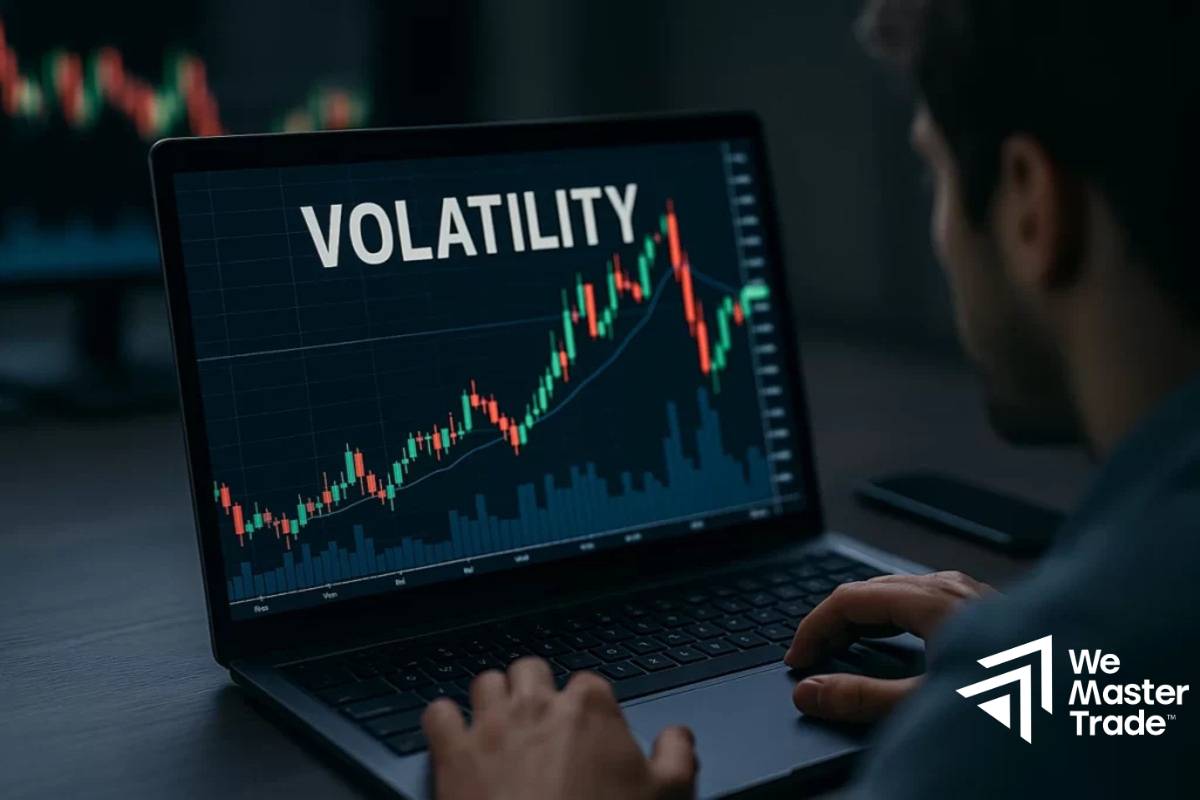
2. Why is volatility the most important indicator?
Identifying market regimes
The market constantly alternates between two states: Accumulation (low Volatility) and Expansion (high Volatility).
- Low volatility: Often represents a coiled-spring phase, where the market is waiting for major news or events.
- High volatility: This is when clear trends form or strong reversals occur.
By monitoring volatility indicators, technical traders can determine when to stay on the sidelines and when to step in to capture major market waves.
Optimizing stop-loss placement
A common mistake among traders is setting a fixed stop loss based on a specific number of pips or points. This approach can be extremely dangerous if volatility is ignored.
- When the market has high volatility, price noise becomes more aggressive. A tight stop loss can easily result in being “liquidity swept” before price moves in the intended direction.
- Using indicators such as ATR (Average True Range) allows traders to place stop losses based on real market volatility, helping protect capital more intelligently.
See more:
- What is MQL4? The Roadmap for Self-Learning EA Programming for MT4
- MT5 Risk Management: The “Survival” Secret & Profit Optimization
- How to Place Orders in MT4 & Set Take Profit/Stop Loss: A Standard Guide for Traders Who Want to Get Funded
Enhancing the effectiveness of other indicators
Momentum indicators like RSI or Stochastics often generate false signals when volatility is low. In contrast, when combined with volatility indicators such as Bollinger Bands, traders can better confirm the validity of a breakout. When the Bollinger Bands expand alongside increasing trading volume, it is a strong confirmation that a powerful trend is beginning.
3. Top volatility indicators every technical trader should know
To successfully apply theory in practice, Wemastertrade recommends focusing on the following three core tools:
Average True Range (ATR)
ATR does not predict price direction, but it shows how much price has moved on average over the last X periods. This is one of the best tools for risk management and position sizing.
Bollinger Bands
Developed by John Bollinger, this indicator uses a moving average (SMA 20) and two bands based on standard deviation. The “Bollinger Band Squeeze” is one of the most reliable signals for predicting an upcoming volatility explosion.
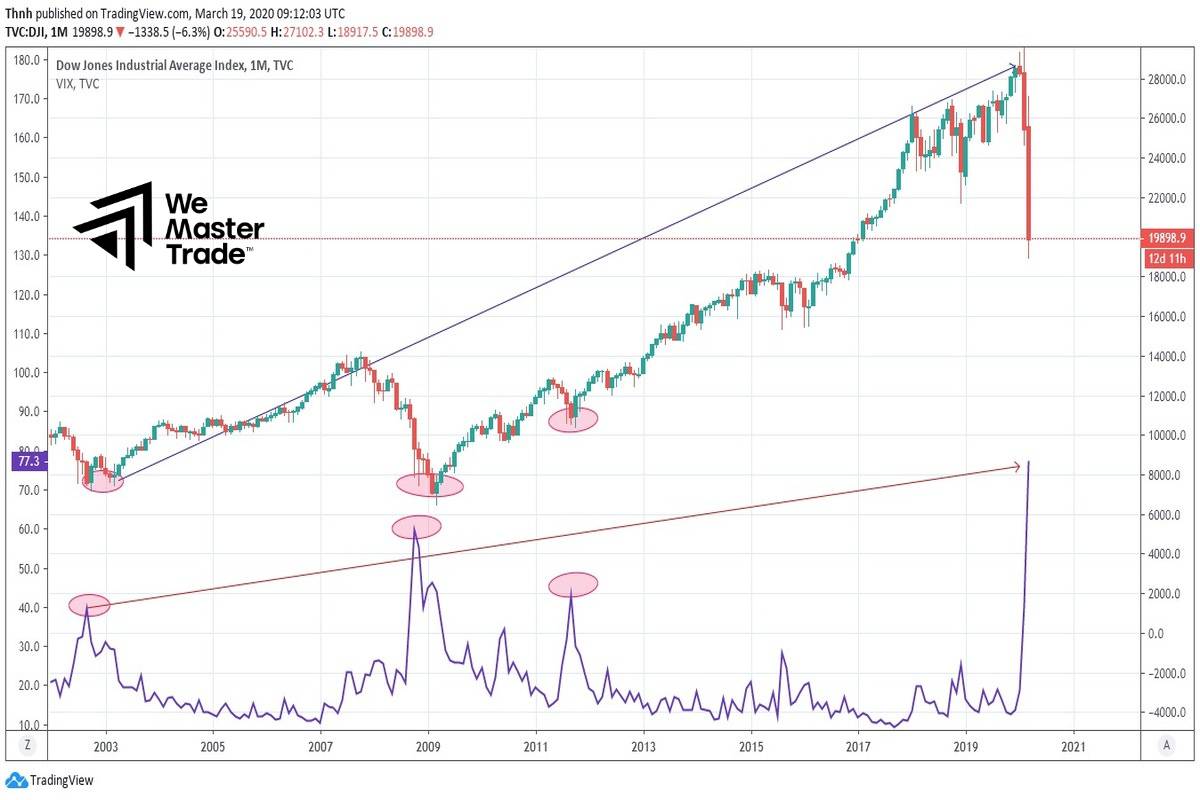
VIX (The Fear Index)
Although commonly used in stock markets, the VIX is a crucial sentiment indicator that reflects the market’s expectations of future volatility. When the VIX spikes, the market is in panic mode—an opportunity for technical traders who follow the philosophy of “buy when others are fearful.”
4. Volatility-based trading strategy at Wemastertrade
Within the Wemastertrade community, we guide our students to apply a three-step process to master market fluctuations:
- Measure: Use ATR to determine the width of the market’s current “breathing rhythm.”
- Filter signals: Only trade when volatility shows signs of expansion (e.g., price breaking out of the Bollinger Bands with strong momentum).
- Manage risk: Adjust position size inversely to volatility. The higher the volatility, the smaller the position size—keeping risk per trade constant.
Expert philosophy: “Trading is not about predicting where price will go, but about managing the volatility around that price.” — This is a core philosophy at Wemastertrade.
Don’t fear volatility—turn it into your advantage
In summary, Volatility is the soul of technical analysis. Ignoring it means trading with a major blind spot. Understanding why volatility is such a critical indicator will help you avoid market traps, optimize stop-loss placement, and improve your win rate.
We hope this article has provided valuable insights for your trading journey. To stay updated with advanced strategies and powerful technical analysis tools, don’t forget to follow upcoming articles from Wemastertrade.