











One of the most important decisions you can make for your long-term security and development is selecting the right financial strategy. Two typical approaches stand out among the many opportunities the financial markets present: trading and investing. Though they both want to raise your wealth, their approaches, risk tolerance, time dedication, and final goals differ. This essay will examine what trading and investing are, their advantages and disadvantages, and how you could decide which is best for you.
What Is Trading?
Trading is an active technique that includes buying and selling financial items, such as stocks, currency, commodities, or cryptocurrencies, in order to profit from short-term market swings. Traders rely on market timing and fast execution to create gains rapidly.
Types of Trading:
- Day trading: Day traders start and settle positions on the same day, minimizing overnight risks. Their trading strategy is to capture tiny price swings by doing repeated transactions throughout the day.
- Swing trading: Swing trading involves holding positions for days or weeks to capitalize on projected market “swings.” They examine trends and utilize technical indicators to determine when to enter and depart.
- Scalping: Scalping involves making fast transactions, holding positions for just seconds or minutes. Their method is centered on making a large number of transactions to benefit from little price movements.
Advantages of Trading
- Quick profit potential: Trading with favorable market movements might result in quick profits. Skilled traders who are adept at interpreting market signs might benefit from modest movements.
- Flexibility: Trading tactics are flexible and can adjust to changing market circumstances. There are possibilities to benefit in both bullish and negative markets.
- Active engagement: Trading is a dynamic and exciting atmosphere for people who appreciate making quick choices and actively participating in the market.
Disadvantages of trading
- High pressure: Trading involves continual attention, rapid decision-making, and stress tolerance. This setting is not ideal for everyone.
- Risk of fast losses: For rookie traders who misjudge the market or fail to control risk, short-term volatility and frequent trades might cause large losses.
- Time intensive: Trading is time-intensive as it calls for constant market monitoring and rapid response, which is difficult for those with full-time responsibilities.
What is investment?

Investing is a long-term strategy meant to gradually raise wealth by means of purchases and retention of financial assets over time. Through appreciation, dividends, and interest, investors typically want to make profit from the long-term increase of their assets.
Types of Investment
- Stocks: Investing in stocks might result in capital increase as businesses expand and flourish.
- Bonds: Bonds are a common substitute for conservative investors because of their consistent income and less volatility relative to stocks.
- Real estate: Real estate investments might provide gains via rental income and property value rise.
- Exchange-traded funds (ETFs): ETFs allow investors to diversify across many assets, therefore lowering individual risk and getting market returns.
- Cryptocurrencies: Investing in cryptocurrencies like Bitcoin, Ethereum, and future digital assets might provide notable returns and diversification in the digital economy.
Advantages of Investing
- Sustainable growth: Investment aims for long-term capital appreciation. Over time, compounding returns may dramatically increase your wealth.
- Less stress: Investing is a buy-and-hold strategy, which reduces stress by eliminating the need for regular market monitoring. This strategy frequently leads in a more comfortable investment experience than trading.
- Reduced transaction costs: Fewer transactions result in lesser fees and tax liabilities, leading to greater cost efficiency.
Disadvantages of Investing
- Slow returns: Unlike trading, where gains may be realized fast, investment needs patience to accrue over years or decades and have some professional investment tips.
- Market downturns: Market fluctuations might impact long-term investments. During economic downturns, investors may see considerable drops in portfolio value before recovering.
- Limited flexibility: Investing in long-term trends and fundamentals limits the ability to capitalize on short-term market opportunities.
Key Differences Between Trading vs Investing
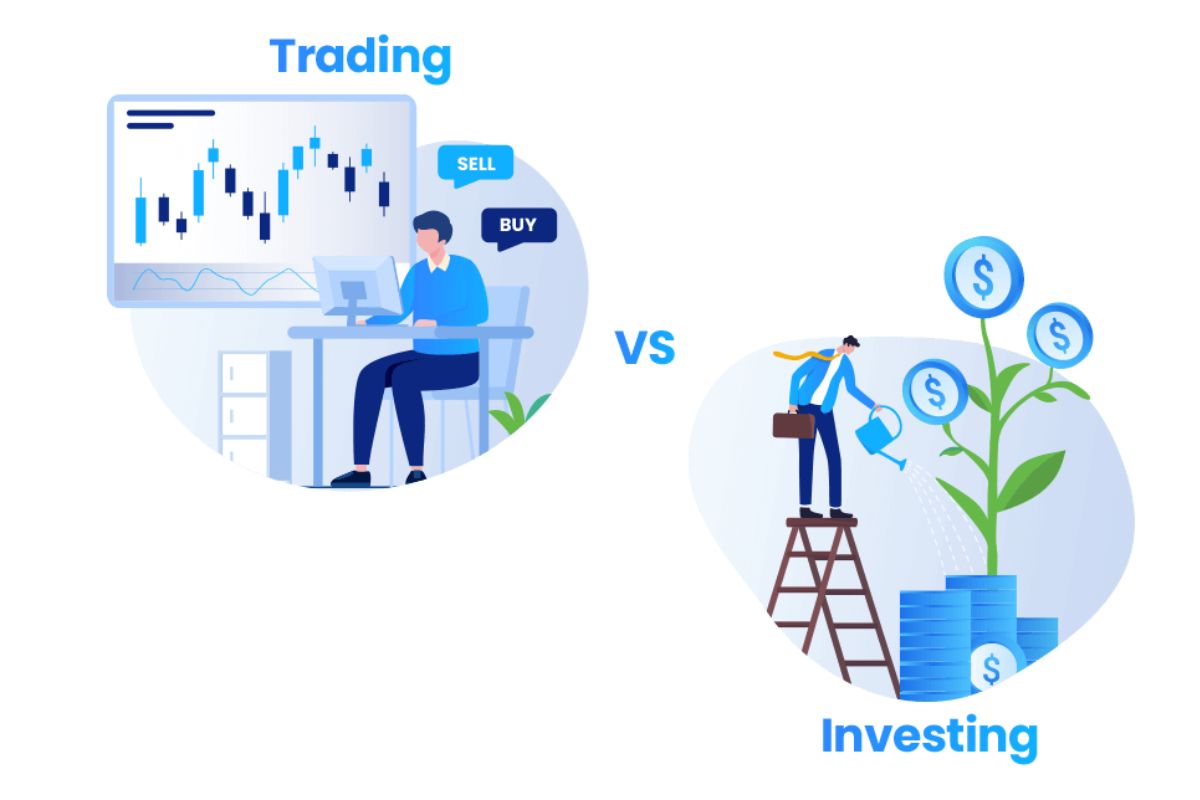
Understanding the key distinctions between trading and investing is critical for selecting the best approach for your financial objectives. Here are some of the important variables to consider:
Time Horizon
- Trading focuses on the short-term. Traders use daily or weekly price changes to earn rapid gains.
- Investing emphasizes long-term development. Investors retain investments for years or even decades, banking on market appreciation and compounding.
Risk and Return
- Trading involves increased risk owing to market volatility and frequent trading. However, the opportunity for quick growth is bigger.
- Investing offers reduced risk and steady rewards over time. Investors accept slower growth in exchange for a more secure way to accumulate money.
Required Skills and Knowledge
- Trading calls for technical analysis skills, strong market knowledge, and quick under pressure judgment ability. Often individuals who keep up with market fluctuations and news are successful traders. You can follow them to learn more at WeCopyTrade platform.
- Investing requires a thorough grasp of basic research, economic data, and business performance. Patience and the capacity to consider in the long run are key.
Costs & Fees
- Frequent trading leads to greater transaction fees and tax obligations. If not handled properly, these expenses might eat away at total profitability.
- Investing involves minimal transaction costs due to infrequent transactions. Long-term holdings can get preferential tax treatment in several countries.
How to Know Which Strategy is Best for You

Choosing the optimal strategy for your financial goals depends on an awareness of the main differences between trading and investing. Here are some salient factors to take into account:
Set Your Own Financial Objectives
Trading might be a terrific decision if you desire quick money and are willing to accept more risk. On the other hand, a long-term investing plan might be more suited if your objective is to consistently save money and ensure a comfortable retirement.
Consider if you need money immediately or whether you could commit to a longer-term strategy. Trading may be more enticing for people seeking short-term cash; investing is more suitable for those wishing to progressively raise their wealth.
Calculate Your Risk Acceptance
Trading by nature carries more risk. Trading might be a fascinating choice if you are at ease with the prospect of losing a significant amount of your money in search of more returns. On the other hand, investment can be more fit for your requirements if you want a more cautious approach with less volatility.
Consider if you need money immediately or whether you could commit to a longer-term strategy. Trading may be more enticing for people seeking short-term cash; investing is more suitable for those wishing to progressively raise their wealth.
Evaluate the Time You Can Dedicate to the Market
Trading requires continual attention. Trading may be a viable option if you have the time to examine market patterns, make transactions, and monitor positions continuously. This method is best suited to persons who can devote many hours each day to market research and trade management.
Investing is less time-consuming. Investing enables you to check your portfolio on a regular basis without the need for daily interaction, which is ideal for people with hectic schedules or who prefer a hands-off approach.
Who Should Choose Trading?
- Adventurous: Trading might be for you if you like fast-paced, high-energy situations and are at ease with measured risks.
- Time commitment: Traders have to set out a lot of time to actively monitor the market, usually daily.
- Quick decision-making: Good trading calls on the ability to react forcefully and fast to changes in the market. If you like the thrill of rapid transactions and you are naturally fast and decisive, trading might be the perfect way for you.
Who Should Choose Investing?

- Stability and long-term vision: Investing is perhaps a better match if you value a consistent, long-term strategy to wealth building and wish to relax about daily market fluctuations.
- Limited time: Investing offers a more laid-back approach with sporadic assessments instead of daily examination for those who lack the luxury of continuously watching the markets.
- Analytical and patient: Investing requires extensive research and a long-term mindset. If you love studying businesses, understanding market fundamentals, and are willing to wait for your assets to develop over time, investing may be a successful approach.
Conclusion
Your goals, risk tolerance, and lifestyle will all affect the extremely personal decision you make between trading and investing. Both systems provide different benefits and challenges, hence self-awareness is very important. Spend some time considering what really speaks to you before you begin. The best approach is ultimately one that fits your objectives for both personal fulfillment and financial success. Check out more our latest market news and join our trading program at https://wemastertrade.com/