










One familiar name in the global financial markets is George Soros. Often referred to as “The Man Who Broke the Bank of England,” Soros is more than just a wealthy investor; he is a bold thinker, a man with the ability to flourish in turbulent circumstances. This article explores George Soros’s past triumphs, exposing the strategies behind his success and the useful advice investors may find today. Whether you are a novice investor or an experienced one, Soros’s knowledge offers valuable insights for negotiating the often shifting financial market terrain.
Background of George Soros
George Soros was born in 1930 in Budapest, Hungary, to a poor family. He survived World War II and eventually emigrated to England, where he graduated from the famed London School of Economics (LSE).
Soros started his financial career in New York, honing his abilities on Wall Street. What distinguishes him is his ability to integrate economic theory with a thorough knowledge of market psychology. His investing strategy extends beyond profitability, emphasizing the need of capitalizing on global market volatility.
Soros is estimated to have a net worth of $7.2 billion as of September 2024, having contributed more than $32 billion to humanitarian organizations. Much of the money has gone into paying education and health initiatives, human rights campaigns, and fostering democracy.
Key Milestones in Soros’s Investment Career
Groundbreaking achievements that have solidified George Soros’s reputation as among the most influential figures in world finance characterize his financial career.
Black Wednesday, “The Man Who Broke the Bank of England” (1992)

Soros became well-known all across for his famous pound currency bet in 1992. High interest rates and a failing economy were expected to hinder the UK government from keeping the fixed currency rate under the European currency Rate Mechanism (ERM).
Using borrowed billions of pounds to short-sell the currency, Soros speculated on its devaluation. The pound fell and Soros profited $1 billion on a single day when the UK left the ERM.
Lesson from this event:
- Macro analysis is crucial: Understanding the interaction between economic policy and market movements is crucial.
- Courage and decisiveness: Soros was willing to make large risks when he saw an opportunity.
The Quantum Fund: A Profit-Generating Machine (1973)
Starting the Quantum Fund in 1973, George Soros has subsequently established a legendary brand in the hedge fund industry. The fund was among the most successful in history with an average yearly growth rate of 30% over more than two decades.
Among the many assets the Quantum Fund invests in are currencies, stocks, bonds, and commodities. By grasping world events like the 1997 Asian financial crisis and Eastern Europe’s post-Cold War economic reconstruction, Soros made enormous profits.
Lessons from the Quantum Fund:
- Diversification is crucial: Diversifying assets across asset types and locations reduces risk.
- Risk management: Soros was always concerned about reducing losses when things didn’t go as planned.
Strategies for Investing in Emerging Markets
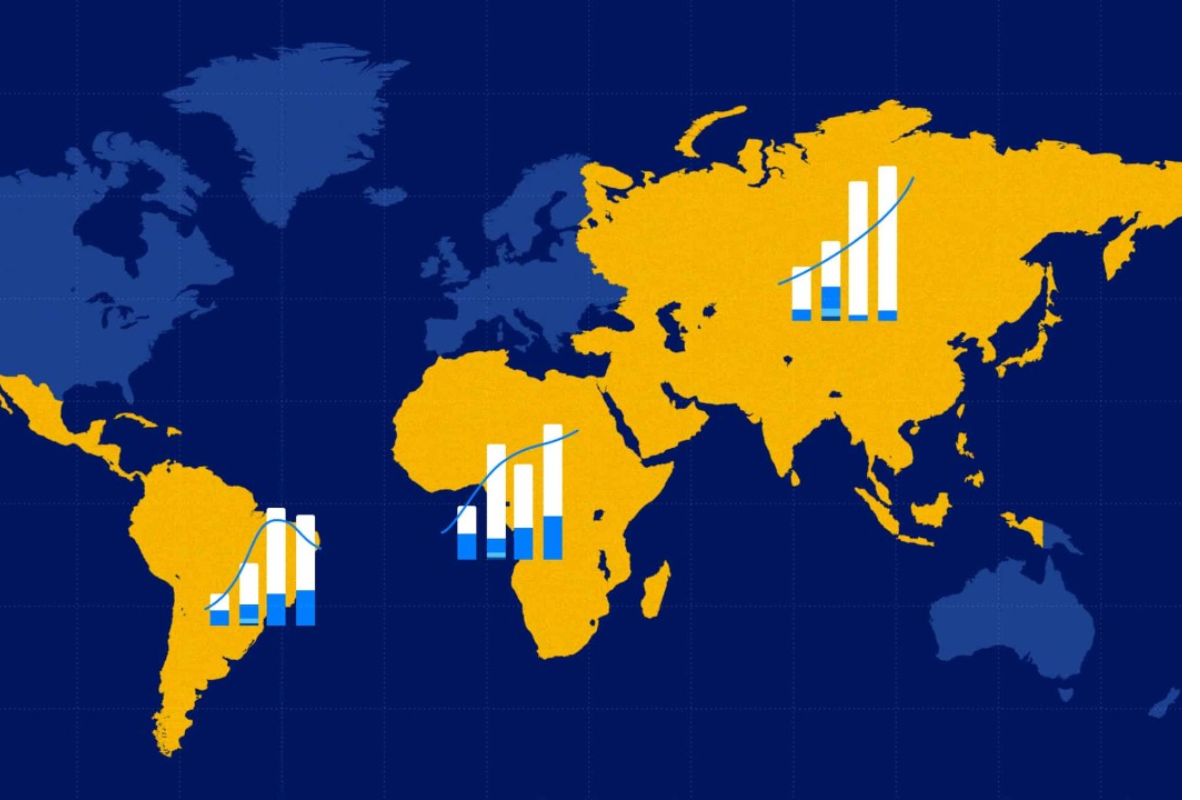
George Soros is well known for seeing promise in developing economies, where there are many dangers along with excellent prospects. His significant investment in Eastern Europe during the time of transition after the fall of the Soviet Union is a noteworthy example. In addition to offering financial assistance, he encouraged the growth of economic infrastructure, which contributed to the region’s notable change.
Moreover, Soros engaged in markets in Asia and South America, during periods of economic crisis to acquire low-cost assets and subsequently profited greatly when the markets calmed down.
- Investing money on the Hong Kong stock market during the 1997 Asian financial crisis.
- Laying a bet on Turkey’s 2000s economic comeback.
- Placing a wager on Turkey’s economic resurgence in the 2000s.
Lessons from Investing in Emerging Markets
- Enormous risks accompany enormous benefits: Understanding the features of these markets and being ready for volatility is very important.
- Investors must have geopolitical knowledge: Mostly because of his meticulous attention to international events and their consequences on the economy, Soros is successful.
Famous Strategies and Tips of George Soros
One of the most prosperous investors in history, George Soros, has created a series of tactics that have enabled him to successfully negotiate challenging financial environments and accomplish outstanding success.
Strategy 1: Reflexivity – Knowledge of Market Psychology

The foundation of George Soros’s investing philosophy is the principle of reflexivity, which highlights the interaction between investor perceptions and market prices. This theory contends that market participants’ attitudes and actions influence financial market prices in addition to underlying facts. This creates a feedback loop in which fundamentals are influenced by market patterns, which further impact pricing.
In asset bubbles, for instance, the initial price increase draws in more investors, starting a vicious cycle that drives up values much over their true worth. The bubble eventually pops when inflated perceptions collide with reality. By learning to recognize these distortions, Soros was able to take advantage of both market ups and downs.
Tips for investors:
- Assess how investor mood is influencing market behavior rather than relying just on conventional measures like P/E ratios.
- To spot prospects that are undervalued, use contrarian thinking. Look for cues to adopt a different stance when the majority is too positive or too negative.
- Try out the real market with no risk on WeCopyTrade.
Strategy 2: The Secret to Longevity – Risk Management
According to Soros, the cornerstone of successful investment is capital preservation. He has often underlined that preventing large losses is far more crucial than making disproportionate profits. Even in his most bold moves, like as his brief wager against the British pound,oros gave much thought to the hazards and set protections to minimize losses.
He famously said, “It’s not whether you’re right or wrong that’s important, but how much money you make when you’re right and how much you lose when you’re wrong.” This idea helped him maintain his composure while making risky wagers.
Tips for investors:
- Establish clear exit strategies: To prevent rash decisions, specify the circumstances under which you will lock in gains or reduce losses before placing any trades.
- Only make investments you can afford to lose: Effective position size management makes ensuring that one mistake doesn’t put your whole portfolio at risk.
Strategy 3: When The Odds are in Your Favor, Place a Large Wager

Soros’s career is characterized by bold, focused wagers when he was firmly certain of his analysis. Although diversification is recommended by conventional financial knowledge to lower risk, Soros thought that dispersing assets too widely may impair profits. His strategy was to invest significant funds after waiting for a rare but very confident chances.
One famous example is his $10 billion gamble on the British pound on Black Wednesday 1992. oros was able to predict the pound’s approaching devaluation and acted quickly because of his careful study and grasp of the status of the economy.
Tips for investors:
- Await the ideal time: Be patient and avoid the temptation to seize every chance. Rather, concentrate on well-studied, high-potential ventures.
- Don’t hesitate: Take decisive action as soon as you’ve done your research and the chances are in your favor.
Strategy 4: Flexible to Market Changes
Soros differs from many investors in that he is open to changing his view and adjusting to new knowledge. Adhering strictly to an original investing concept might be harmful in volatile markets. Soros understood that markets are dynamic and that staying ahead requires adaptability.
Throughout his career, he demonstrated this flexibility by continuously modifying his portfolio to reflect changing conditions. When fresh information contradicted Soros’s initial beliefs, his humility and pragmatism enabled him to swiftly change course rather than hold onto a failing stance.
Tips for investors:
- Remain modest: When your analysis or approach is no longer sound, admit it and don’t be afraid to alter your direction.
- Keep a close eye on markets: To make sure you’re constantly working with the most recent information, keep a careful watch on regulations, trends, and world events.
Strategy 5: Pay Attention to Worldwide Trends
The key to Soros’s success is his aptitude for seeing and seizing geopolitical and macroeconomic trends. He was aware that global events, including changes in politics, trade regulations, and economic reforms, had an impact on financial markets. He put himself in a position to benefit from significant developments by examining these variables.
His investment in Eastern Europe after the collapse of the Soviet Union was one of his most noteworthy achievements. Realizing the area’s potential for economic change, Soros sponsored infrastructure development and made investments in its financial markets, therefore promoting long-term prosperity.
Tips for investors:
- Keep up with world news: Keep up with global events that might lead to opportunities in stocks, commodities, and currencies.
- Recognize the macroeconomic effects: Examine how significant occurrences, such trade disputes or economic penalties, affect international markets and provide investment possibilities.
Conclusion
It is essential to approach every choice with a firm grasp of market dynamics and a well-defined plan while navigating the complexity of investing. A strong framework for seeing possibilities, controlling risk, and adjusting to changing circumstances is offered by George Soros’s observations.
Investors may improve their decision-making skills by adopting his ideas of adaptability, perseverance, and knowledge of market psychology. The primary lesson is to maintain discipline, keep an open mind to new information, and approach every investment with a fair assessment of the risks and benefits. Profits are not the only goal of investing; careful, calculated decisions that result in long-term success are also important.
For more helpful informations about trading and investing please check out our website: https://wemastertrade.com/blog/.