












Have you ever heard of slippage? It is considered as a negative signal in trading investing. It is one of the factors that directly affects your profits. So where does inflation come from and how can we limit it? The following article will help you answer all those questions.
What is slippage?

Slippage is when you want to buy or sell something, but when the transaction is executed, the price has changed from when you placed the order. This happens because the market moves quickly, causing you to pay more or receive less than you originally expected.
If the slippage is too large, it can turn a profitable trade into a losing trade.
For example, you want to buy a stock for 10,000 VND, but when the order is executed, the price has increased to 10,200 VND. This 200 VND difference.
It can be divided into three types depending on the market situation at the time of the transaction:
- Positive (buying at a lower price than expected),
- Negative (buying at a higher price than expected)
- No (buying at the expected price).
For example, if you want to buy a stock for 100,000 VND but end up buying it for 102,000 VND, that is negative it. Conversely, if you buy it for 98,000 VND, that is a positive one.
See more:
- Applying the Kelly Criterion to Your Trading Systems
- What is Position Sizing? Popular Methods You Should Know
- How To Choose Your Best ECN Brokers – Top ECN Forex Brokers
- Top 10 STP brokers need to know for your best trading choice
Reasons Cause of Slippage
Some of the main causes of price slippage that you should be aware of:
Low liquidity
The main cause of slippage in low-liquidity currency pairs is the difference between supply and demand.
In forex trading, when you place an order to buy or sell less-traded currency pairs (low liquidity), you have to wait a while to find someone who wants to trade with you, and during that waiting period, the price may change because the fewer people trading, the more difficult it is to match orders.

If you want to limit the risk of slippage, prioritize trading popular and highly liquid currency pairs such as:
- HKD (Hong Kong Dollar): The currency of the Hong Kong Special Administrative Region, closely linked to the USD.
- MXN (Mexican Peso): The currency of Mexico, an emerging economy.
- CNY (Chinese Yuan): The currency of the world’s second largest economy.
- SGD (Singapore Dollar): The currency of Singapore, a major financial center in Southeast Asia. KRW (South Korean Won): Currency of South Korea, an industrialized economy.
- ZAR (South African Rand): Currency of South Africa, an emerging economy heavily dependent on raw commodity exports.
- RUB (Russian Ruble): Currency of Russia, a large economy with many natural resources.
- INR (Indian Rupee): Currency of India, a large and rapidly growing economy.
High volatility
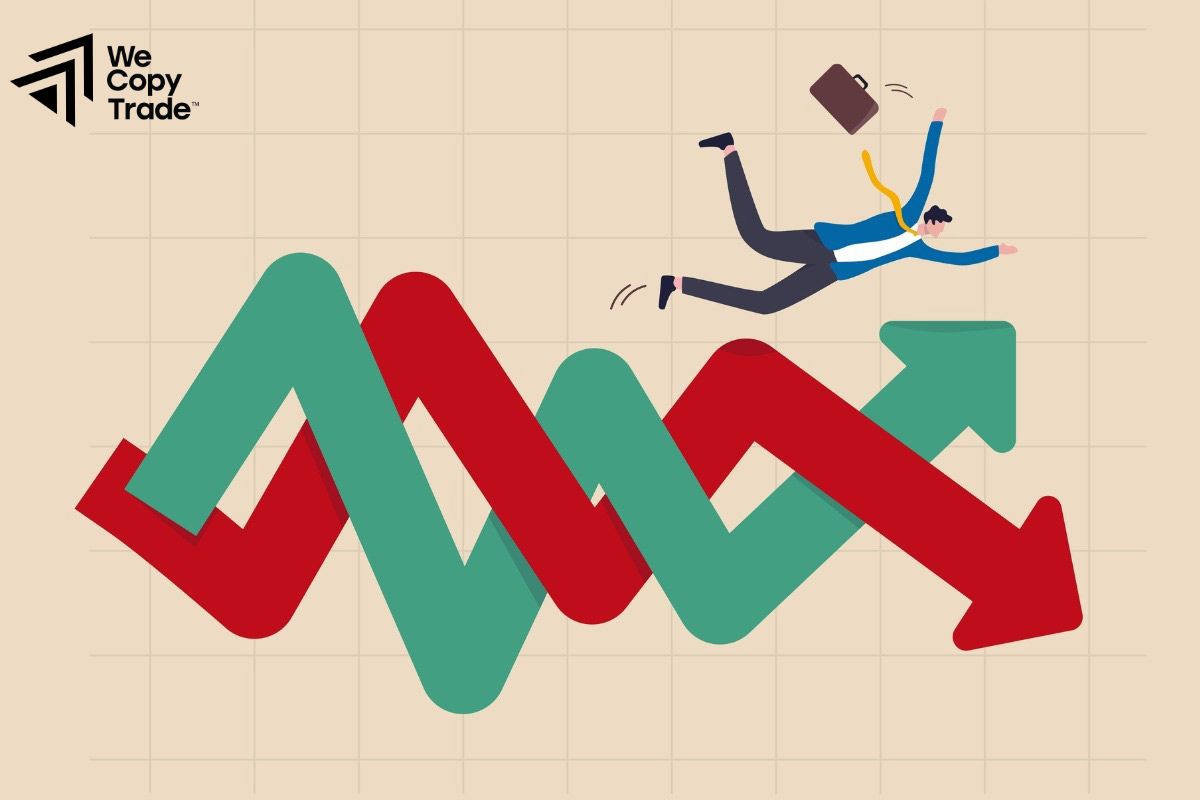
High volatility means that market prices change very quickly. The more volatile the market, the higher the chance of slippage.
Key factors that cause high volatility:
- Economic news, political news, or unexpected events can cause the market to become volatile.
- Central bank meetings that decide on interest rates can have a big impact on financial markets.
- Economic crises, political crises, or natural disasters can cause strong market fluctuations.
High Volume Trading
When you place a large buy or sell order, it can change the price in the market and cause slippage. This is because when you want to buy or sell a large amount of stock, you will have to accept buying or selling at many different prices and the price may be higher than what you expected.
Pros and Cons of Slippage
Although it is known as a negative thing. However, besides the disadvantages, it also has its own advantages:
Pros of Slippage
- Slippage is not only a bad thing in trading. Sometimes, the price can change in your favor.
- For example, when you want to sell a stock, its price suddenly increases. At this time, you will sell it at a higher price than the price you placed your order, giving you an unexpected profit.
Cons of Slippage
- Negative slippage can result in you buying an asset at a higher price or selling it at a lower price than expected, causing financial losses.
- This problem can affect your trading strategy, distort your calculations and technical analysis, and lead to you making wrong trading decisions.
- When faced with constant, investors can feel stressed and anxious, affecting their trading psychology and ability to make informed decisions.
- Stop-loss orders are designed to limit losses, but if slippage occurs, the stop-loss order may not be executed at the desired price, leading to greater losses.
How To Calculate The Slippage
Calculating helps you better understand your trading costs. If the slippage is too large, it can significantly impact your profits. Therefore, tracking and managing this situation is an important part of cryptocurrency trading.
To calculate, you use the following formula:
Slippage (%) = [(Actual Price – Estimated Price) / Estimated Price] x 100
For example: In the above case, the slippage would be: [(40,200 – 40,000) / 40,000] x 100 = 0.5%
This means that you paid 0.5% more than the price you originally intended.
How to Reduce the Impact of Slippage
To minimize slippage, professional investors often apply the following methods:
- Using a guaranteed stop-loss order is the most effective way to completely eliminate the risk. However, you will have to pay a fee for this service.
- Choose a trading platform with high liquidity to limit price fluctuations, minimizing the possibility.
- Place a limit order at a specific price that you are willing to buy or sell. However, this order does not guarantee immediate execution, especially in volatile market conditions.
- When trading with large volumes, the possibility will be higher. Therefore, consider reducing the position size to minimize the risk.
- In addition to guaranteed stop orders, you can use other tools such as trailing stops, take profits to manage risks more effectively.
Conclusion
In conclusion, slippage is an unavoidable risk in trading. However, by understanding the causes of this problem and applying appropriate risk mitigation measures, you will no longer be concerned about this mistake in your trading.
See now: