











Real market trading means making decisions in market conditions where price movement, execution, liquidity, spreads and emotions matter. A strategy can look simple in a chart replay or demo environment, but feel very different when the trader must act in real time.
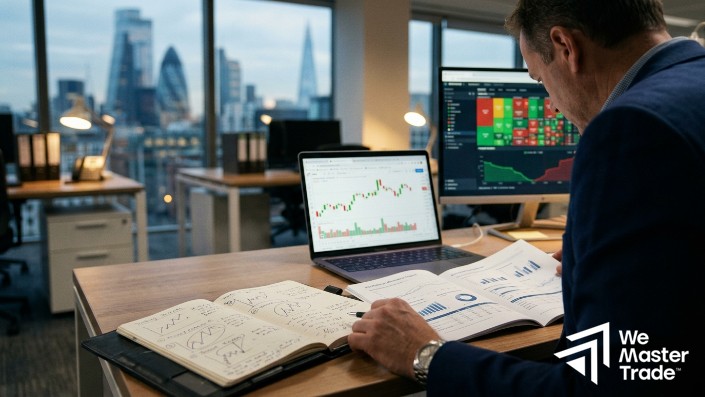
The keyword can be confusing because some SERP results point to brand names or broker pages. For traders, the useful topic is the transition from learning or simulated practice into live market conditions.
This content is for educational purposes only. It does not provide financial advice or guarantee trading results, challenge outcomes, funded status or payouts.
What real market trading means
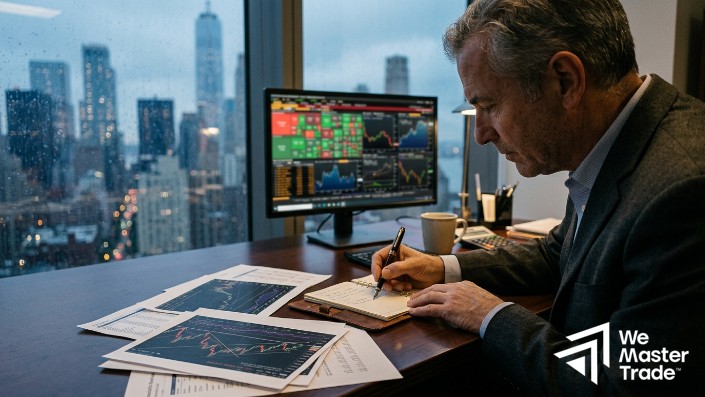
Real market trading is not only about clicking buy or sell. It is about making decisions while the market is moving, spreads can change, volatility can expand and emotions can influence execution.
Compared with static chart study, real market trading includes:
- Time pressure.
- Changing liquidity.
- Slippage risk.
- Spread changes.
- News volatility.
- Emotional pressure after wins or losses.
- The need to follow account rules.
That is why a trader can understand a strategy intellectually but still struggle when market conditions become live.
Demo, simulated and real market conditions
Demo or simulated trading can be useful. It helps traders learn order types, platform layout, position sizing and basic strategy execution without risking personal capital. But simulated practice does not always recreate the emotional pressure of live decisions.
| Environment | Useful for | Main limitation |
|---|---|---|
| Chart study | Learning structure and patterns | No execution pressure |
| Demo account | Practicing orders and risk sizing | Emotions may be weaker |
| Simulated challenge | Testing rules and consistency | Conditions depend on the platform |
| Real market trading | Practicing decision-making under pressure | Mistakes can have real consequences |
WeMasterTrade offers access to trading platforms and simulated symbols, but tools are only part of the process. A trader still needs rules, discipline and realistic expectations.
What changes when trading becomes real
The first change is execution. In real market trading, the exact entry and exit may differ from the plan because prices move, spreads widen or liquidity changes.

The second change is emotional pressure. A trader may close a winner too early, move a stop, revenge trade after a loss or overtrade after a winning streak.
The third change is rule pressure. In a prop firm environment, daily loss and maximum drawdown rules can turn one emotional decision into a challenge failure.
This is where trading discipline becomes more important than a clever indicator.
Common mistakes in real market trading
Many traders do not fail because they know nothing. They fail because they cannot execute what they already know under pressure.
Common mistakes include:
- Increasing size too quickly after demo success.
- Changing strategy after a few losses.
- Ignoring spread and slippage.
- Trading news events without preparation.
- Treating simulated results as guaranteed future performance.
- Moving stops to avoid accepting a loss.
- Taking trades that do not fit the plan.
For a deeper view of decision quality, read risk taking in trading.
A checklist before moving closer to live conditions
Before increasing risk or entering a prop firm challenge, use a practical checklist:
- Do I have written entry and exit rules?
- Do I know my risk per trade?
- Have I tested the strategy across different market sessions?
- Do I know when not to trade?
- Can I stop after reaching a daily loss limit?
- Do I review trades in a journal?
- Do I understand the instrument’s spread and volatility?
If the answer is no to several questions, the trader may need more practice. Real market trading rewards preparation more than confidence.
Real market trading in a prop firm environment
In a prop firm environment, the goal is not only to find trades. The goal is to trade within rules. This changes how traders should think about setups. If you are deciding which evaluation path fits your process, start with the Best Prop Firm homepage and compare the available routes.

A trade may look attractive but still be unsuitable if it risks a daily loss breach. A news event may create opportunity but also create execution uncertainty. A strategy may work on paper but fail when the trader cannot follow it during a drawdown.
That is why prop trading mistakes often come from behavior and risk control. The market does not need to be extreme for a trader to make a rule-breaking decision.
FAQ: Real market trading
Is real market trading different from demo trading?
Yes. Demo trading can help with practice, but real market conditions add execution pressure, emotional pressure, spread changes, slippage risk and consequence.
Should beginners skip demo trading?
No. Demo or simulated practice can be useful for learning mechanics and testing a strategy. The mistake is assuming demo success guarantees real market performance.
What is the biggest challenge in real market trading?
For many traders, the biggest challenge is execution discipline. They know the plan but struggle to follow it when price moves quickly or emotions rise.
How can prop traders prepare for real market conditions?
They can use a written trading plan, risk limits, journaling, platform practice and rule review before increasing risk or entering a challenge.
Treat real market trading as a process
Real market trading is a skill-building process. Start with rules, practice execution, review mistakes and increase complexity slowly.
If you plan to trade through a trading challenge, review the conditions first. The goal is not to prove confidence. The goal is to trade with measurable risk, consistent behavior and clear rules.