













In the volatile financial world, increasingly more traders are actively seeking smarter capital cooperation models – where they can both leverage their skills and optimize performance without bearing too much risk. Prop Firms and Investment Funds are becoming prominent choices to solve this problem. However, many traders still confuse these two seemingly similar models. And if you are a true trader, understanding the differences and making the right choice can change your entire trading journey.
Comparing Prop Firms and Investment Funds
On the path of developing a trading career, choosing the appropriate capital cooperation model plays a crucial role. Prop Firms and Investment Funds are the two most popular models today – but each model carries different operating philosophies, evaluation criteria, and levels of control.

Below is a detailed analytical table, helping you clearly see the strengths – weaknesses and make the right decision for yourself.
| Criteria | Prop Firm | Investment Funds |
| Nature of operation | Providing capital to traders who have passed the test or demonstrated trading ability. | Capital from many investors, managed and allocated by organizations or individuals. |
| Role of trader | Directly trading with the provided capital, according to the firm’s regulations and risk limits. | Can be a fund manager (if reputable and experienced enough), or simply a passive investor waiting to receive profits. |
| Personal capital risk | Almost zero (except for the exam fee or system access fee). No major capital loss if failed. | There are risks if you are a direct contributor or manager. Risks increase with market fluctuations and the ability of the operator. |
| Evaluation criteria | Trading skills, discipline, risk management ability, compliance with the firm’s rules. | Net return, investment strategy, asset management experience and long-term performance. |
| Initial capital size | Only need small capital to take the exam (usually from $50–$500). After that, capital is provided from a few thousand to hundreds of thousands of USD. | Requires larger initial capital if you want to contribute capital or qualify to operate a real fund (usually from tens of thousands of USD or more). |
| Transparency | High if choosing the right reputable Prop Firm (public regulations, profit sharing ratio, withdrawal policy). | Diversity – there are transparent funds, public data; there are also funds that lack information and independent audits. |
| Flexibility | Very high: Traders have the right to decide on entry/exit points, trading time, personal strategies. | More limited: The investment process follows the collective strategy or fund management; Withdrawal time is also limited by term. |
See more:
- Building Prop Firm Relationship: 4 Principles Every Trader Should Know
- Prop Firm Trading Model – What Traders Need to Know
- 5 Tips to Become a Smart Prop Firm Trader
Advantages and Disadvantages of Prop Firms and Investment Funds
In the financial journey, choosing between prop firm and investment fund is not simply choosing where to trade or deposit capital. Each model carries with it great opportunities and potential risks. Below is a comprehensive view to help traders compare the two most popular paths today:
Prop Firm

Outstanding advantages:
- No need for large initial capital: Traders only need to pay a small exam fee. If you pass, you can trade with large capital from $10,000 to $500,000 depending on the firm.
- Higher potential income: Traders keep most of the profits from successful transactions (depending on the firm’s policy), opening up income opportunities that exceed their own capital.
- Self-control of strategy and time: You have full control over your trading strategy, order entry time, and are not bound by customers or third parties.
- Access trading tools Premium services: Reputable prop firms often provide professional platforms, market data, and advanced analytical tools to help traders make more accurate decisions.
- Focus on maximum profits: Since you use the company’s capital, this encourages traders to be disciplined and manage risks better.
Limitations to note:
- Pressure to overcome initial challenges: Traders must pass a skill assessment test and then comply with strict rules such as drawdown limits, trading frequency, risk: reward ratio.
- Operational risk: Even if your personal capital is almost zero, you are still under performance pressure. Some firms lack transparency about profit sharing ratios, withdrawal policies, or are prone to changing terms.
- High operating costs for the company: For independently operated prop firms, investing in technology and highly specialized personnel is a significant financial burden.
- Market impact: Large transactions from the firm can affect market prices, sometimes creating unfavorable conditions benefit if not control volume well.
Investment Fund

Outstanding advantages:
- Effective passive investment: Suitable for investors who do not have time or in-depth knowledge of trading, but still want to participate in the market and optimize idle capital.
- Stable profitability: Thanks to a diverse investment portfolio, carefully selected including large, sustainable growth enterprise stocks, risks are effectively dispersed.
- Professional management: The fund’s risk analysis and management team helps to control investment performance well and limit emotional decisions.
- Transparency and assurance: Some funds have a commitment to buy back if investors want to withdraw capital, providing a sense of security in the long term.
Disadvantages to consider:
- No complete control over the portfolio: Investors contributing capital to the fund will give all decision-making rights to the management company, so they cannot arbitrarily change their personal investment strategy.
- Management and trading fees: Depending on the type of fund, you may have to pay fees such as asset management fees, trading fees or performance fees if the profit exceeds the threshold.
- Depending on the operator: If the performance is poor or the strategy is wrong from the fund management, you can still lose money even if you do not directly trade.
- Strict supervision and regulation: Especially for investment funds operating internationally, legal compliance and transparent reporting are mandatory, sometimes slowing down the market response speed.
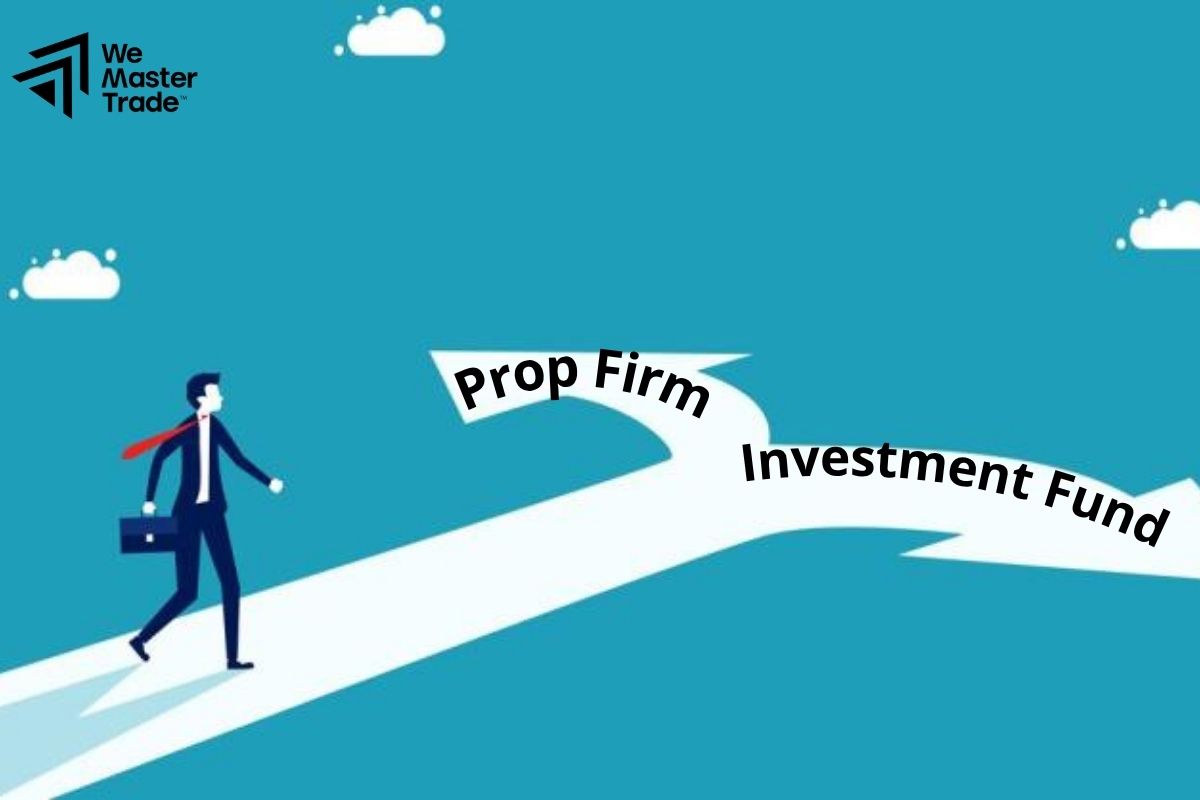
So Prop Firm and Investment Fund – Which Model Should You Choose?
Choosing between prop firm and investment fund depends a lot on each person’s level, goals and trading style. Each model has its own suitable audience, and understanding yourself will help you make the best decision.
- Skilled traders who want to have full control over their trading: Prop firms are ideal, allowing you to access large capital without having to invest a lot of initial capital, while allowing you to be autonomous in making decisions.
- Newbies who want to try and learn step by step: Should start with prop firms through small accounts. This is a low-risk approach, suitable for getting acquainted with the real market.
- Investors with capital, not trading directly: Investment funds are a suitable channel, especially for those who want to make passive profits by entrusting management to experts.
- Experienced traders who want to expand and manage other people’s capital: You can consider building or participating in a private investment fund – where you act as a real fund manager.
Conclusion
In summary, the best trading model is the one that suits your skills, mindset and profit goals. Both prop firms and investment funds are options that can be powerful tools if you know what you need and which path you want to take.
See more: