













Are you looking to venture into prop trading? Are you unsure where to start? If you find yourself in this situation and stumbled upon this article, consider it a crucial message just for you: “First, learn about prop firm costs.” How significant are prop firm costs in proprietary trading? Let’s find out!
What are Prop Firm Costs?
Prop firm costs refer to the various fees and expenses that traders need to pay when they participate in a funded trading program offered by proprietary trading firms. In this model, you are provided with capital to trade rather than using your own personal money. If your trades are profitable, you’ll share a percentage of those profits with the firm. However, to join and maintain your account, you will need to cover certain types of fees.
See more:
- Understanding Virtual Trading: A Beginner’s Guide
- The Most Effective Prop Firm Trading Trends Nowadays
- Forex Funded Account vs. Personal Account: What Should We Choose?
Why Must Traders Fully Understand Prop Firm Costs?
When considering joining a prop firm, most traders tend to focus solely on “getting funded” and “what percentage of profits they’ll share.” But in reality, prop firm costs are the silent drain that can erode your profits. If you don’t fully understand them, you might find that your trades are profitable, yet the fees have nearly wiped out your gains before you even see a payout.
Here’s why understanding prop firm costs is a critical factor for your trading success:
- Avoid surprises with hidden fees like monthly maintenance fees, platform fees, or unclear spread markups.
- Calculate your real profits – not “winning trades” but “actual earnings after all expenses are deducted”.
- Choose the right prop firm that fits your budget and trading strategy, rather than being swayed by attractive advertisements that later reveal exorbitant fees.
- Compare the return on investment among different prop firms based on their fee structures and refund policies. This allows you to optimize your capital and manage risk more effectively.
- A successful trader doesn’t just know how to enter trades; they also know how to manage prop firm costs as an integral part of their overall capital management strategy.
Common Types of Prop Firm Costs
To ensure these expenses don’t overly impact your trading, it’s vital to clearly understand the common types of prop firm costs that traders will incur when they join:
Evaluation Fees
Before you can be granted capital, you must typically pass a skills assessment or evaluation test. The evaluation fee will vary depending on the size of the funded account you choose. This is a crucial step for the prop firm to assess whether you are a suitable candidate and possess the necessary skills to manage their capital responsibly.
Monthly Subscription
Some prop firms charge a recurring monthly maintenance fee. This fee grants you access to their trading platform, real-time market data, and various support tools. The amount of this fee can fluctuate depending on the specific services you utilize and the type of trading account you hold.
Trading Commissions & Platform Fees
Once you are funded, you will generally still need to pay commissions for each executed trade. In some cases, there might also be an additional fee for using their proprietary trading platform. While these amounts may not seem excessively high individually, they directly impact your actual net profit. Therefore, diligent management of these trading-related prop firm costs is essential.
Are There Free Prop Firm Accounts?
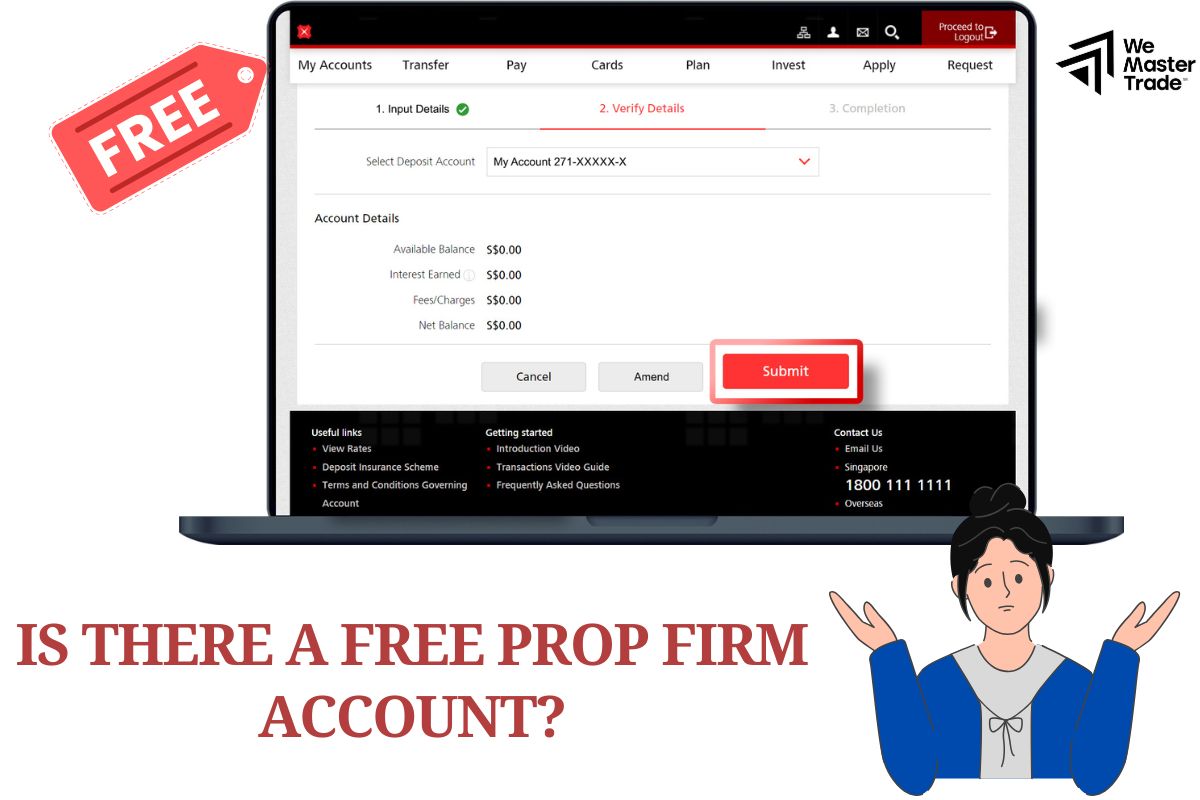
Typically, to gain access to a funded account, you will need to pay initial prop firm costs to participate in the evaluation tests. However, there are still a few ways to begin trading with a prop firm account without an upfront payment:
- Free Trials or Demo Accounts: Some prop firms allow you to experience their simulated trading environment completely free of charge. This is an excellent way to practice your strategies and thoroughly understand the trading conditions before committing to actual prop firm costs.
- Free Challenges/Promotions: A few prop firms organize free trading challenges. If you perform well and pass these challenges, you might be granted a live funded account without having to pay the initial fee.
- Refundable Fees Upon Success: Certain prop firms offer to refund your evaluation fee if you successfully pass their challenge and begin trading with a live funded account. This policy significantly reduces your financial risk during the initial participation phase.
How Much are Reasonable Prop Firm Costs?
Determining “reasonable” prop firm costs isn’t as simple as comparing “Firm A is cheaper than Firm B.” The crucial factor isn’t just the price tag; it’s whether the value you receive from that investment is truly worth it.
To properly assess whether prop firm costs are reasonable, look deeply into the following four critical factors:
“Value-for-Money” Ratio: What Do You Get for the Fee?

An account worth $50,000 with a $250 evaluation fee might seem expensive on the surface. But consider this:
- If the passing conditions are relatively achievable,
- If they offer excellent technical support,
- If the profit-sharing ratio is highly favorable (80-90% for the trader),
- And if they have a clear policy for refunding the fee upon success,
→ Then this could be an incredibly worthwhile investment.
Conversely, a $10,000 account that only costs $60 might appear cheap, but if:
- It comes with extremely strict time limits for the evaluation,
- Has rigid and inflexible trading rules,
- And offers a low profit-sharing ratio (only 50-60%),
→ Then while the upfront prop firm costs might be low, the overall investment might not be efficient or profitable in the long run.
Total Long-Term Costs
Many traders are lured by seemingly low evaluation fees, but do not take into account the additional costs such as:
- Monthly account maintenance fees,
- Ongoing trading platform fees,
- Higher-than-average trading commissions.
The sum of these charges can subtly erode your profits daily, meaning you might execute winning trades but still see very little money in your pocket
Instead, calculate all potential prop firm costs and amortize them monthly. This will give you a much more realistic view of the “true cost” of committing to a particular prop firm.
Refund Policies

If a company is willing to refund your evaluation fee upon successful completion of the challenge, it signals a few important things:
- They are confident in the effectiveness of their evaluation process.
- They are truly interested in establishing a long-term partnership with talented traders.
This is a strong indicator that you are investing your money in a trustworthy and reputable firm, as your financial risk during the initial phase is significantly reduced.
Does the Cost Fit You?
A prop firm that is an excellent fit for one trader might not be the right choice for you, especially if:
- The prop firm costs are simply too expensive for your current budget.
- The trading conditions and rules do not align with your preferred trading style.
- The psychological pressure exceeds your ability to manage stress and emotions.
Conclusion
In conclusion, understanding prop firm costs is one of the foremost criteria you need to meticulously calculate before deciding to join a proprietary trading firm. However, it’s crucial to remember that a “reasonable cost” isn’t necessarily the cheapest one. Instead, it’s the cost that best satisfies your trading goals and needs, offering genuine value for the investment. Weigh all factors carefully to make an informed and precise decision. We wish you success on your upcoming trading journey!
See more: