











Forex trading hours matter because the currency market does not behave the same way all day. A pair can feel calm during one session, become active during an overlap, then widen spreads near the weekly close or around major news.
This guide explains the main forex sessions, why overlaps matter, and how to build session timing into a risk-aware trading plan. It is educational only and does not guarantee trading results, challenge outcomes, funded status or payouts.
What are forex trading hours?
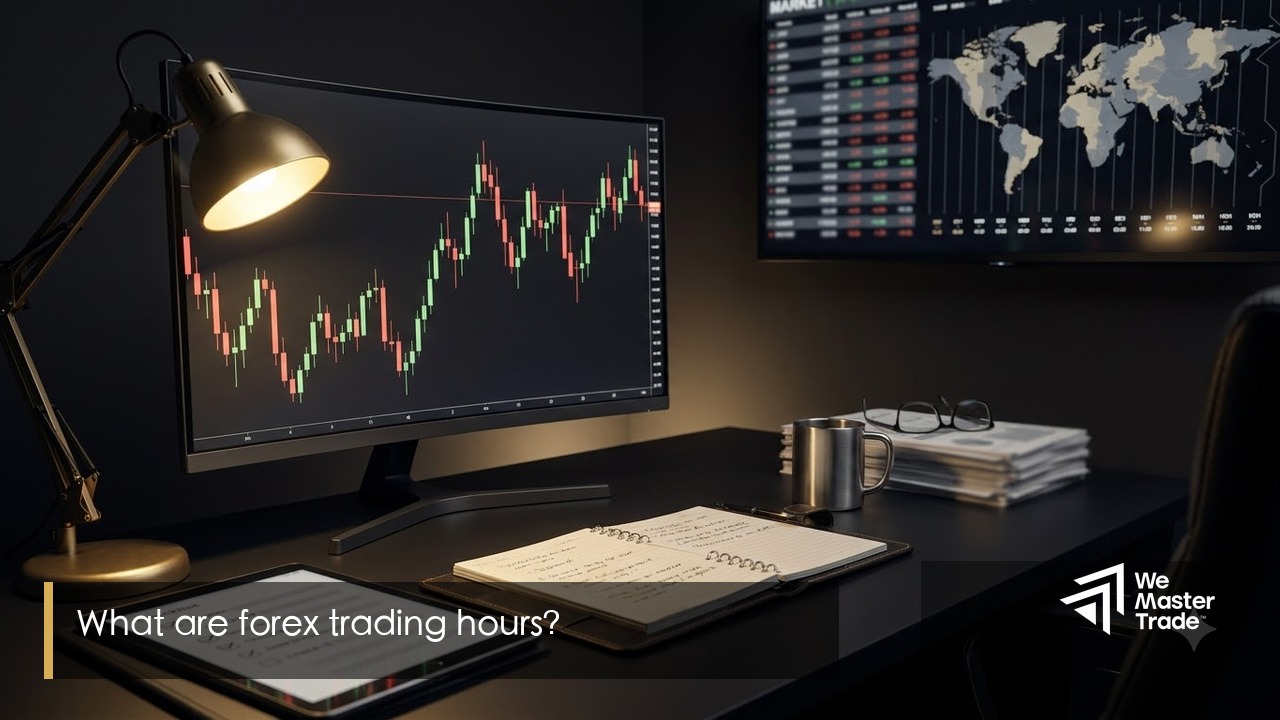
The forex market is commonly described as open 24 hours a day, five days a week. Retail forex trading typically begins around the Sunday New York open and runs until the Friday New York close, with exact availability depending on broker, platform, liquidity provider, holidays and daylight saving changes.
That 24-hour label can be misleading. The market may be open, but liquidity, spreads and volatility change by session. A trader should care less about whether the market is technically open and more about whether the conditions match the strategy.
If you are trading in a prop firm environment, also check whether your account has restrictions around weekend holding, news exposure or symbols. The market clock is only one part of the rule set.
The four main forex sessions
Forex activity follows major financial centres. The exact time can shift with daylight saving, but the common session structure is:
| Session | Typical role | What traders usually watch |
|---|---|---|
| Sydney | Weekly open and early Asia liquidity | Gaps, thin liquidity, AUD/NZD pairs |
| Tokyo | Asian session activity | JPY pairs, range conditions, early risk tone |
| London | Deep liquidity and European flows | EUR, GBP, crosses, trend expansion |
| New York | US data and overlap with London | USD pairs, indices spillover, news volatility |
The London and New York sessions often attract the most attention because liquidity and scheduled economic releases can be heavier. That does not mean every trader should trade those windows. It means the trader should test whether their setup performs better or worse there.
For broader macro timing, pair this topic with Central Banks and Financial Markets and Labour Market Economic Indicator.
Why session overlaps matter
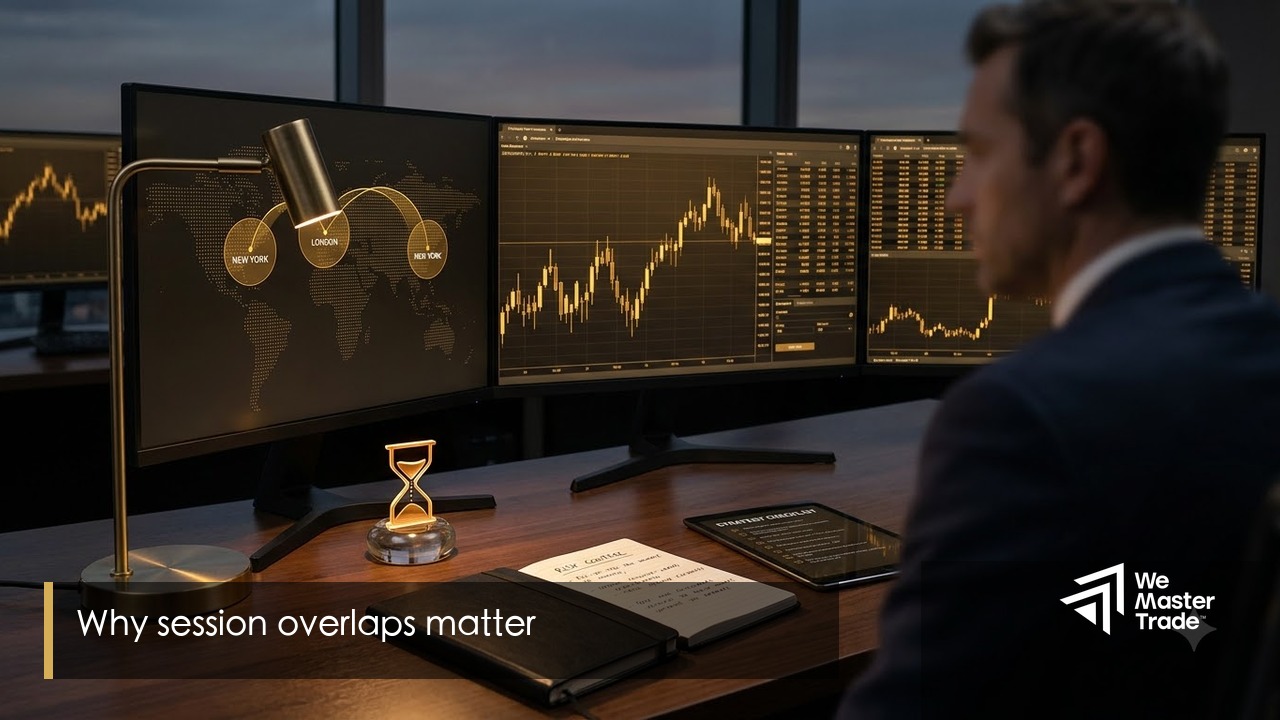
Session overlaps are periods when two major markets are active at the same time. The London-New York overlap is the most watched because European and US participants are both active, and US data often lands during that window.
Overlaps can create cleaner movement, but they can also create faster reversals. A breakout trader may prefer the energy. A mean-reversion trader may need wider stops or stricter filters. A newer trader may simply need to observe first before risking capital.
Do not assume high activity is automatically better. High volatility can expose weak position sizing, emotional exits and stop placement mistakes. If that is a recurring issue, review How to Calculate Position Size in Trading before increasing trade frequency.
Best time to trade forex depends on strategy
There is no single best time to trade forex for every trader. The best window depends on the pair, timeframe and strategy.
A scalper may prefer active hours with tighter spreads. A swing trader may care more about daily closes and scheduled catalysts. A news trader may focus on economic releases, while a technical trader may avoid the minutes immediately before and after high-impact data.
Use a simple session review:
- Which session produces the clearest setups for your pair?
- Are spreads stable when you enter?
- Does your stop size still make sense during that session?
- Do you overtrade during active windows?
- Are you trading because the setup is valid or because the market is moving?
The goal is not to trade more hours. The goal is to trade the hours that fit your written process. For that process-first approach, see How to Build a Trading Strategy and Trading Discipline.
News events can change normal trading hours behavior
Normal session behaviour can change quickly around central bank decisions, inflation releases, jobs reports, retail sales and major political events. A quiet session can become unstable when a surprise headline hits.
During major news, traders should watch for:
- Wider spreads.
- Slippage.
- Fast one-minute candles.
- False breakouts.
- Liquidity gaps.
- Platform execution delays.
That is especially important for prop firm traders. A trade that looks small before a news release can violate a drawdown or daily loss rule if execution becomes poor. Before trading around scheduled events, read Retail Sales Economic Indicator and Trading US Indices Around News Events.
Weekend opens and closes need extra care
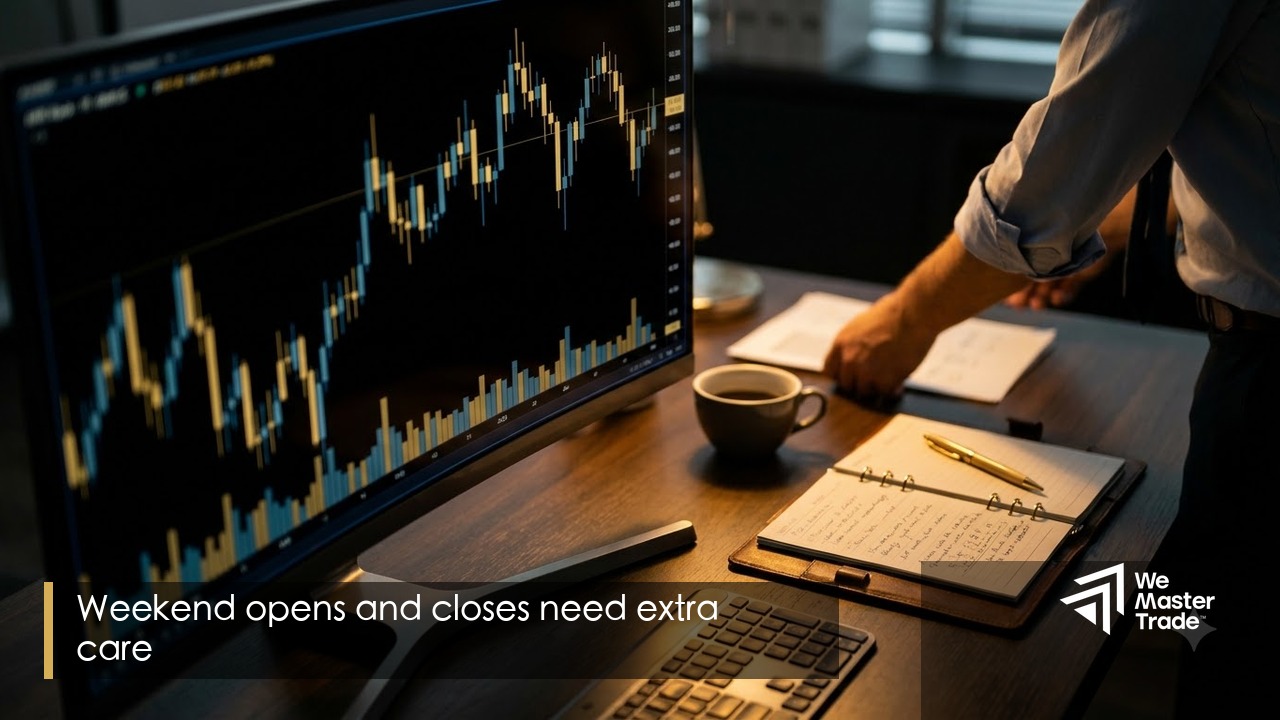
The Friday close and Sunday open deserve special attention. Liquidity can thin near the end of the trading week, and weekend headlines can create gaps when the market reopens.
This does not mean every weekend position is wrong. It means weekend risk should be intentional. Know whether your strategy allows holding, whether the instrument can gap, and whether your account rules allow that exposure.
For a deeper guide, see Weekend Gaps in Forex.
Forex trading hours checklist for prop firm traders
Before trading a specific session, run a short checklist:
- Is the pair normally liquid during this session?
- Are spreads acceptable for your stop size?
- Is there high-impact news during the trade window?
- Does the setup fit your tested strategy?
- Does the position size respect daily loss and max drawdown limits?
- Are you allowed to hold through the session close, weekend or news event?
- Does your platform support the symbols and execution you need?
If you are comparing how a session-based approach fits a prop firm route, start with the WeMasterTrade homepage and review the Trading Challenge or Instant Evaluation rules before trading.
FAQ
What are the main forex trading hours?
Forex is generally available from the Sunday New York open to the Friday New York close. The main sessions are Sydney, Tokyo, London and New York, with exact platform times depending on broker and daylight saving changes.
What is the best forex session to trade?
Many traders watch the London session and London-New York overlap because liquidity is often stronger. The best session still depends on your pair, strategy, timeframe and risk rules.
Can forex spreads change by session?
Yes. Spreads can be tighter during liquid sessions and wider during thin liquidity, news releases, market opens, holidays and the weekly close.
Should beginners trade every forex session?
Usually no. Beginners often benefit from observing multiple sessions first, then focusing on one or two windows where their strategy is easiest to review.
Do prop firm rules affect forex trading hours?
They can. Some rules may affect news trading, weekend holding, drawdown limits, symbol availability or platform execution. Always check the rules before building a session-based plan.
Build your schedule around risk, not excitement
Forex trading hours are useful only when they help you make better decisions. A busy session can create opportunity, but it can also expose poor discipline.
Choose the sessions that fit your strategy, test them honestly, and keep risk rules visible before every trade. The market is open for many hours. Your job is to decide which hours deserve your attention.