











The Forex market is the largest financial market in the world, with daily trading volume reaching trillions of USD. One of the important factors that traders need to master in order to trade effectively is Forex Trading Hours.
In this article, we will explore in detail Forex Trading Hours, the main trading sessions, the overlaps between sessions, and their impact on market liquidity and volatility.
See more:
- Should You Trade Forex? An In-Depth Look for Vietnamese Traders
- Forex Losses – How to Limit Risk Effectively in Forex
- Emotional Trader: Understand and Control to Trade Effectively
What Are Forex Trading Hours?
Forex Trading Hours are the time frames when financial centers around the world are open, allowing traders to participate in buying and selling currency pairs. This market operates continuously thanks to the global connection of the banking system, brokerage platforms, and individual investors.
What Are Forex Trading Hours?
Generally, the market starts operating from Monday at 06:00 a.m. (Singapore time) when the Sydney session opens, and ends on Saturday at 06:00 a.m. when the New York session closes. Throughout this period, there is always at least one trading session open, helping the Forex market maintain high liquidity and continuous operation.
Main Trading Sessions in Forex
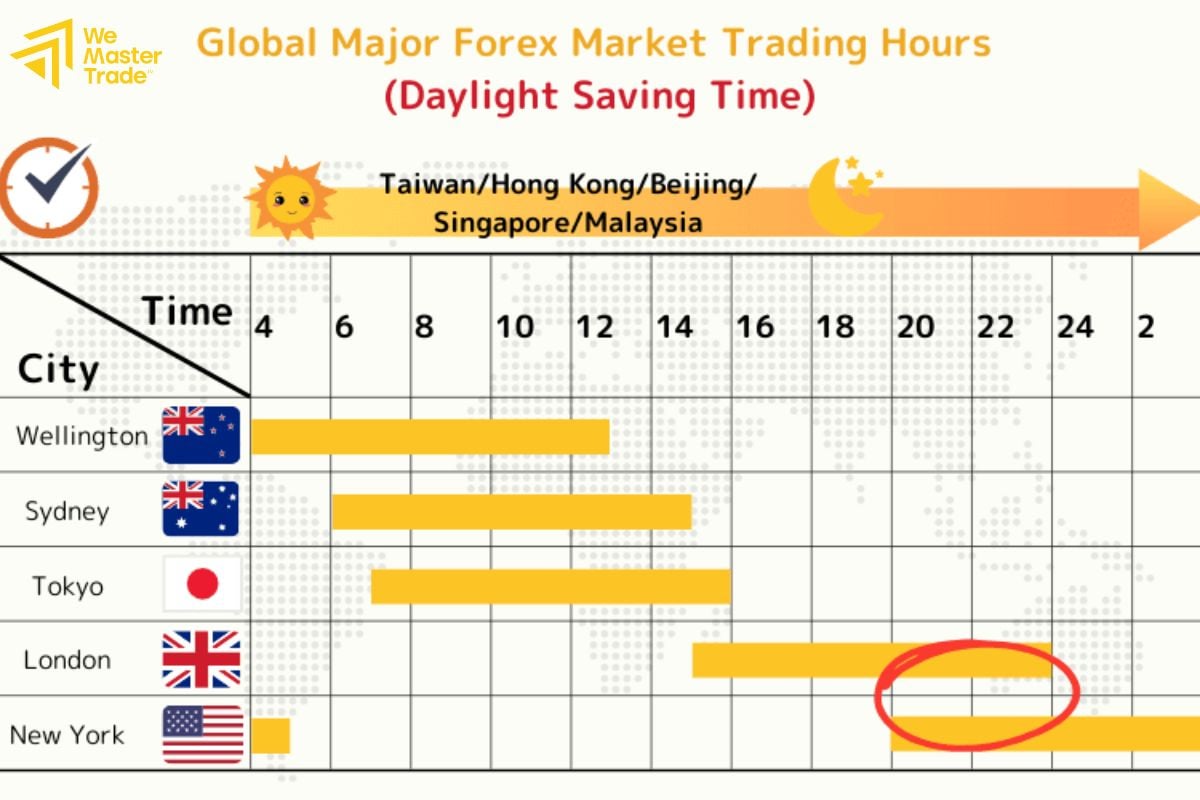
The market is divided into 4 main trading sessions: Sydney, Tokyo, London, and New York. These are major financial centers, accounting for up to 75% of global trading volume.
Sydney Session
- Opening hours: 06:00 – 14:00 (Singapore time).
- This is the first session to open during the week and is usually less volatile than other sessions.
- Popular currency pairs: AUD/USD, NZD/USD, USD/SGD.
Tokyo Session
- Opening hours: 08:00 – 17:00 (Singapore time).
- It is the major trading center in Asia, focusing heavily on currency pairs related to JPY.
- Popular currency pairs: USD/JPY, EUR/JPY, GBP/JPY.
London Session
- Opening hours: 16:00 – 00:00 (Singapore time).
- This is the most active session, accounting for more than 30% of total global trading volume.
- Popular currency pairs: EUR/USD, GBP/USD, EUR/GBP.
New York Session
- Opening hours: 21:00 – 06:00 (Singapore time).
- This is the final trading session of the day and is also very important due to its overlap with London.
- Popular currency pairs: USD/CAD, USD/CHF, EUR/USD.
The Overlap Between Trading Sessions
One of the important characteristics of Forex Trading Hours is the overlap between sessions. This is the time when the market has the highest liquidity and volatility.
The Overlap Between Trading Sessions
- Sydney and Tokyo: 08:00 – 14:00 SGT → focused mainly on Asia–Pacific currency pairs.
- Tokyo and London: 16:00 – 17:00 SGT → volatility increases slightly as the market shifts from Asia to Europe.
- London and New York: 21:00 – 00:00 SGT → the most active period, accounting for the majority of global trading volume.
Example: The EUR/USD pair experiences the strongest volatility during the London and New York overlap, because both the euro and the US dollar are heavily traded in these two centers.
The Impact of Forex Trading Hours on Traders
Understanding Forex Trading Hours helps traders:
-
Capture price movements: Knowing when the market is active to seize opportunities.
-
Manage risk better: Trading during quiet hours can lead to slippage due to low liquidity.
-
Choose suitable currency pairs: Each session has specific major currency pairs that are more active.
-
Optimize personal strategies: Scalpers often prefer trading during the London – New York session, while long-term traders may choose quieter time frames.
When Is the Best Time to Trade Forex?
There is no single “golden hour” for everyone, but in general, the best time usually falls during overlapping sessions when liquidity is high:
- London – New York (21:00 – 00:00 SGT): Strongest volatility, suitable for short-term trading.
- Sydney – Tokyo (08:00 – 14:00 SGT): Good for traders interested in Asia–Pacific currency pairs.
- Tokyo – London (16:00 – 17:00 SGT): Less active but still offers opportunities.
Traders need to consider their personal strategy, risk appetite, and daily time zone schedule to choose the most suitable time.
Factors to Note When Monitoring Forex Trading Hours
Factors to Note When Monitoring Forex Trading Hours
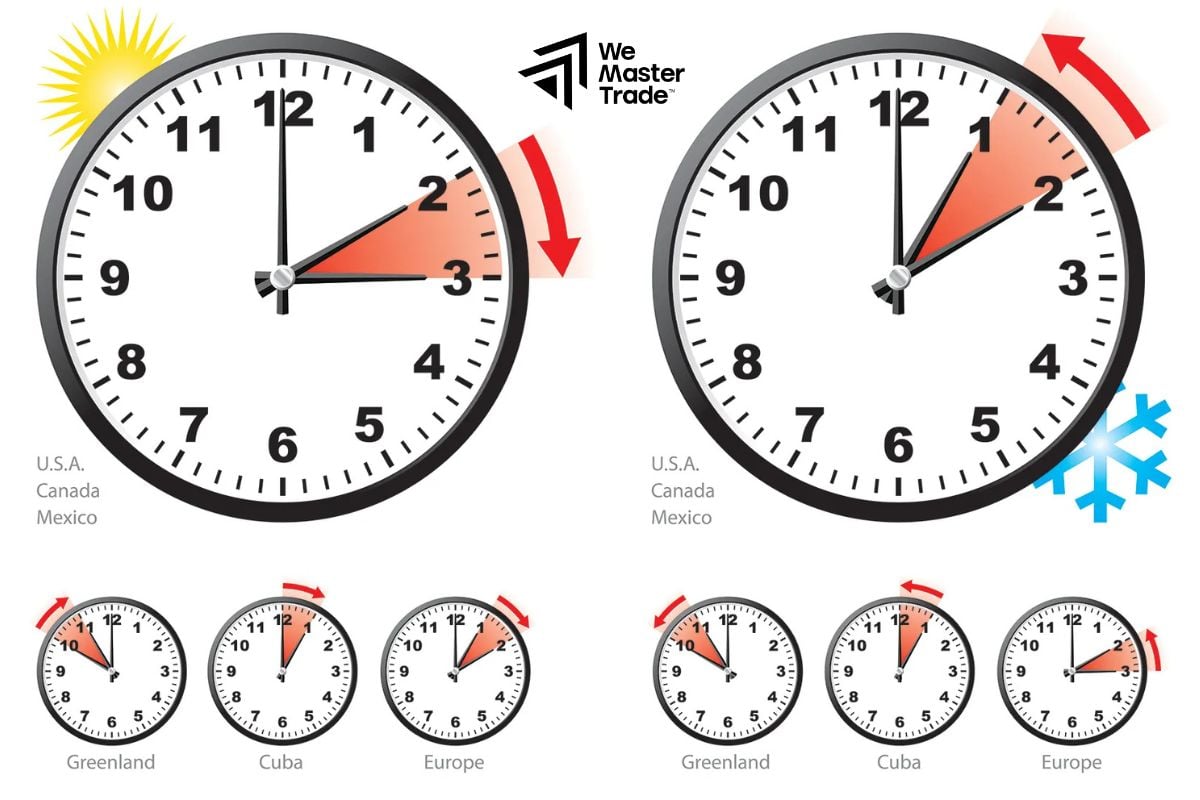
- Daylight Saving Time: Some countries such as the US and the UK change trading hours in March, April, October, and November.
- Economic news: GDP, CPI, and central bank interest rates are usually released according to local time, causing strong volatility.
- Unusual events: Political crises, natural disasters, and global news can have an impact regardless of trading hours.
- Personal habits: Traders should trade when they are most alert, instead of forcing themselves into very late or very early time frames.
Frequently Asked Questions About Forex Trading Hours
- When does the Forex market open?
The market opens at 06:00 a.m. on Monday (SGT) with the Sydney session. - When does the Forex market close?
Forex closes at 06:00 a.m. on Saturday (SGT) when the New York session ends. - Which session is the most active?
The London – New York overlap (21:00 – 00:00 SGT) is the most active. - Should you trade during quiet hours?
During the 03:00 – 06:00 SGT period, the market usually has low liquidity. Trading during this time may carry a higher risk of slippage.
Conclusion
In summary, Forex trading hours are an important factor that directly affects liquidity, volatility, and trading strategies. Whether you are a new trader or experienced, understanding and taking advantage of the characteristics of each session will help increase analytical efficiency, optimize opportunities, and control risk.
See more: