












In the modern financial world, CFD forex (Contract for Difference) is considered a popular instrument that allows traders to participate in the foreign exchange market without directly owning the underlying asset. With its flexibility, CFDs offer many opportunities but also carry significant risks, especially when leverage is used.
This article will provide a detailed analysis of what CFD forex is, how it works, examples, benefits, and risks, helping traders understand its nature and apply it effectively.
What is CFD Forex?
CFD forex is a derivative financial contract in which two parties (the trader and the broker) agree to exchange the price difference of a currency pair between the opening and closing times of the trade.
What is CFD Forex?
The biggest differences between CFD forex and traditional trading:
- Traders do not need to own the underlying currency.
- They only need to correctly predict the price direction to profit.
Example:
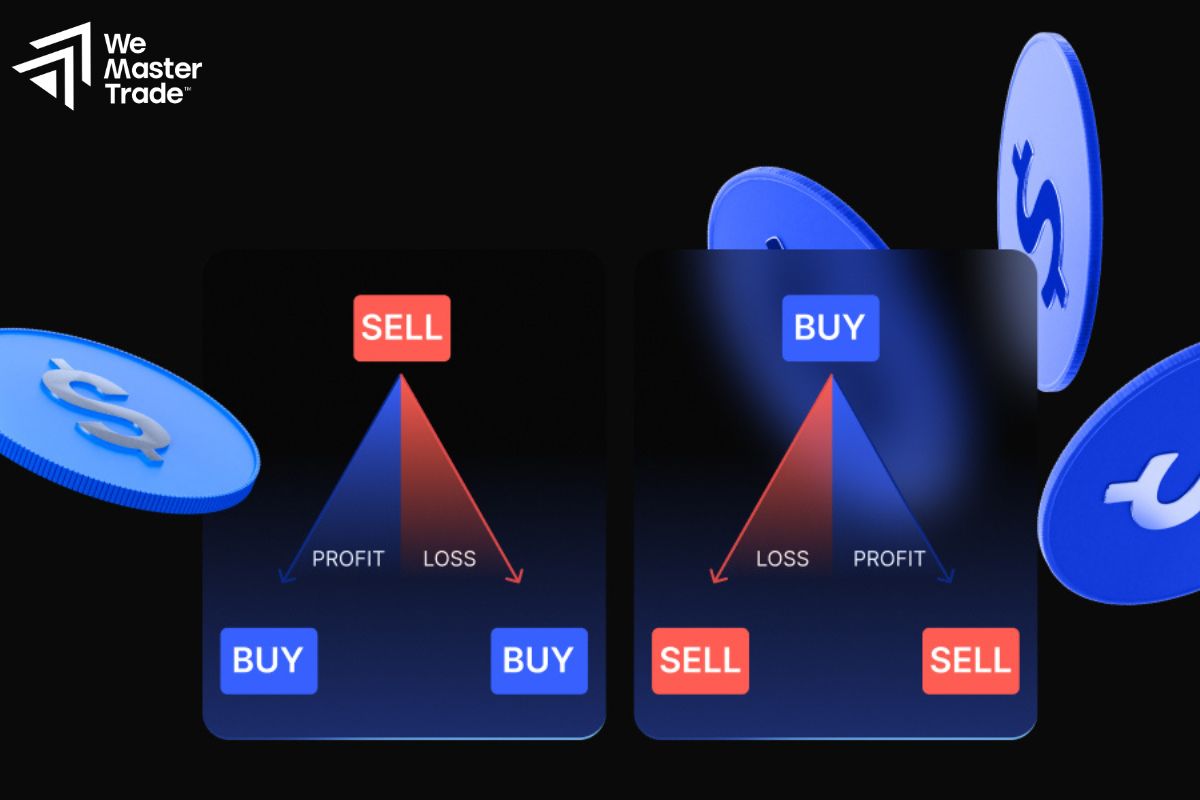
- If you buy a CFD on EUR/USD and the price increases, you make a profit.
- If the price decreases, you incur a loss.
- Conversely, if you sell a CFD on EUR/USD and the price falls, you profit.
How does CFD Forex work?
The mechanism of CFDs is based on reflecting the market value of forex prices.
- Opening a long position (Buy): Profit when the exchange rate rises, loss when it falls.
- Opening a short position (Sell): Profit when the exchange rate falls, loss when it rises.
- Closing a trade: By placing the opposite order of the one used to open the position.
See now:
- Should You Trade Forex? An In-Depth Look for Vietnamese Traders
- Forex Losses – How to Limit Risk Effectively in Forex
- Emotional Trader: Understand and Control to Trade Effectively
Advantages of CFD Forex
Access to multiple markets with one account

Access to multiple markets with one account
A single CFD account can trade forex, indices, commodities, and global stocks. This helps traders easily diversify their portfolios.
Two-way trading
Unlike traditional investing, which typically involves buying with the expectation of price increases, CFDs allow short selling, enabling traders to profit even when the market declines.
Flexible leverage
Leverage allows traders to control large positions with small capital, optimizing capital usage.
No need to own the asset
There is no need to hold physical currencies or securities; all trades rely solely on price movements.
Disadvantages and Risks of CFD Forex
Despite the advantages, CFDs also carry various risks:
- Leverage risk: You may quickly lose your entire margin if prices move against your expectations.
- Trading costs: Beyond spreads, traders may incur overnight fees or commissions.
- Not suitable for everyone: CFDs are complex and require knowledge and risk management skills.
- High volatility: The forex market is inherently volatile, and leverage can amplify risks.
Statistics show that up to 76% of retail accounts lose money when trading CFDs—a figure that reflects the level of risk traders must carefully consider.
Leverage in CFD Forex

Leverage in CFD Forex
A key feature of CFD forex is financial leverage.
- Leverage allows you to control a large trade size with a small amount of capital.
- Example: A leverage ratio of 1:20 means you only need to deposit 5% of the contract value.
Specific example:
- Buy 1,000 CFDs of Barclays stock valued at 2,500 GBP.
- With leverage of 1:5, you only need 500 GBP as margin.
- If the price increases by 4%, the return on your margin is 20%.
However, high potential returns come with higher risks. Leverage can magnify losses quickly if the market moves against your prediction.
How is CFD Forex different from traditional forex trading?
Asset ownership:
- Traditional forex: Requires holding currencies.
- CFD forex: Only trades price differences.
Short selling capability:
- Traditional forex: Often limited.
- CFD forex: Short positions are easily opened.
Leverage:
- Traditional forex: Lower leverage.
- CFD forex: Higher, flexible leverage but with greater risk.
Conclusion
In conclusion, CFD forex is a derivative financial instrument offering flexibility in forex trading and access to various other markets. With the ability to trade both directions, use leverage, and diversify portfolios, CFD forex opens many opportunities for traders. However, these opportunities come with high risks, especially regarding leverage and price volatility.
Understanding the nature, operation, advantages, and disadvantages of CFD forex will help traders gain a more comprehensive perspective, enabling them to make more objective and safer trading decisions.
See more: