












If you’ve visited our Trustpilot profile, you may have noticed a consumer warning. Here’s why, in full transparency.
It Started With How We Collected Reviews
When we first invited customers to leave reviews, we used a basic invitation link, a method many businesses used at the time. Trustpilot later tightened its standards, and reviews collected this way became subject to stricter verification.
As a result, many genuine reviews from real traders were removed or flagged, triggering the consumer warning still visible on our profile today.
These changes were related to Trustpilot’s review verification requirements rather than changes in our customer experiences. It had nothing to do with fake or manipulated reviews. Every review we collected came from a real customer, and we never told anyone what to say or what rating to give.
We’ve since updated our process to fully comply with Trustpilot’s current requirements. Learn more about supported invitation methods here: Trustpilot Supported Invitation Methods
A Second Reason: Reviews From Certain Markets Were Flagged
A large part of our early trader base came from markets with limited access to prop trading services, where many traders used VPNs. In some cases, reviews from certain markets may receive additional verification checks due to factors such as VPN usage or shared networks, even when the traders and their experiences were entirely genuine.
It’s also common in some regions for multiple people to share one device or connection, which further triggers Trustpilot’s automated flagging. Many genuine reviews were misclassified and removed as a result, a platform-level limitation largely outside our control.
This Happens to Other Companies Too, Even the Largest Ones
A warning or a low rating on Trustpilot isn’t a sign of dishonesty. It’s a common outcome of how Trustpilot’s automated system works, affecting companies of every size.
Companies with a full “Warning” label
Wealthsimple, a major Canadian financial company, carries the same Trustpilot “Warning” notice as our profile.
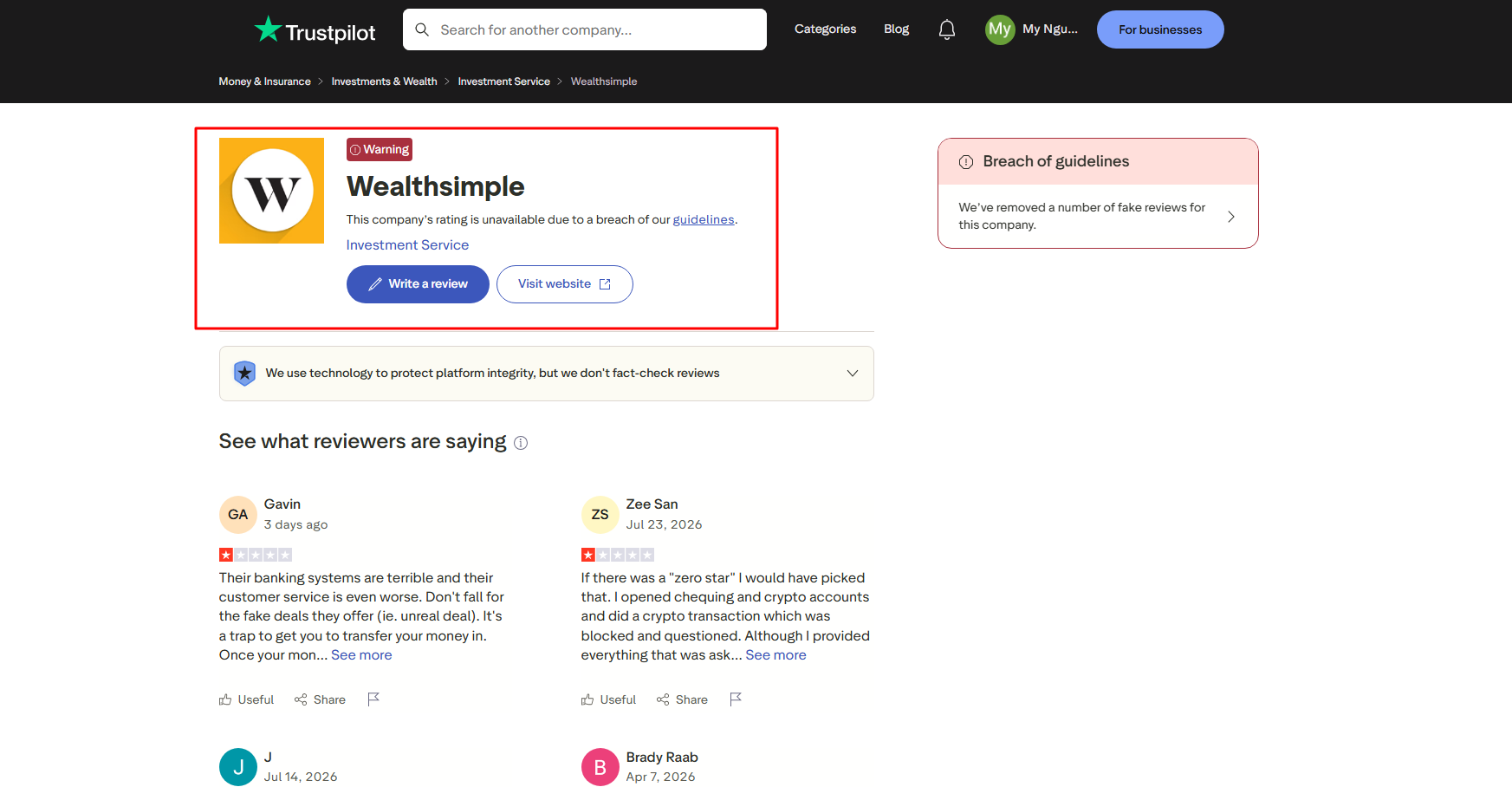
Wealthsimple, Trustpilot “Warning” label, rating unavailable
Binance, the world’s largest crypto exchange, also carries a “Warning” label, with reviews removed for breaching guidelines.
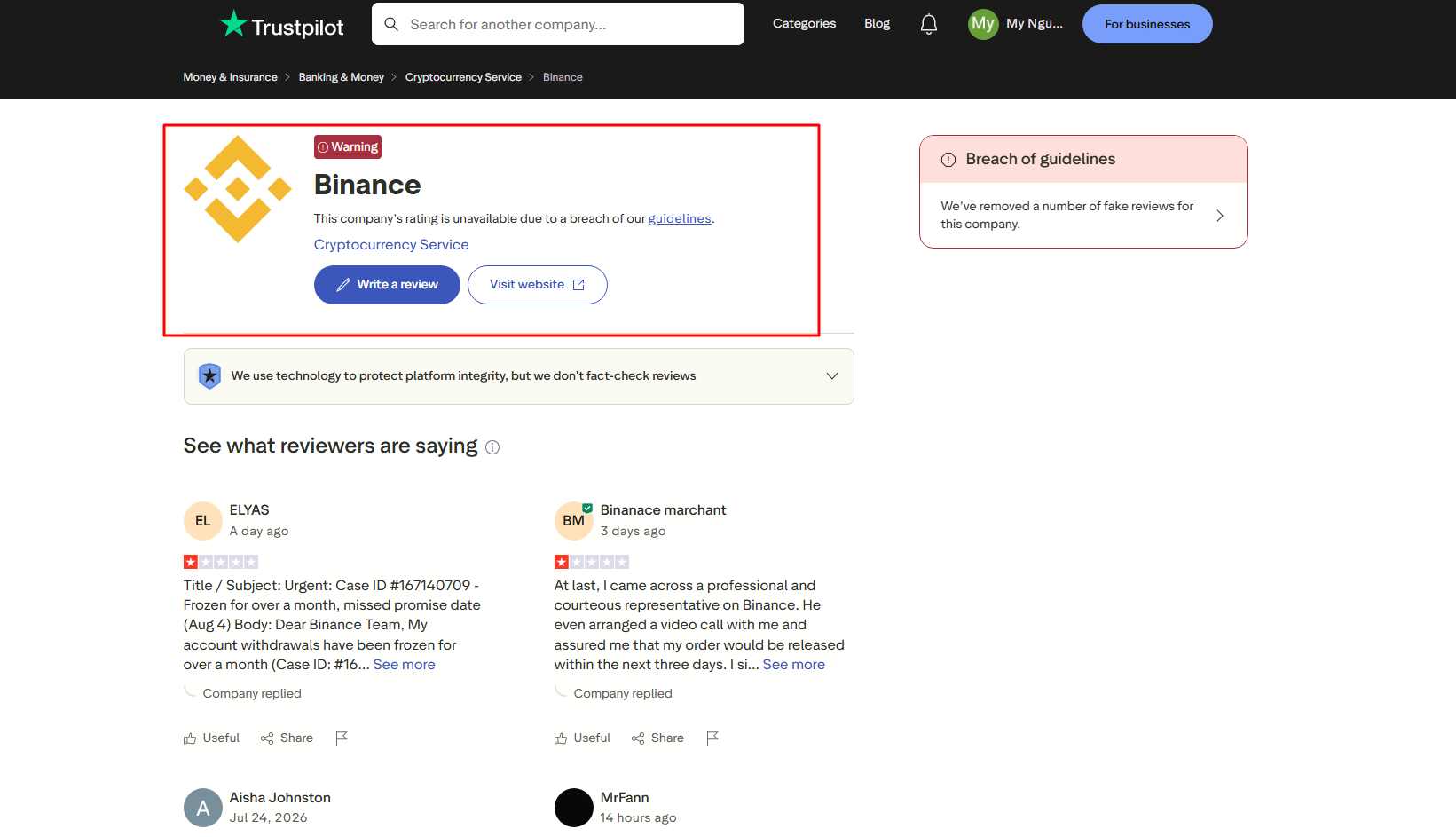
Binance, Trustpilot “Warning” label
Large businesses with near 1-star ratings
Microsoft holds a 1.2 out of 5 (“Bad”) rating from nearly 3,900 reviews.
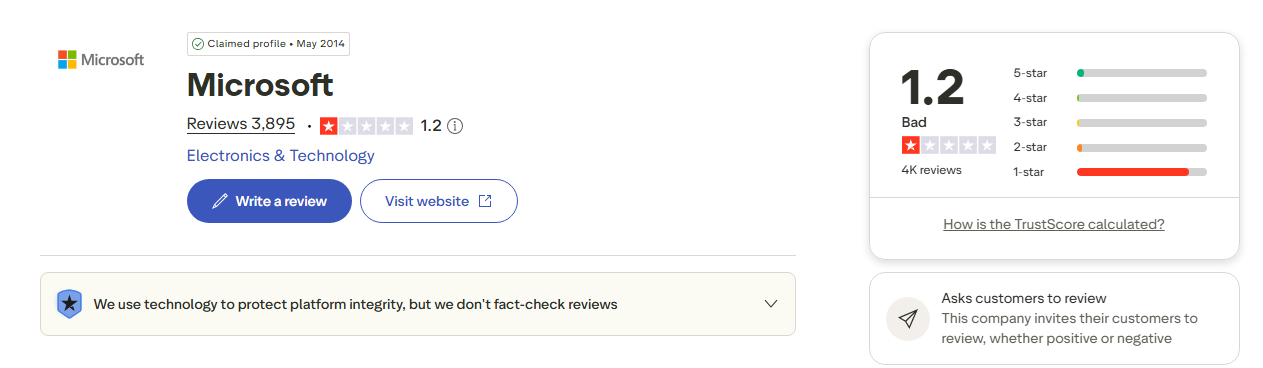
Microsoft, 1.2 rating (“Bad”)
Amazon holds a 1.6 out of 5 (“Bad”) rating from over 48,000 reviews.
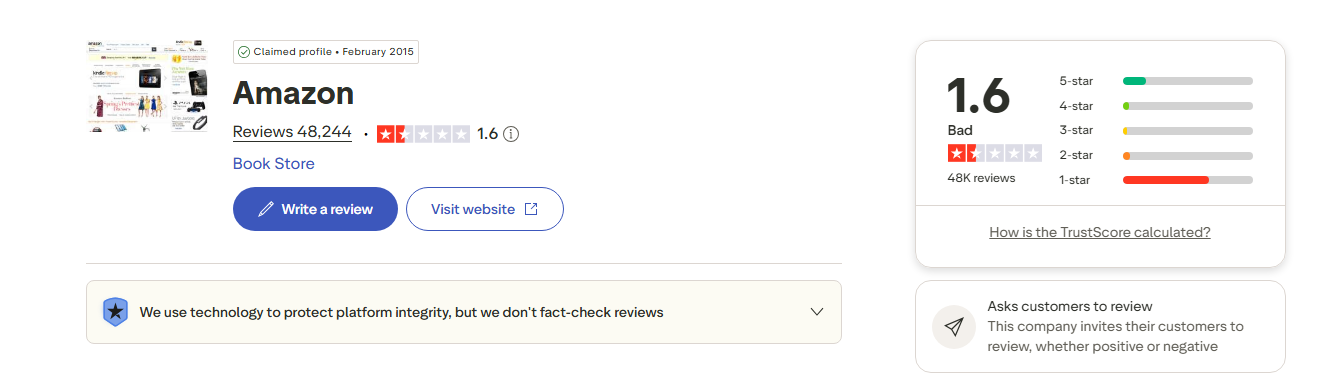
Amazon, 1.6 rating (“Bad”)
Even Google sits at a 2.3 (“Poor”) rating, from over 10,000 reviews
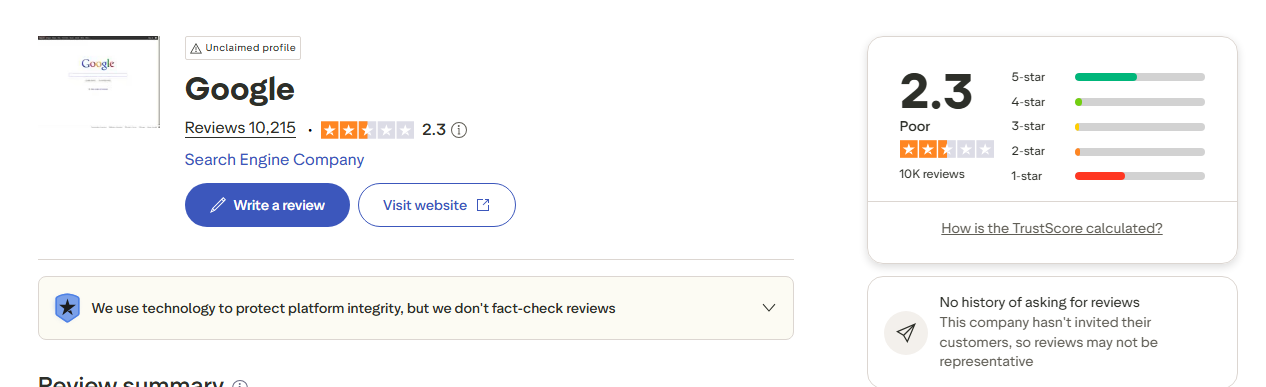
Google, 2.3 rating (“Poor”)
These examples show Trustpilot warnings and low ratings are a common, platform-wide pattern, not a reflection of WeMasterTrade’s service quality.
Our Commitment to Transparency
We take these questions seriously. Neither issue reflects dishonest practices; both stem from platform-level limitations and policy changes affecting businesses globally. We remain committed to integrity, genuine customer feedback, and continuous improvement. Thank you for trusting us.
See Our Official Independent Reviews
For independent, verified trader reviews and ratings, visit our official review profile: https://fxverify.com/prop-firms/wemastertrade-review-4594
Thank you for supporting WeMasterTrade. Join our official Facebook community to see real payouts and trading experiences from real traders: https://www.facebook.com/groups/wecopytradetraderscommunity