











Trading volatile markets can feel exciting because price moves faster and opportunities appear more often. The same conditions can also expose weak risk management, poor stop placement and emotional decision-making.
A volatile market is not automatically good or bad. It is a market condition. Your job is to decide whether your strategy is built for it, whether liquidity is acceptable and whether the risk still fits your account rules. This article is educational only and does not guarantee trading results, challenge outcomes, funded status or payouts.
What makes a market volatile?
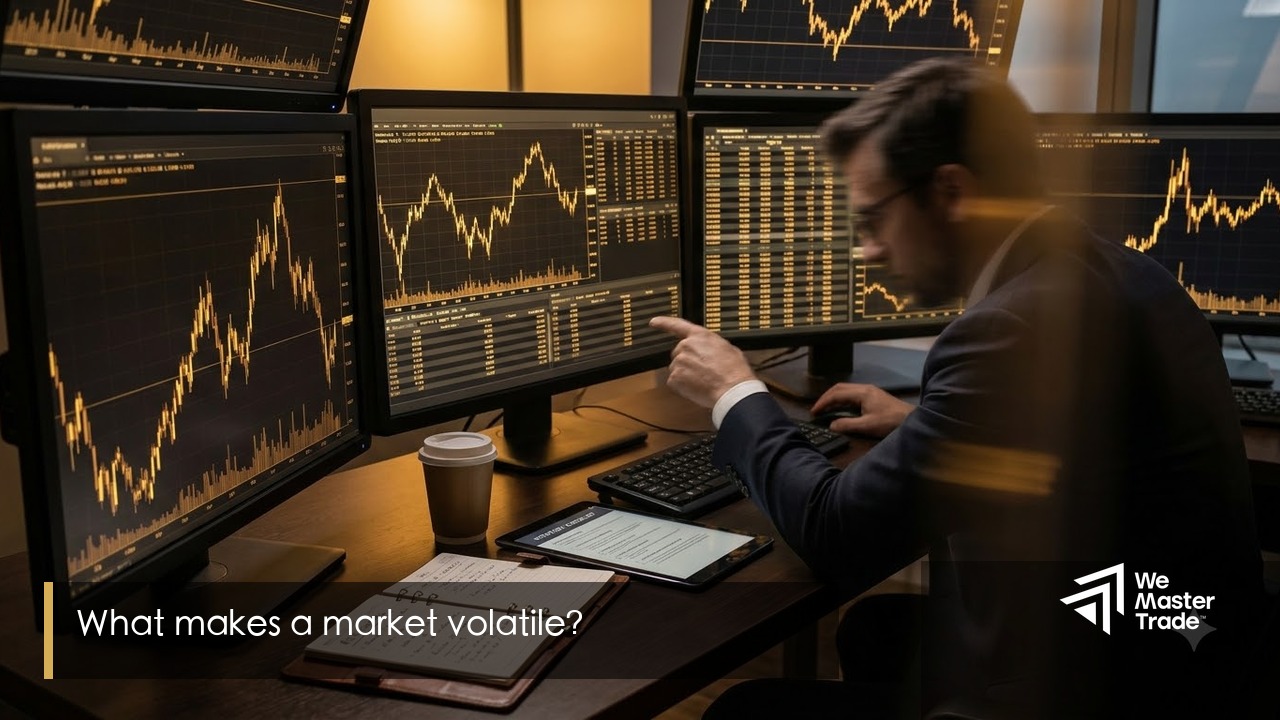
Volatility means price is moving more than usual over a given period. That can happen in forex, indices, commodities, crypto, stocks or futures.
Common causes include:
- Central bank decisions.
- Inflation, jobs or retail sales data.
- Earnings releases.
- Geopolitical headlines.
- Liquidity shocks.
- Position unwinds.
- Market opens and closes.
- Surprise policy or regulatory news.
Volatility can be measured with tools such as average true range, implied volatility or simple candle range. But the practical question is simpler: are price moves larger, faster or less predictable than your strategy expects?
For macro drivers, see Central Banks and Financial Markets and Inflation Trading Impact.
Volatility changes the rules of execution
A setup that works in normal conditions may behave differently when the market becomes unstable. Spreads can widen, stops can slip, fills can be worse and candles can reverse quickly.
That means volatile markets require more than confidence in direction. They require execution planning.
Ask before entry:
- Is liquidity deep enough?
- Is the spread acceptable?
- Is the stop distance realistic for current range?
- Could a scheduled release hit during the trade?
- Am I reducing size to match the wider stop?
- Do my account rules allow this type of volatility?
If these questions feel annoying, that is the point. Volatility punishes vague plans.
Strategies traders use in volatile markets
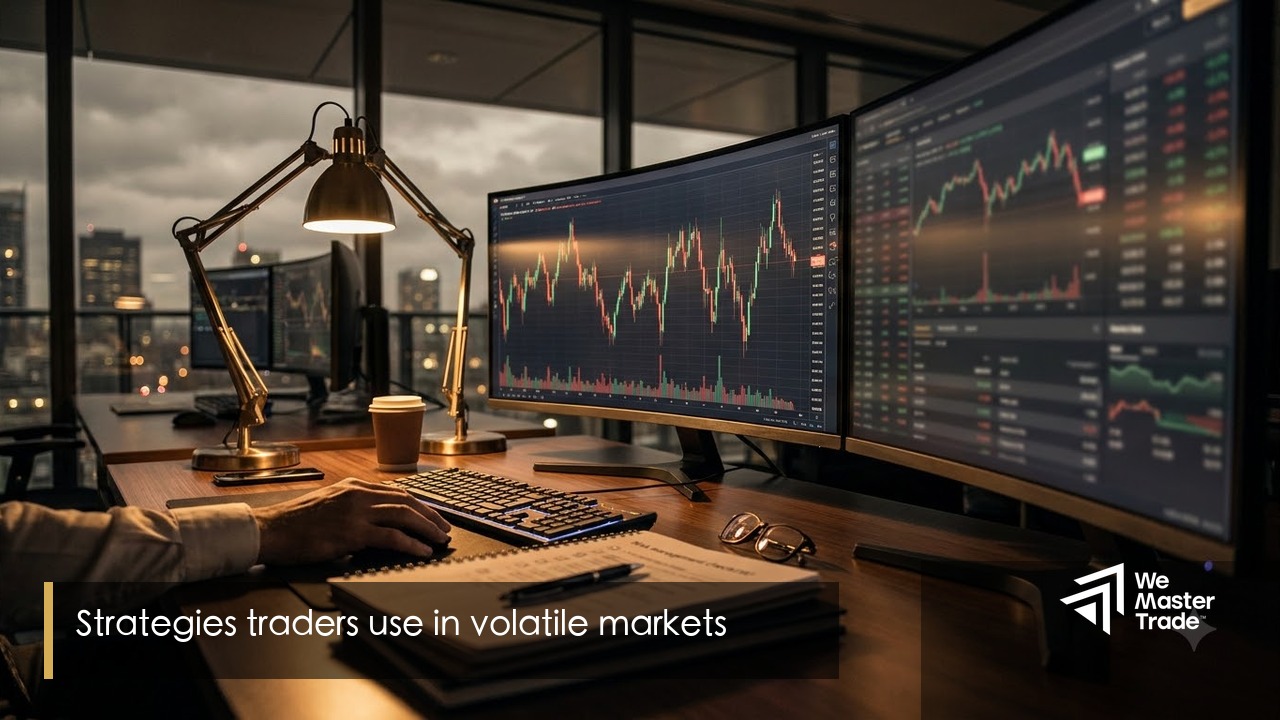
There are several ways to approach volatility, but each one has trade-offs.
| Approach | When it may fit | Main risk |
|---|---|---|
| Breakout trading | Price clears a key level with volume or momentum | False breakouts and slippage |
| Mean reversion | Price stretches too far from a fair area | Trends can keep extending |
| Momentum trading | Strong directional flow continues | Late entries can chase exhaustion |
| News avoidance | Trader waits until spreads normalize | May miss large moves, but protects process |
| Reduced-size trading | Conditions are tradable but wider than normal | Still requires strict stop discipline |
No strategy works in every volatile market. A breakout plan for London session forex may not fit a thin holiday market or a surprise flash crash.
If you run more than one approach, keep them separated in your journal. Mixing signals from different systems is one reason traders lose clarity. Review Multiple Trading Strategies before combining methods.
Position sizing matters more when volatility rises
The biggest mistake in volatile markets is keeping the same lot size while the stop distance expands. If the stop is wider and the position is unchanged, the money risk is larger.
A better process is:
- Define the invalidation point.
- Measure the stop distance.
- Decide the account risk.
- Calculate position size from the risk, not from emotion.
- Skip the trade if the required stop is too wide.
That sequence protects you from turning a normal trade idea into an oversized loss. For formulas and examples, read How to Calculate Position Size in Trading and Risk Reward Ratio Mistakes.
News trading needs stricter preparation
Volatile markets often appear around news. That includes central bank statements, inflation data, labour market reports, GDP releases and unexpected political headlines.
Some traders specialize in these moments. Others avoid them. Both approaches can be valid if they are intentional.
Before trading news-driven volatility, check:
- The economic calendar.
- Expected release time.
- The market’s current positioning.
- Spread behaviour before previous releases.
- Whether your platform and account rules allow news exposure.
- Whether your stop-loss can realistically protect you.
A rule-based trader may decide to wait 5-15 minutes after a release before entering. Another trader may avoid the session entirely. The key is deciding before the candle moves, not after adrenaline takes over.
Emotional discipline during volatile markets

Volatility creates a psychological trap: movement feels like opportunity. The trader sees large candles and starts believing they must participate.
That can lead to:
- Chasing entries.
- Moving stops.
- Revenge trading after a fast loss.
- Taking too many trades in one session.
- Ignoring the trading plan because “this move is different.”
A simple rule helps: if volatility makes your behaviour worse, reduce size or stop trading. Market opportunity is irrelevant if your execution collapses.
For the behavioural side, read Trading Discipline and Risk Taking in Trading.
Prop firm checklist for volatile markets
Volatile conditions can conflict with prop firm rules. Before trading, check daily loss limits, max drawdown, news restrictions, weekend exposure and symbol availability.
A practical checklist:
- Is this market allowed on the account?
- Are there news restrictions?
- Is the spread normal enough for the strategy?
- Does position size respect drawdown rules?
- Is the trade correlated with other open positions?
- Can the platform handle the execution style?
- Do I know when I will stop for the day?
If you are comparing account routes, review the Trading Challenge, Instant Evaluation and Trading Platforms pages before trading high-volatility sessions.
FAQ
What is a volatile trading market?
A volatile trading market is one where price moves more than usual, often with larger candles, wider ranges or faster reactions to news and order flow.
Is volatility good for traders?
Volatility can create opportunity, but it also increases execution and risk-management pressure. It is only useful when your strategy and sizing are built for it.
How should I trade volatile markets?
Use a written plan, reduce size when ranges widen, check spreads and liquidity, respect stop-loss rules and avoid trading news unless the strategy is designed for it.
Should beginners trade high volatility?
Beginners should be careful. It is often better to observe volatile sessions first and practice with low or simulated risk before trading larger size.
Can volatile markets break a prop firm account?
They can if the trader ignores daily loss, max drawdown, news rules or position sizing. Volatility does not remove account rules.
Volatility is a filter, not a signal by itself
Trading volatile markets starts with a simple decision: does this environment fit my rules? If yes, size the trade for the current range. If no, wait.
A disciplined trader does not need to catch every large move. The goal is to survive enough market conditions to keep improving the process.