













Forex trading is an exciting but difficult industry in which mastering every detail may be the difference between profit and loss. Learning to understand Forex quotes is an essential ability for every trader. This book will take you through everything, from the fundamentals of currency pairings to the intricacies of bid, ask, and spread. Whether you’re a novice or want to improve your talents, this guide has all you need to know.
What is a Currency Pair?
A currency pair is a quotation of two independent currencies one stated against the other. The basis of a currency pair is the first specified currency; the quotation is the second currency used as the benchmark. Pairings of currencies are meant to be compared to one another to ascertain the required quotation amount of one unit of the base currency. Every currency is often identifiable with a three-letter symbol. For instance, the Canadian dollar is written “CAD” in outside markets.
Foreign exchange merchants deal in pairs of currencies. The forex market lets you exchange currencies for worldwide trade and investment as well as purchase and sell them. Usually speaking, the currency market is open twenty-four hours a day, five days a week.
Forex trading is ongoing purchasing and selling of currencies. Investors acquire the base currency of a currency pair then sell the stated currency. The bid price is the quantity of necessary quote money to get one unit of base money.
When the currency pair is sold, the investor gets the quote currency in exchange for the base currency. Thus, the currency pair’s selling price is the amount received in the quote currency in exchange for one unit of the base currency.
Nonetheless, when trading currencies, investors sell one currency in exchange for another.

Some popular currency pairings include:
- EUR/USD: The euro vs the US dollar.
- USD/JPY: Represents the US dollar versus the Japanese yen.
- GBP/USD: The British Pound vs the US Dollar.
Understanding these combinations enables traders to see trends and make sound judgments regarding market entrance and exit locations.
A Forex quote is based on a currency pair. Let us break down the major components.
Structure of a Forex Quotation
Fundamentally, a Forex quote is set up around a pair of currencies. Let us dissect the main elements here. Base and Quote Currency:
- Base Currency: This is the currency you’re purchasing. In the EUR/USD pair, the base currency is the Euro.
- Quote Currency: This is the currency you’re selling. The quotation currency for EUR/USD is the US dollar.
For example, if the EUR/USD quote is 1.2000, that signifies that one euro equals 1.2000 US dollars. This structure is necessary because it expresses the cost of the base currency in terms of the quote currency.
Bid, Ask, and Spread
Once you’ve grasped the fundamentals, the next step is to learn about the bid, ask, and spread—the three important components of every Forex quote.
Bid Price
The bid price is the rate the market—or your broker—is ready to pay for the base currency in return for the quotation currency. In essence, it’s the price you might sell the fundamental money for. A Forex quote shows always the lowest of the two figures shown as the bid price.
Ask Price

By comparison, the ask price is the base currency’s price the market is ready to sell for the quotation currency. It is the price you may pay with the fundamental money. Usually, the ask price is somewhat higher than the bid.
Spread
The spread is what separates the bid from the ask pricing. It illustrates trading’s expenses and largely explains how brokers gain from every trade. For instance, the spread is 0.0005 if the bid price is 1.2000 and the asking price is 1.2005. Though this may appear little, spreads might change depending on market conditions, currency pair liquidity, and even time of day.
How to calculate the spread:
Spread = Ask Price – Bid Price
A narrower spread (a smaller difference) is typically better for traders since it lowers the cost of entering and leaving deals. On the other side, a large spread may raise trading expenses and reduce total profitability.
Pip and How to Calculate its Value
Another important term in Forex trading is the pip. A pip (short for “percentage in point”) is the smallest price movement that a specific currency rate may make, according to market tradition.
What is a Pip?
In most pairs of currencies, a pip stands for the fourth decimal point—0.0001. But with combinations of currencies including the Japanese Yen, a pip usually serves as the second decimal point—0.01. This consistency lets traders more easily compare price swings across many pairings.
How To Calculate Pip Value
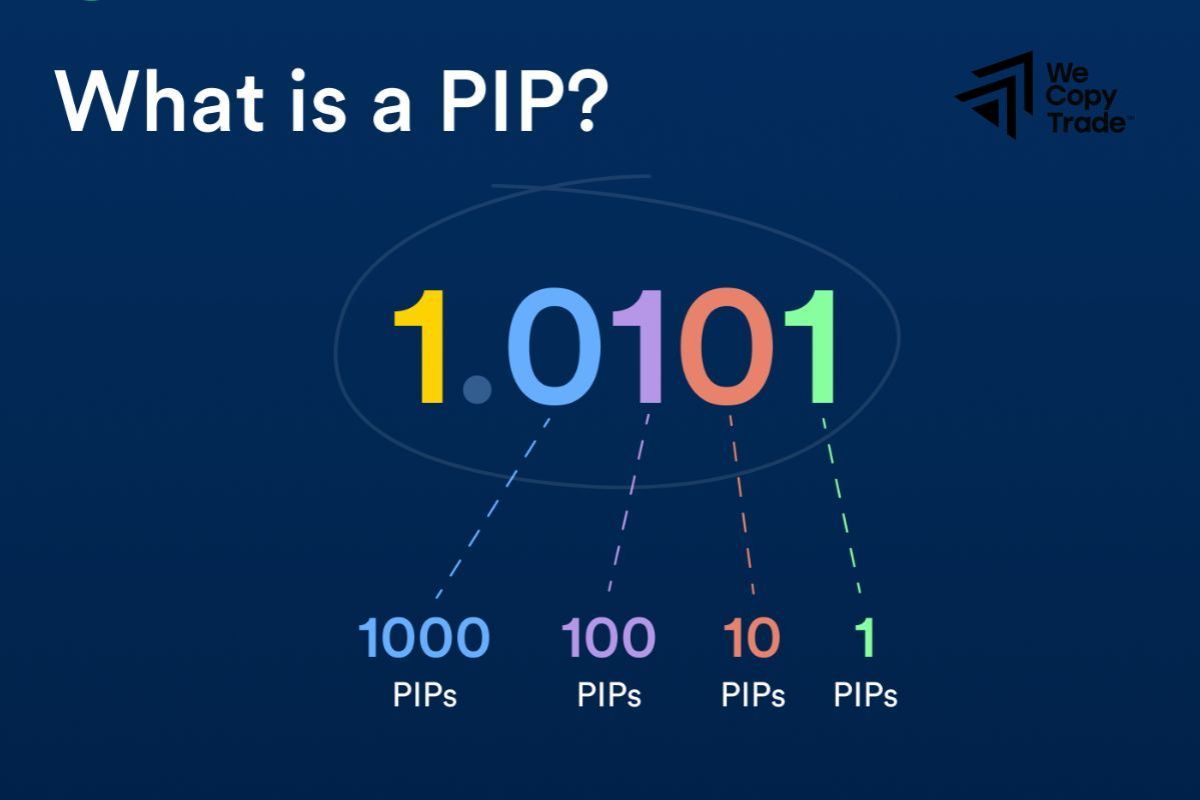
The value of a pip is calculated based on the amount of your transaction (lot size) and the currency pair. A often used formula is:
Pip Value = (One Pip/Exchange Rate) x Lot Size.
For example, if you are trading a normal lot (100,000 units) of EUR/USD and one pip is equivalent to 0.0001, you may compute the pip value in USD accordingly. Many brokers provide pip calculators to help simplify this procedure, which is critical for good risk management.
Importance of Pip in Risk Management
Pips are essential when it comes to placing stop-loss and take-profit orders. Understanding how much a pip is worth in your trading account allows you to properly calculate your risk each transaction and manage your total exposure. Whether you are a day trader or a long-term investor, risk management via exact pip estimates is an essential technique for success.
Types of Forex Quotations: Direct vs. Indirect
Forex quotes may be offered in two formats: direct and indirect. Both have their purposes, and recognizing the distinction is critical to properly analyzing the market.
Direct Quotation

A direct quote indicates the amount of local money required to purchase one unit of foreign currency. For example, in the United States, a direct quotation may be:
USD/EUR equals 0.8500. This implies that one US dollar equals 0.85 euros. Direct quotations are often utilized by dealers in their home nations since they represent the cost of acquiring foreign currency.
Indirect Quotation
An indirect quote does the opposite: it indicates how much foreign money is required to purchase one unit of home currency. Using the same currencies but from a European viewpoint, you could notice:
EUR/USD equals 1.1765. This indicates that one euro is equal to 1.1765 US dollars. It flips the viewpoint, revealing how much foreign money you must exchange for home currency.
Key Differences and Applications
Understanding whether a quote is direct or indirect might help you analyze price swings. For example:
- Local perspective: When dealing with native currency, traders often utilize direct quotations.
- Global perspective: Indirect quotations may be more relevant for individuals dealing on a global scale or comparing prices across borders.
This difference is critical when doing technical and fundamental research because it influences your assessment of market movements and currency strength.
Tips For Traders
Understanding forex quotes is just one aspect of the puzzle. Successful trading requires that you utilize this information appropriately. Here are some important advice and cautions for traders.
Key Considerations for Reading Forex Quotes
- Accuracy and timeliness: Make sure you’re dealing with accurate, up-to-date quotes. Inaccurate data might result in bad trading judgments.
- Market conditions: Be mindful that liquidity, volatility, and market emotion may all cause quick changes in bid/ask prices and spreads.
- Broker differences: Different brokers may show somewhat different quotations. Always check the source of your data and understand how your broker calculates spreads.
Warnings and Risk Management Tips
- Look for wide spreads: Wide spreads raise trading expenses and might reduce your profit margin, particularly in unpredictable markets.
- Avoid over-leveraging: While leverage may boost profits, it can also compound losses. Make sure you utilize leverage wisely and understand the implications on your account.
- Practice on a demo account: Before you invest real money, practice reading and responding to Forex quotes in a risk-free environment. A sample account allows you to get acquainted with market dynamics without incurring financial risk.
- Follow the experts: You can refer to how to enter orders and risk management of experience traders to practice and find profits automatically on platforms like WeCopyTrade.
Strategies Based on Quota Analysis
- Technical analysis: Using historical data and charts, identify patterns and probable entry/exit points based on bid/ask spread changes and price fluctuations.
- Fundamental analysis: Stay current on economic news and events that may affect currency prices. Interest rate movements, economic data releases, and geopolitical developments all have a big impact on forex prices.
- Hybrid approaches: Many successful traders use both technical and fundamental analysis. Correlating market data with larger economic indicators allows you to make better educated judgments that consider both price movement and underlying market drivers.
Conclusion
Forex trading is an ongoing process of learning and self-improvement. Accept each event as a chance to develop and improve your methods. Stay disciplined, handle your risks intelligently, and be patient; success frequently comes to those who wait for the perfect opportunity. Remember that the market favors those who are proactive and persistent. Check out our trading tips and join our trading program at: https://wemastertrade.com/