











Fundamental analysis forex is the process of studying economic and policy factors that can influence currency value. Instead of looking only at price patterns, a trader asks why one currency may strengthen or weaken against another.
This article uses refreshed rendered HTML crawl data from major forex education pages covering definition, fair value, technical vs fundamental analysis, core drivers, drawbacks and practical trading use. It is educational only and does not provide personal financial advice, guaranteed trading results, funded status, rewards or payouts.
Fundamental analysis forex: quick definition

In forex, fundamental analysis looks at the forces behind currency demand and supply. These forces include interest-rate expectations, inflation, employment data, GDP growth, central bank policy, political risk and global sentiment.
A currency pair is a relationship. EUR/USD is not only about the euro or only about the US dollar. It reflects how traders value one currency against the other. Fundamental analysis helps explain what may be changing that relationship.
It does not guarantee direction. It gives context for why a currency may be strong, weak or sensitive to a specific event.
Why fundamentals matter in currency trading
Rendered crawl data from OANDA and Forex.com shows a common structure: explain what fundamental analysis is, compare it with technical analysis, then introduce important economic drivers. That sequence matters because beginners first need to understand what kind of question fundamentals answer.
Technical analysis asks: what is price doing? Fundamental analysis asks: what may be driving price? A trader can use both. A chart may show a breakout, while fundamentals help explain whether the move is connected to changing rate expectations, inflation data or central bank guidance.
Fundamentals matter because currencies are tied to economies. When expectations about an economy change, currency pricing can change too.
For example, a currency may strengthen before a rate decision if traders expect a central bank to stay restrictive. But if the decision is already priced in, the currency may not continue higher after the announcement. This is why fundamental analysis is less about reading one headline and more about understanding expectations, surprise and reaction.
The main forex fundamental drivers
Most forex fundamental drivers fit into a practical set of categories:
| Driver | Why it matters for forex |
|---|---|
| Interest rates | Higher expected rates can support a currency, depending on context |
| Inflation | Persistent inflation can influence central bank policy |
| Employment data | Strong or weak labour data can shift rate expectations |
| GDP growth | Growth trends affect confidence in an economy |
| Central bank guidance | Speeches and decisions shape expectations before policy changes |
| Risk sentiment | Safe-haven and growth-sensitive currencies can react differently |
| Political risk | Elections, conflict or policy uncertainty can affect flows |
WeMasterTrade already has deeper resources on GDP Trading Indicator and Labour Market Economic Indicator. These topics are useful because forex often moves on the gap between expected data and actual data.
Fundamental analysis and fair value

Forex.com-style education often discusses fair value: the idea that a market price may be compared with what fundamentals suggest an asset or currency should be worth. In forex, this is difficult because each pair reflects two economies at once.
A trader may believe one currency is undervalued, but timing still matters. A currency can remain weak longer than expected if markets focus on a different driver. A good fundamental view can still produce a losing trade if the entry, stop or timing is poor.
This is why fundamentals should support a trading plan rather than replace one.
Technical analysis vs fundamental analysis in forex
OANDA-style competitor headings clearly separate technical and fundamental analysis. The distinction is simple:
- Technical analysis studies price, chart structure and indicators.
- Fundamental analysis studies economic data, policy expectations and market drivers.
A trader might use fundamentals to choose a directional bias and technical analysis to plan execution. For example, if US data is strengthening and rate expectations are rising, a trader may look for technical opportunities that align with dollar strength. But the trade still needs risk control.
The danger is overconfidence. A strong macro view can already be priced in, or the market can react differently from the headline number.
How to build a simple fundamental analysis routine
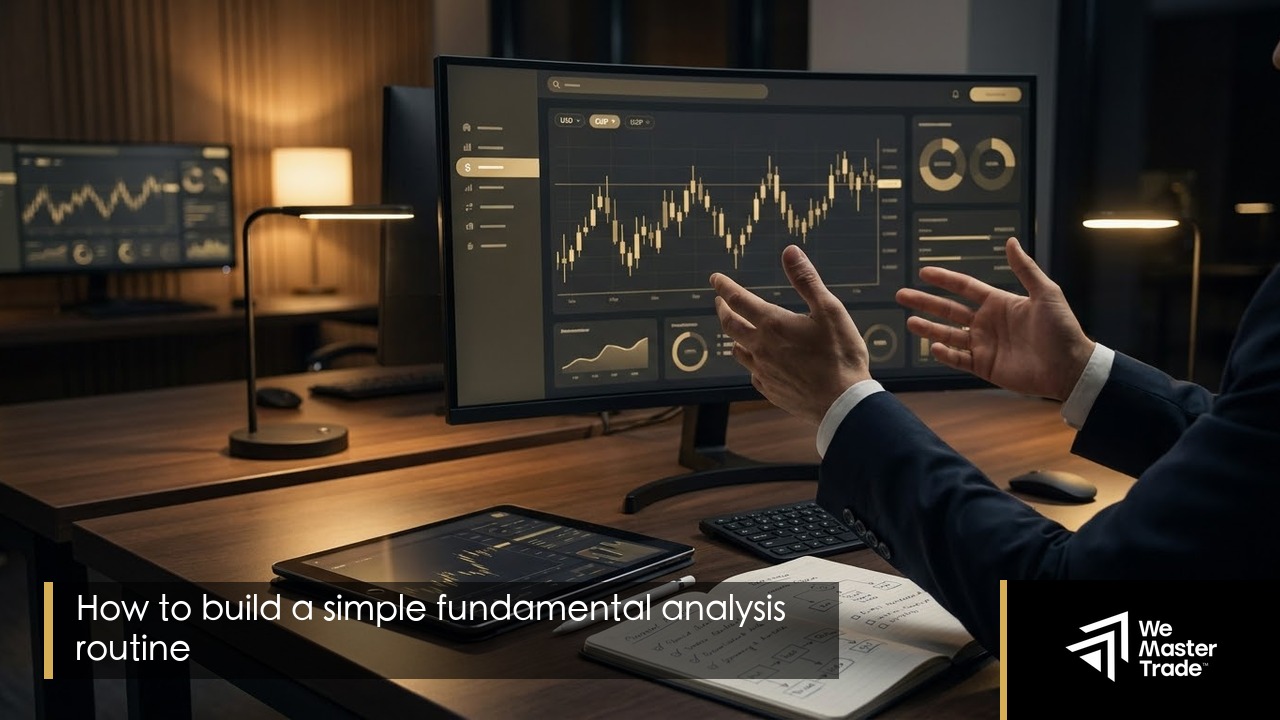
A useful routine should be repeatable. Beginners do not need to follow every report in the world. They need to know which events matter for the currencies they trade.
Try this workflow:
- Choose the currency pairs you actually monitor.
- Check the weekly economic calendar.
- Mark central bank decisions, inflation, jobs and GDP releases.
- Note market expectations before the release.
- Compare the actual result with expectations.
- Watch the market reaction, not only the headline number.
- Record the event and reaction in a journal.
This process trains the trader to think in expectations. A strong number may not lift a currency if the market expected something stronger. A weak number may not hurt a currency if weakness was already priced in.
Drawbacks of fundamental analysis
Rendered crawl pages also cover drawbacks and pros/cons. The main drawback is that fundamental analysis can be slow, complex and uncertain.
Economic data can conflict. Inflation may be high while growth weakens. Employment may look strong while forward-looking indicators soften. Central banks may guide the market in one direction, then change tone after new data.
Another drawback is timing. A trader can be right about the broad macro story but wrong about when the market will move. That is why fundamentals need a plan for entry, invalidation and position size.
There is also a practical information problem. Economic releases can be revised, central bank language can be interpreted differently by different market participants, and risk sentiment can change quickly. A trader should avoid building a large position only because one data point supports the idea.
Fundamental analysis in a prop firm process
For prop firm traders, fundamentals matter because news risk can affect drawdown and rule compliance. A trade may be directionally reasonable but unsuitable if it sits too close to a high-impact event or creates excessive risk for the account.
Before trading a macro idea, check whether the instrument is available on the Simulated Symbols page and whether your workflow fits the Trading Platforms. The macro story should not override account rules.
A useful prop firm routine is to mark high-impact events before the week begins, decide which pairs may be affected and define whether your strategy is allowed to trade around those conditions. That preparation can reduce impulsive decisions when volatility arrives.
The point is not to predict every macro outcome. It is to know when the market may become unstable, when to stay smaller and when the setup needs confirmation from price instead of confidence from a headline.
FAQ
What is fundamental analysis in forex?
Fundamental analysis in forex studies economic and policy factors that can influence currency value, including interest rates, inflation, jobs data, GDP growth and central bank guidance.
Is fundamental analysis better than technical analysis?
Neither is automatically better. Fundamental analysis explains macro context, while technical analysis helps structure levels and timing. Many traders use both.
Which economic indicators matter most for forex?
Interest-rate decisions, inflation data, employment reports, GDP growth and central bank speeches are among the most watched indicators.
Can beginners use fundamental analysis?
Yes, but beginners should keep it simple. Start with a few major currencies, track high-impact events and record how price reacts compared with expectations.
Does fundamental analysis guarantee direction?
No. Fundamentals support a view, but markets can price information early, react differently than expected or reverse quickly.
Turn macro context into a trading checklist

Fundamental analysis forex becomes useful when it turns into a checklist: know the event, know expectations, watch the reaction and protect risk.
If you are comparing prop firm options, review the Trading Challenge only after checking whether your strategy can handle news risk, symbol conditions and account rules.