





A typical occurrence in trading are range-bound markets, in which price fluctuations are limited within clearly defined support and resistance levels. For traders used to trending markets, these circumstances often disappoint them; yet, they provide great possibilities for those who know the mechanics of range trading. This article will explore the subtleties of range-bound markets, their traits, and practical trading techniques to properly minimize risk.
Overview of Range Trading Techniques
A range bound market is defined by the lack of a discernible trend. Prices often vary between support and resistance levels, resulting in a trading range. It is vital to highlight that range-bound markets may occur in any financial asset, including stocks, commodities, currencies, and indexes.
Signal of Range-Bound Markets
Range-bound markets provide certain signs that let traders recognize them and modify their approach. These indications show price oscillation between clearly defined resistance and support levels without any obvious trend direction. Key signals are those listed below:
- Pattern of Price Movement: Prices in range-bound markets swing within a steady range, bouncing often between a certain high (resistance) and low (support) level. On price charts, when no breakout outside the set limits has place, these trends are plainly seen. Lack of a consistent trend suggests balance between demand for purchasing and selling.
- Technical Indicators: Finding range-bound circumstances is often aided by technical indicators. Reflecting the sideways direction of the market, moving averages—including the 50-day and 200-day—appear somewhat flat and close together. Usually falling between 30 and 70, the Relative Strength Index (RSI) indicates the absence of significant either bullish or negative momentum.
- Volume Analysis: Often accompanying range-bound markets, lower trading volume analysis reflects lower trader activity and interest. This little volume helps to explain why the price cannot exceed levels of support or resistance. On the other hand, surges in trading volume close to these levels might indicate possible reversals or approaching breakouts.
- Fundamental Factors: Range-bound markets are also identified in part by news events and economic situation. Markets sometimes go sideways in times of economic uncertainty or when there is little news influencing mood. Comparably, range-bound price behavior typically follows after company results announcements with little effect on investor mood.
Knowing these indications helps traders to more successfully negotiate range-bound markets and take advantage of the consistent price swings inside the set range.
Definition of Range Trading Techniques
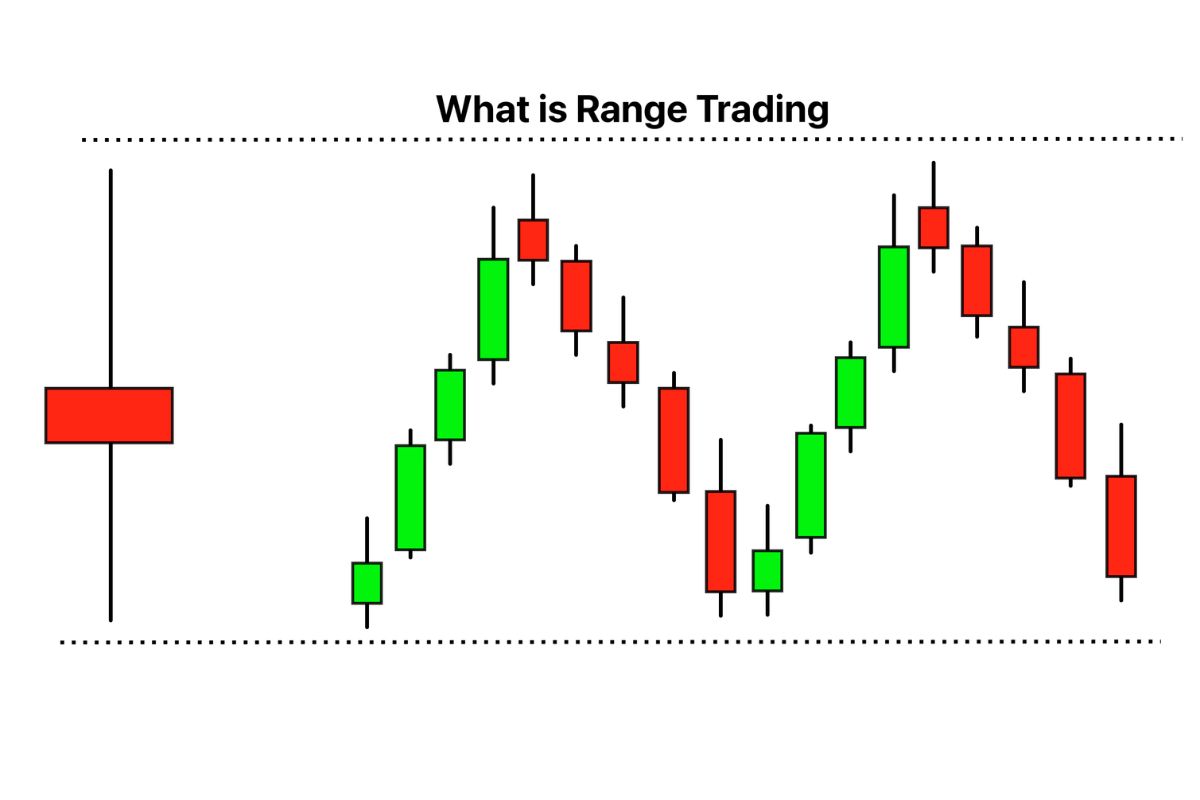
In financial markets, range trading techniques are methods used to profit on price swings within a specified range, limited by support and resistance levels. In markets without a clear trend, range trading is especially successful as it provides chances for steady gains by means of disciplined execution and appropriate stop-loss placements, therefore reducing risk. Stability and consistent pricing patterns are what this method excels on.
Technical analysis tools are very important in range-bound markets in guiding traders to find exact entry and exit points. Three well-known instruments below help you to maximize your trading techniques.
- Price Channels and Bollinger Bands: By examining market volatility, Bollinger Bands find overbaked or oversold levels. Prices either touching the upper or lower bands usually indicate possible reversals. Clear trading ranges defined by price channels let traders purchase close to support and sell near resistance with efficiency.
- Moving averages: Moving averages help to smooth out price data thus exposing the overall trend in range-bound situations. MAs allow traders to pinpoint varying degrees of dynamic support and resistance. Combining many timesframes helps one make selections with more precision.
- MFI, Money Flow Index: Based on pricing and volume, the Money movement Index gauges the money movement into and out of the market. Strong reversals indicate either oversold levels (below 20) or MFI approaches overbought levels (over 80). Confirming signals in range-bound markets is especially where this technique is very helpful.
Popular Range Trading Techniques
Range trading has many styles, developed to help traders take advantage of range-bound market periods. Here are some popular range trading techniques:
Horizontal Range Trading
Finding obvious, horizontal support and resistance levels on a price chart is the basis of horizontal range trading. Traders purchase when prices approach the support line from these levels and sell near the resistance line. This kind of trading uses the consistent swings within a set price range. Understanding and recognizing these levels helps traders to carry out plans with accuracy, therefore reducing the dangers connected with erratic price swings. Often used by both novice and professional traders, horizontal range trading is among the most basic strategies available in range-bound markets.
Channel Trading: Diagonal Range Trading
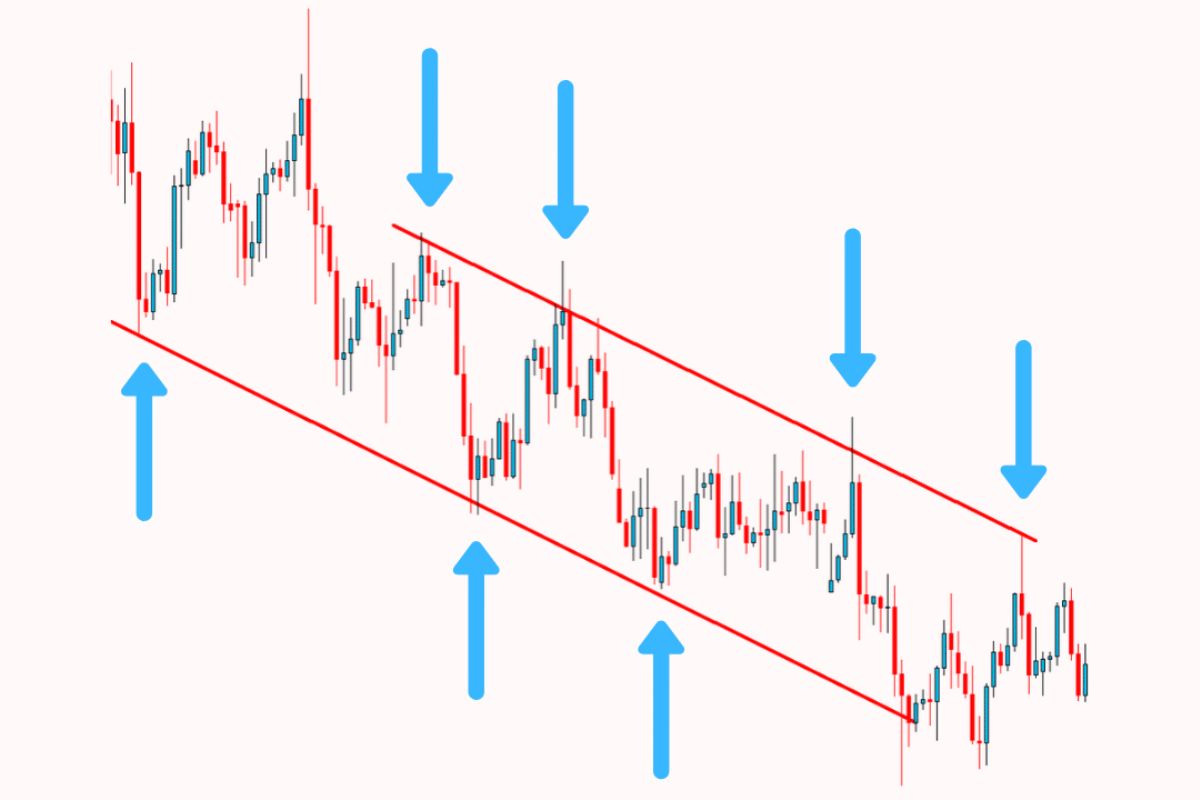
Channel trading, often referred to as diagonal range trading, forms a channel wherein the price moves using sloping trendlines. Whereas the lower trendline functions as support, the higher trendline provides opposition. Seeking to benefit from the projected price swings inside the channel, traders purchase around the lower trendline and sell near the top one. Because the channel might change with time, this approach calls for close monitoring. For markets with a little trend, diagonal range trading is perfect as it lets traders combine directional movement with range-bound techniques.
Sideways Box, Rectangular Range Trading
Traders in rectangular range trading find a box-like structure created by parallel support and resistance lines. Traders purchase close to the lower border and sell at the higher boundary, thus the price swings within this “box.” This strategy assumes that until a breakthrough happens, prices will keep bouncing back inside these set levels. When price movement is constrained, this method helps traders hoping to benefit from the constancy of range-bound patterns to clearly enter and exit spots.
Range Trading Expansion: Volatility Expansion
Expanding range trading—also known as volatility expansion—focusses on markets where the price range is expanding with time. This strategy allows traders to dynamically change their entrance and exit points, therefore adjusting to increased volatility rather than set support and resistance levels.
Traders capitalize on the larger price swings by buying during low volatility periods and selling when volatility increases. Since the range grows with market circumstances, frequently offering chances in unpredictable situations, this kind of range trading calls for flexibility and a strong awareness of market dynamics.
Tips for Effective Range Trading Techniques
Mastering range trading requires a mix of technical expertise, focused execution, and a thorough grasp of market behavior. The following pointers can help traders improve their range trading methods, handle risks properly, and profit on price oscillations inside a specific range:
Identify clear support and resistance levels
- Use historical price data to identify consistent support and resistance levels.
- Confirm these levels using chart tools such as trendlines or horizontal lines.
- Ensure that the range is large enough to permit lucrative transactions after accounting for transaction costs.
Utilize technical indicators
- Use indicators like as Bollinger Bands, RSI, and Stochastic Oscillators to detect overbought and oversold circumstances.
- Moving averages may provide dynamic support or resistance within a range.
- Combine various indicators to get stronger indications.
Establish precise entry and exit points

- Buy around support and sell near resistance to maximize gains.
- Consider partial exits to lock in gains while keeping the rest running in case of a breakthrough.
- To limit losses, place stop-loss orders below support or above resistance.
Monitor volume and volatility
- Low volatility and volume often imply a steady range, but surges might signify breakouts.
- Use volume analysis to assess trader sentiment and identify possible reversals.
- Avoid trading during times of very low volume, since this may result in misleading signals.
Maintain discipline and patience
- Avoid pursuing transactions outside of the defined range.
- Stick to your goal and avoid overreacting to short-term price fluctuations.
- Wait for solid confirmations before launching a trade to decrease the risk of whipsaws.
Be prepared for breakouts
- Keep a watch on market variables that might lead to a breakout, such as news or economic developments.
- Use trailing stop orders to safeguard gains in the event of an unexpected breakthrough.
- If a breakout happens, alter your plan to prevent being trapped in a losing position.
Regular application of these ideas helps traders perform better in range-bound markets and provide a strong basis for long-term trading success. Try out copy trading to learn more about trading strategies with WeCopyTrade!
Conclusion
Range trading is about developing discipline and strategy in equal proportion, not just about profite from price swings. For traders ready to change and improve their methods, the stability of range-bound markets offers a rich field. Adopting range trading helps one to learn the delicate skill of negotiating the complexity of markets. Check out more helpful trading tips and resigter our program at: https://wemastertrade.com/

